

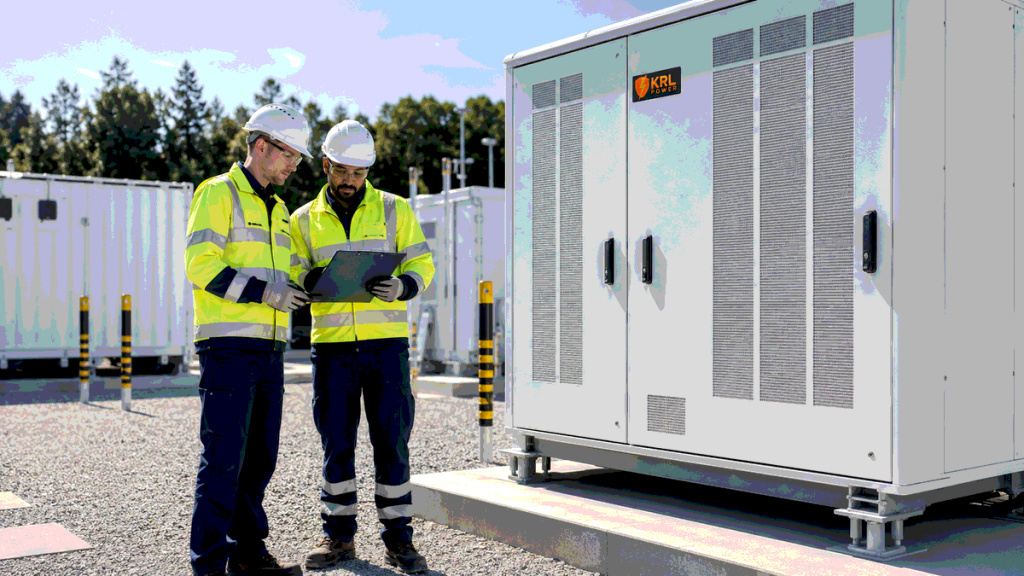
KRL Power works with commercial energy storage systems whose useful life is defined by operating needs, site strategy and technical evidence—not by a calendar date alone. A commercial BESS decommissioning plan should begin before the system is disconnected. It protects people, preserves asset records, controls data access and gives the owner a defensible route for reuse, recycling or disposal.
Retirement Decision and Scope
First decide what is ending: the battery asset, a PCS, the whole site, or a specific operating service. Keep the decision record separate from a warranty claim or a capacity-augmentation discussion.
- Record the business trigger: lease end, site closure, load change, replacement project, safety decision, repeated unavailability or revised operating strategy.
- Identify every asset included: battery enclosure, PCS, transformer, EMS gateway, switchgear, HVAC, fire interfaces, cables and spares.
- Set the target outcome for each asset: retain, relocate, reuse, sell, recycle or dispose through an approved route.
- Name the owner of site access, operational data, removal approval, environmental records and final handover.
- Freeze the latest asset register, serial numbers, as-built drawings, firmware list and maintenance history before work starts.
The original commercial energy storage design process is a useful source for the initial system boundary. The decommissioning plan must update that boundary to the as-built site.
Safety Isolation and Energy Control
A storage system can retain hazardous energy after normal dispatch stops. The removal contractor needs a documented isolation sequence approved for the actual installed topology.
- Confirm the final operating state, planned shutdown window and party authorized to issue the isolation instruction.
- Stop dispatch commands from the EMS, local controller, remote portal and any third-party aggregator before electrical work begins.
- Isolate AC, DC and auxiliary supplies using the approved single-line diagram; lock and tag each relevant point.
- Verify absence of voltage using the required procedure and record the test result before access to live compartments.
- Manage residual battery energy, thermal condition and any required discharge process under the applicable product instructions.
- Keep fire, emergency response and site-security arrangements active until the physical hazard is removed.
- Document every temporary jumper, bypass, removed fuse, changed setting and restored circuit during the work.
For systems serving backup or hybrid generation duties, the isolation plan must also address generator, PV and critical-load paths. Review the relevant industrial off-grid and diesel-hybrid storage approach before assuming a grid-connected shutdown sequence applies.
Data, Cyber Access and Documentation

End of service is also an access-control event. A removed cabinet, retired gateway or inactive cloud account must not leave customer data, credentials or remote-control paths available to an unauthorized party.
- Export meter, alarm, maintenance and event data required for regulatory, insurance, asset-accounting or dispute records.
- Identify administrator accounts, VPN connections, SIM cards, cloud portals, API keys and local engineering passwords.
- Revoke third-party remote access only after required operating and incident records are preserved.
- Back up final BMS, PCS, EMS and protection settings with a clear time stamp and asset reference.
- Record which data is retained, who holds it, how long it is retained and the approved deletion method for non-retained data.
- Update network drawings and asset registers so a retired device is not mistaken for an active site interface.
Use BMS, PCS and EMS responsibilities as a guide to identifying control layers, then confirm the actual access arrangement with the project records.
Reuse, Recycling and Disposal Path
Do not label an asset as reusable or recyclable from a visual inspection. The route should be based on condition evidence, transport rules, local requirements and the receiving party’s documented capability.
| Route | Decision evidence | Owner control |
|---|---|---|
| Retain in place | Approved operating plan and condition review | Maintain monitoring, access and maintenance obligations |
| Relocate or reuse | Model traceability, handling plan, receiving-site design and accepted test scope | Control custody, transport and re-commissioning evidence |
| Recycle | Accepted material route, battery identification and transport paperwork | Verify receiver, chain of custody and final certificate |
| Dispose | Applicable regulated disposal path and hazard classification | Retain waste record, carrier record and site-clearance evidence |
- Confirm the exact battery chemistry, module condition, state of charge and packaging requirement before transport.
- Use approved packaging, labels, carrier documents and handling instructions for the actual material and destination.
- Maintain a chain-of-custody record from site release through transport, receiver acceptance and final certificate.
- Avoid promising a resale value before technical condition, legal ownership and receiving-market requirements have been verified.
- Separate recyclable battery material from reusable switchgear, copper, enclosure components and electronic equipment; each may have a different route.
Commercial Handover and Site Restoration
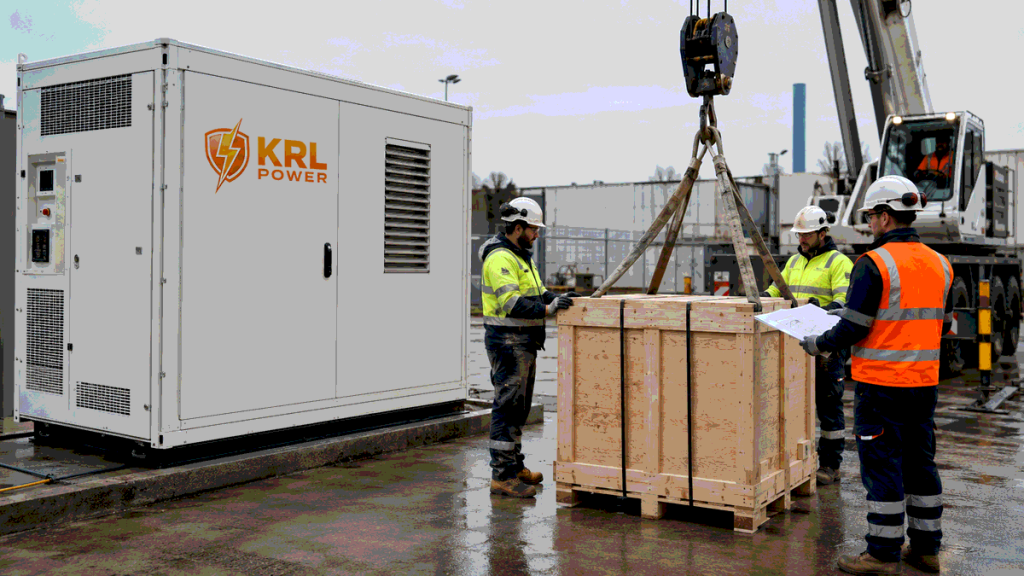
A project is not complete when equipment leaves the gate. The owner needs a closeout pack that confirms what remains energized, what was removed and who accepted every remaining obligation.
- Reconcile the physical removal list against the asset register and serial-number record.
- Confirm cable ends, foundations, penetrations, drainage, fire interfaces and communications routes are made safe or restored.
- Close utility, aggregator, monitoring, maintenance and insurance notifications that depend on the system status.
- Record remaining site equipment and its operating boundary if only part of the original BESS is removed.
- Issue as-left drawings, photographs, isolation records, waste certificates and final access-control confirmation.
- Update financial, asset-management and maintenance systems so retired equipment is not budgeted or dispatched as active capacity.
For context on the original commercial application, see commercial and industrial energy storage solutions and commercial energy storage selection guidance. Decommissioning decisions, however, must rely on the actual site condition and applicable local requirements.
Owner Checklist Before Contractor Release
- Approve scope, roles, site schedule and escalation contacts.
- Review the isolation method against the final as-built drawings.
- Confirm emergency response, lifting, traffic and access arrangements.
- Verify data export, credential removal and communication shutdown steps.
- Approve the chain-of-custody and receiving route for each asset class.
- Require records for transport, receipt, recycling or disposal.
- Inspect site restoration and close every temporary work control.
- Receive the final closeout pack before releasing retention or closing the project.