Professional Battery Solutions for Delivery Robots
The Application of Autonomous Delivery Robots
Autonomous delivery robots are rapidly transforming last-mile logistics across urban centers, commercial campuses, industrial parks, and the hospitality sector. By autonomously transporting parcels, food, and retail goods, these fleets significantly reduce labor costs and boost operational efficiency. Whether navigating complex outdoor terrains in residential communities or securely managing internal logistics within hotels and hospitals, these robots demand highly reliable and safe power sources.
The rapid expansion of the unmanned delivery sector requires continuous mobility, long-range endurance, and multi-scenario adaptability. As operational demands increase, the need for safe, incredibly durable, and high-performance battery systems has never been more critical.
KRL specializes in advanced lithium battery solutions engineered specifically for the rigorous demands of delivery robots. Our tailored battery packs deliver extended cycle life, ultra-fast charging, and stable, high-rate discharge output. Integrated with intelligent Smart BMS protection, KRL batteries guarantee the reliable, 24/7 autonomous power your fleet needs to thrive in dynamic, real-world environments.
Amandla e-KRLItekhnoloji esisiseko
KRL PowerCore Technology: Advanced Lithium Battery Series
KRL provides industry-leading PowerCore lithium battery solutions engineered for modern automation. From outdoor autonomous delivery and food service robots to campus logistics fleets and hospital internal distribution, we collaborate with global manufacturers to deliver stable mobility, extended endurance, and seamless system integration.
Our versatile 18650 lithium battery packs are custom-engineered for maximum reliability across demanding robotic applications and critical medical devices.
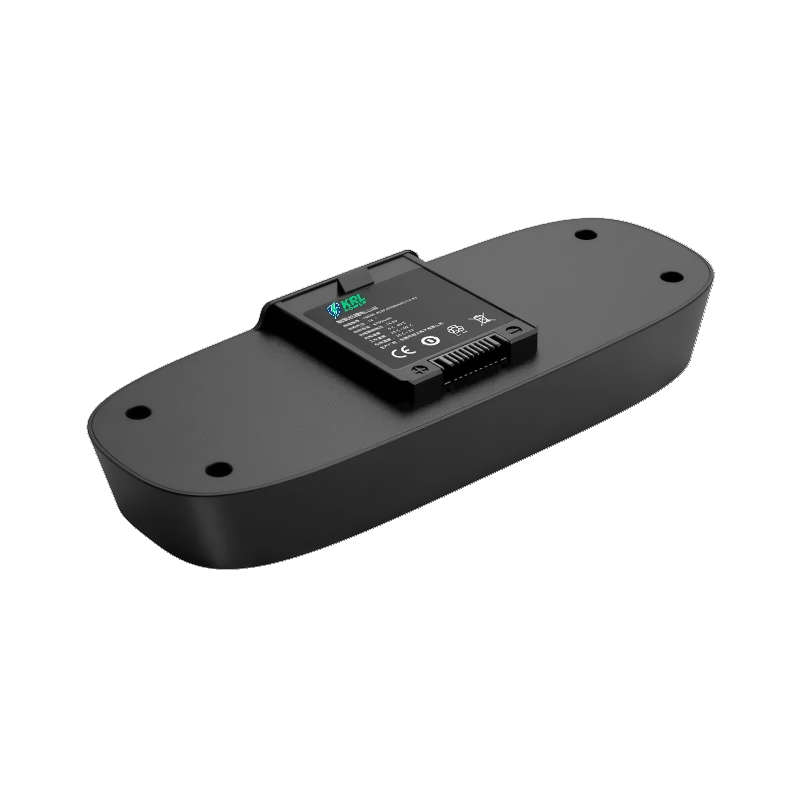
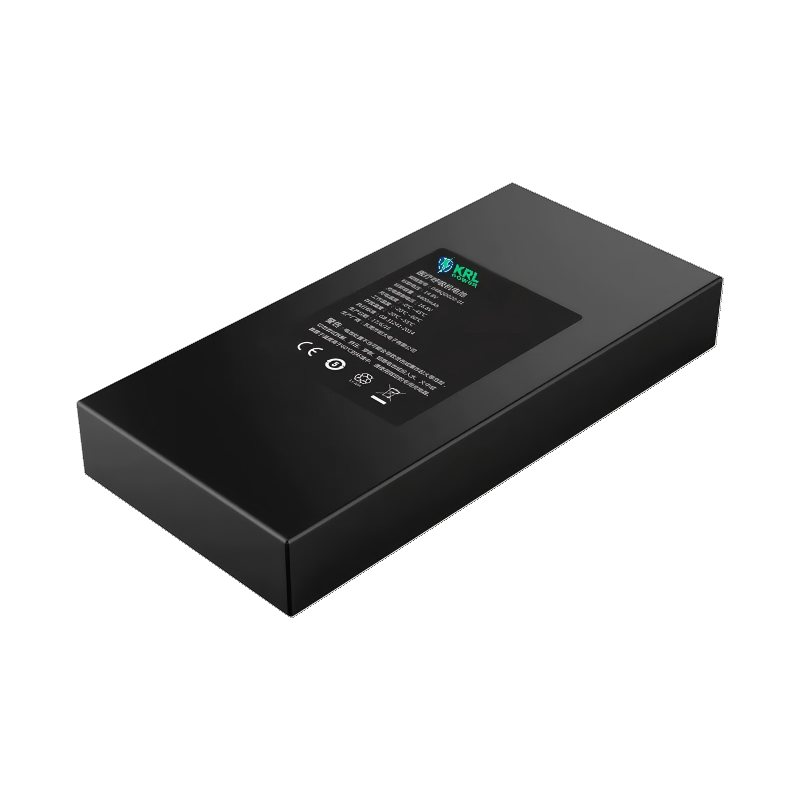
14.4V 6700mAh Custom Low-Temperature Battery Pack
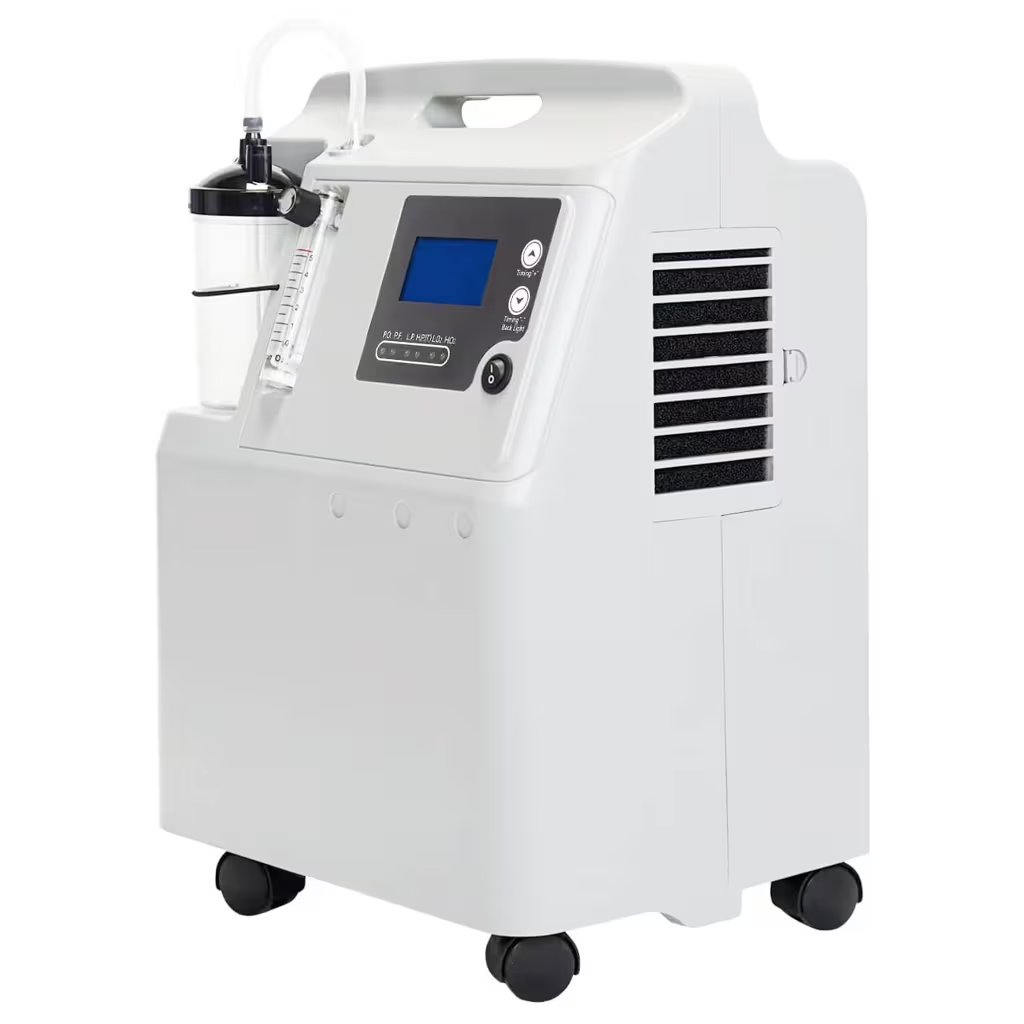
Ideal For: Oxygen concentrators and specialized industrial equipment.
Key Advantage: Custom-engineered to perform flawlessly in extreme cold conditions, guaranteeing reliable power output for specialized, temperature-sensitive applications.
14.8V 4400mAh Ternary Lithium Battery
Ideal For: Medical ventilators and demanding portable devices.
Key Advantage: Built with premium UR18650 cells in a highly compact design (155×75×22mm). Meets rigorous GB/T 18287-2000 standards to ensure uncompromising power stability.
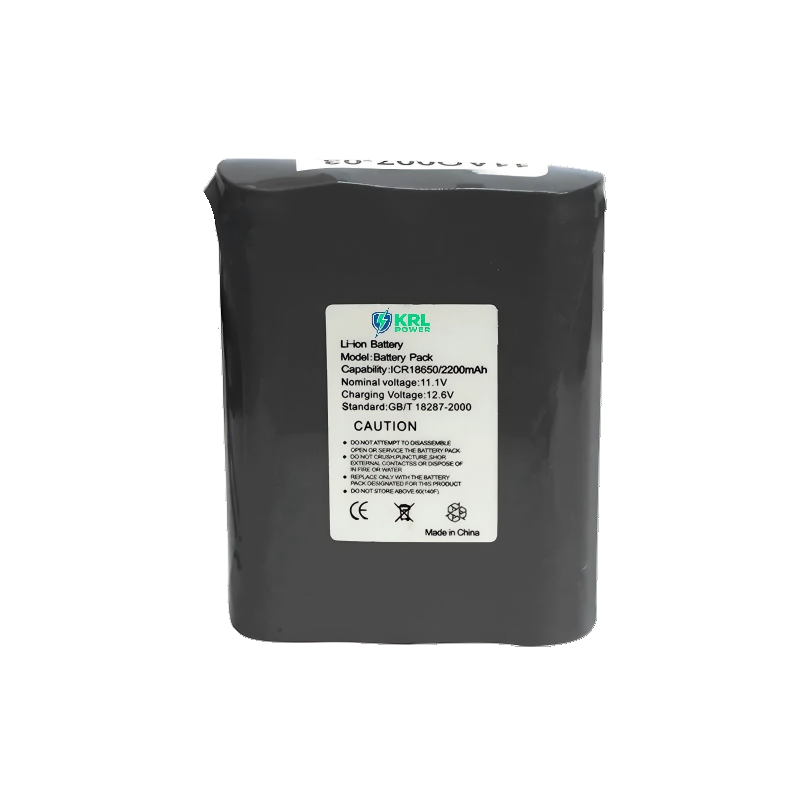
11.1V 2200mAh Compact Lithium Pack
Ideal For: Respirators and handheld electronics.
Key Advantage: Features a dependable 18650-3S1P configuration within an ultra-compact footprint (71×56×19mm), optimizing safe storage and steady energy delivery.
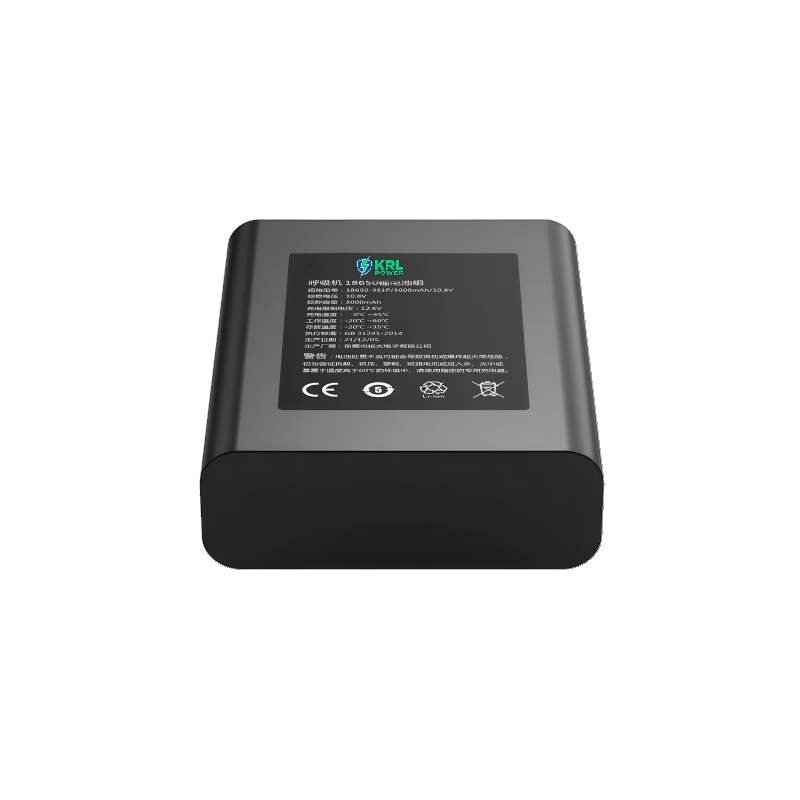
10.8V 3180mAh Smart BMS Battery Pack
Ideal For: Breathing machines and lightweight automation tools.
Key Advantage: Powered by high-capacity NCR18650BD cells. Weighing just 160g, it integrates smart Battery Management System (BMS) protection for maximum operational safety.
10.8V 6.4Ah Premium Cell Lithium Battery
Ideal For: Medical ventilators and industrial-grade hardware.
Key Advantage: Housed in a durable, industrial-grade casing with seamless SMBus communication. Leverages high-safety Samsung 18650 cells for exceptional cycle life and durability.
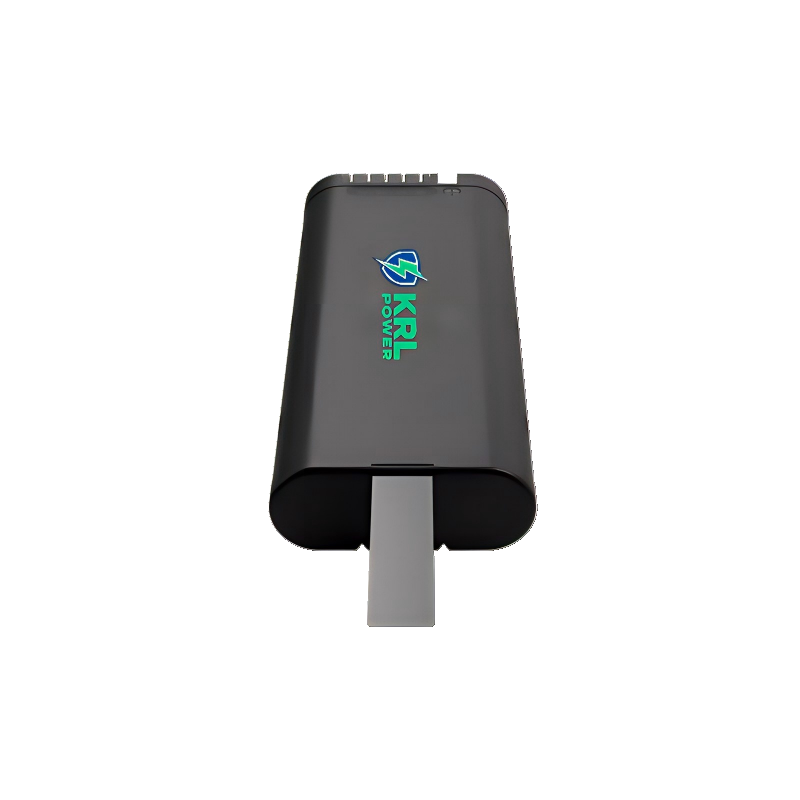
14.4V 6.7Ah Advanced Communication Lithium Pack
Ideal For: Handheld medical devices and automated breathing machines.
Key Advantage: Equipped with robust 18650 cells, integrated SMBUS communication, and advanced BMS protection to ensure extended longevity and precise power management.
Why Choose KRL Delivery Robot Batteries?
Power your autonomous logistics with energy solutions built for the real world. KRL delivery robot batteries maximize your operational uptime and significantly improve your ROI.
Uncompromising Safety & Durability
Fully certified to IEC/UL standards with advanced IP-rated, outdoor-ready casing. Built-in multiple protections safeguard against overcharge, short circuits, and extreme temperature fluctuations.
8–20 Hours Extended Runtime
High-energy-density chemistry supports continuous, multi-shift delivery operations, easily adapting to heavy payloads and complex routing requirements.
High-Torque Power Output
Delivers stable, high-rate discharge to ensure smooth acceleration, reliable hill-climbing ability, and consistent mechanical torque across varying terrains.
Multiple Safety Protections
Protection against overcharge, over-discharge, short circuit, overcurrent, and temperature fluctuations ensures long-term reliability.
Intelligent Fleet Management
Our Smart Battery Management System (BMS) features CAN/RS485 communication, providing real-time SOC/SOH monitoring and fault diagnostics for massive fleet coordination.
Fast & Hot-Swappable Charging
Eliminate logistics bottlenecks. KRL supports ultra-fast 1–2 hour charge times and hot-swappable modular battery systems, keeping your delivery robots moving 24/7.
The KRL Advantage: Product Comparison
Standard lithium batteries are not built for the unpredictable conditions of outdoor logistics. See why upgrading to KRL’s specialized delivery robot batteries significantly lowers your total cost of ownership and maximizes fleet uptime.
| Core Feature | KRL Delivery Robot Battery | Ibhetri yeLithium esemgangathweni | The KRL ROI Advantage |
|---|---|---|---|
| Isatifikethi Sokhuseleko | IEC/UL + Advanced Smart BMS | Basic circuit protection | Uncompromised industrial-grade safety for public spaces |
| Operational Runtime | 8–20 hours | 4–10 hours | Up to 2x longer operation, ensuring full-day delivery shifts |
| Ubomi beSithuthuthu | 2000+ cycles | Izikrozo ezingama-500 ukuya kwezingama-800 | +150% extended lifespan, drastically reducing replacement costs |
| Ixesha lokutshaja | 1–2 hours fast charging | 3–5 hours | Rapid recovery to keep your autonomous fleets moving 24/7 |
| Fleet Communication | CAN/RS485 + Real-time monitoring | No intelligent communication | Seamlessly supports large-scale robot fleet management systems |
| Durability | IP-rated, outdoor-ready | Low environmental resistance | Engineered for all-weather, real-world delivery scenarios |
INTO ETYHWA NGAMAQABANE ETHU
Join the Delivery Robot Power Revolution
Are You Ready to Upgrade Your Autonomous Fleet?
As a vertically integrated source factory with nearly two decades of manufacturing expertise, KRL subjects every lithium battery pack to rigorous electrical, mechanical, and environmental testing. We guarantee rock-solid power stability for your delivery robots, whether they are navigating complex urban streets, bustling commercial campuses, or harsh outdoor environments.
Leverage our direct-from-factory supply chain and advanced battery engineering. We deliver fully customizable, high-performance power solutions exactly where rugged endurance meets intelligent logistics automation.
Izikhokelo ezifanelekileyo

Night-Shift Factory Blackouts: How to Protect Production Lines and Control Restart Risk
A short factory blackout can trigger a much longer production restart. Learn how to protect PLCs, sequence motors and coordinate ESS plus diesel for night-shift production continuity.

Industrial Battery Storage for Diesel Cost Reduction in African Factories
KRL Power screens a 125 kW / 261 kWh C&I ESS for African factories seeking to reduce diesel runtime. Compare load fit, motor starts, PV limits, generator controls, safety evidence and ROI inputs before RFQ approval.

South Africa Data Center & Telecom Edge ESS: Choosing the Right 125kW/261kWh Liquid-Cooled System for Critical Backup
South African edge data centers and telecom sites face residual voltage events and load-reduction risk. A 125 kW / 261 kWh liquid-cooled pre-integrated ESS provides fast bridging, thermal stability and clear responsibility for critical backup.

Nigeria Commercial EV Charging Stations: Why a 261kWh Pre-Integrated Energy Storage System Makes Business Sense
Nigeria commercial EV charging stations need reliable power under unstable grid conditions. A 125 kW / 261 kWh pre-integrated liquid-cooled ESS with optional hybrid solid-state cells provides peak shaving, solar utilization, backup power and lower operating risk.

South African Commercial and Industrial Energy Storage: Durban Community Microgrid Procurement Framework
South African commercial and industrial energy storage for a Durban community microgrid should be treated as a preliminary engineering and procurement framework until the load profile, indoor site conditions, future grid-export route, and model-specific evidence are verified. This article separates client inputs from KRL Power public vendor information and contractual project evidence.

Nigeria Hotel Backup Battery System: A Procurement Brief for 500 kW Loads and 1 MWh Storage
A Nigerian hotel considering a 500 kW inverter and approximately 1 MWh of battery energy storage needs a verified load study before selecting equipment. This engineering brief explains how to define protected hotel loads, assess HVAC and generator interaction, evaluate solar scope, and prepare the inputs required for a precise technical-commercial proposal.
Autonomous Mobile Robot (AMR) & Delivery Robot Battery FAQ
What is the best battery type for custom delivery robots?
How do KRL solutions reduce the Total Cost of Ownership (TCO) for AMR fleets?
Why partner with a source factory instead of a standard battery integrator?
Why is a Smart Battery Management System (BMS) critical for delivery robot fleets?
How do lithium-ion and lithium-polymer batteries compare for delivery robots?
| Attribute | Lithium-Ion | Lithium-Polymer |
|---|---|---|
| Energy Density | High | Higher |
| Shape Flexibility | Limited | Very flexible |
| Weight | Low | Lower |
| Ubomi beSithuthuthu | Long | Medium–long |
| Cost | Medium | Slightly higher |
| Safety | Good | Good with proper BMS |
Should delivery robots use swappable batteries or fast-charging stations?
How do I choose the right battery for a custom delivery robot project?
2.Estimating runtime requirements
3.Selecting a suitable battery chemistry
4.Determining pack size and allowable weight
5.Adding BMS requirements
6.Evaluating environmental conditions
7.Validating with prototype tests This helps builders select the best battery for performance and safety.
What safety standards apply to high-capacity lithium batteries in robotics?
What makes a battery “smart” in robotics applications?
- Built-in BMS
- Real-time monitoring
- CAN / RS485 communication
- Cycle tracking
- Fault detection and protection These capabilities help the robot manage energy more efficiently and safely.
What does a cost analysis for delivery robot batteries include?
- Battery chemistry used
- Capacity and discharge rate
- BMS complexity
- Expected cycle lifespan
- Charging infrastructure Pricing guides often compare long-term cost per cycle, not just upfront price.
What battery specifications are used in robots like Starship or Amazon Scout?
- Lithium-based packs (Li-ion / LiPo / LiFePO4)
- High energy density cells
- Modular pack designs
- Thermal management systems Compiled product specification sheets help illustrate how commercial delivery robots meet range and safety needs.
Should delivery robots use swappable batteries or fast charging stations?
- Swappable batteries maximize uptime and suit high-frequency delivery fleets
- Fast charging works well for small fleets or predictable operation cycles Companies choose based on operation scale, infrastructure cost, and routing behavior.
What safety standards apply to high-capacity lithium batteries in robots?
- UN38.3 transport testing
- UL 2580 / UL 2271 for light electric vehicles
- IEC 62133 for lithium rechargeable cells
- CE and RoHS compliance Safety-related FAQs often address thermal management, certification limits, and risk prevention.
How should a delivery robot fleet maintain its batteries?
- Regular cycle-life checks
- Temperature monitoring
- Proper storage protocols
- Balancing charge levels during low use Video tutorials and maintenance transcripts help operators extend battery lifespan in commercial fleets.