How KRL Power Hybrid Solid-State Batteries Solve the Biggest Safety and Lifespan Problems in Energy Storage Systems
Why Safety Has Become the Biggest Problem in Modern Energy Storage Systems
For many energy storage project owners, EPC companies, and industrial users, the real concern is no longer only energy density or cost.
The real concern is this:
That is why we focused our research on hybrid solid-state battery technology.
The Core Problem of Traditional Lithium Batteries: Thermal Runaway
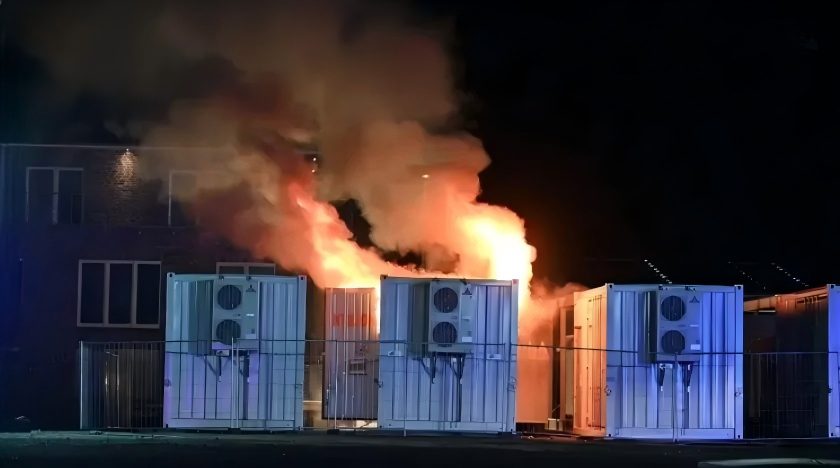
When internal temperature rises beyond critical limits:
- The SEI layer begins decomposing
- Flammable gases are generated
- The separator shrinks or melts
- Internal short circuits occur
- Electrolyte combustion accelerates
- The battery enters uncontrollable thermal runaway
This means that once ignition begins, the battery can rapidly release heat, oxygen, and combustible gases simultaneously.
This is why conventional liquid lithium batteries face several structural limitations:
- High fire and explosion risk
- Dendrite penetration leading to short circuits
- Reduced safety at higher energy density
- Faster aging under high-load operation
- Difficult balance between safety and performance
- Insurance approval
- Installation permits
- Fire safety compliance
- System lifespan
- Maintenance costs
- Long-term investment returns
Why Full Solid-State Batteries Are Not Yet Ready for Large-Scale ESS Deployment
However, in practical industrial deployment, pure solid-state batteries still face major challenges:
Polymer Electrolytes
- Easier manufacturing
- Poor low-temperature performance
- Require elevated operating temperatures
Sulfide Electrolytes
- Extremely high ionic conductivity
- Sensitive to moisture and air exposure
- High manufacturing cost
Oxide Electrolytes
- Excellent thermal stability
- Brittle ceramic structures
- Difficult interface contact
Thin Film Electrolytes
- Excellent cycle performance
- Limited to micro-scale devices
- Safety
- Scalability
- Cost
- Energy density
- Manufacturability
- Long-term stability
KRL Power’s Solution: Hybrid Solid-State Battery Technology
Instead of completely eliminating liquid electrolytes, we transformed the majority of the electrolyte system into a stable solid-state structure while retaining minimal liquid-phase ion transport assistance.
This approach allows us to achieve:
- Near-solid-state safety performance
- Higher energy density
- Lower thermal runaway risk
- Better interface stability
- Existing production line compatibility
- Lower manufacturing cost
- Faster commercial scalability
The Six Core Technologies Behind KRL Power Hybrid Solid-State Batteries
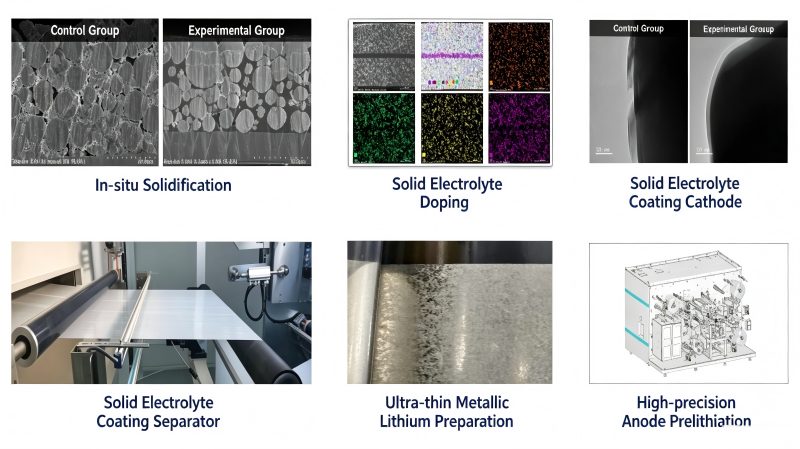
1. In-Situ Solidification Technology
KRL Power’s in-situ solidification technology solves this by allowing electrolyte precursor materials to penetrate electrode structures before solidifying internally.
This creates:
- Continuous ion transport channels
- Reduced internal resistance
- Improved electrode interface contact
- Elimination of free flammable electrolyte
- Significant thermal runaway reduction
- Non-flammable battery behavior
- Better fast charging capability
- Compatibility with existing lithium battery manufacturing lines
2. Solid Electrolyte Composite Mixing Technology
Uniform electrolyte distribution is essential for high-performance ESS batteries.
KRL Power incorporates nano-scale solid electrolyte materials directly into electrode fabrication.
This creates a three-dimensional ion conduction network throughout the battery.
Advantages include:
- Improved high-current performance
- Reduced interface side reactions
- Enhanced cycle consistency
- Longer battery lifespan
For commercial ESS projects, this directly translates into lower degradation rates and reduced replacement costs.
3. Solid Electrolyte Cathode Coating Technology
High-voltage cathode materials often release reactive oxygen species that degrade battery stability.
KRL Power applies ultra-thin solid electrolyte protective coatings onto cathode particles to prevent unwanted reactions.
This improves:
- High-voltage stability
- Thermal resistance
- Long-term cycling performance
- Energy density
The result is a battery system capable of operating safely under demanding industrial conditions.
4. Ceramic-Coated Separator Technology
In conventional lithium batteries, separators begin shrinking under high temperatures.
This can directly trigger internal short circuits.
KRL Power’s ceramic-coated separator technology significantly improves separator thermal stability beyond 200°C.
Benefits include:
- Improved fire resistance
- Dendrite suppression
- Enhanced thermal stability
- Additional short-circuit protection
For utility-scale ESS installations, this extra safety layer is critical.
5. Ultra-Thin Lithium Metal Technology
Lithium metal anodes represent one of the highest energy-density pathways for next-generation batteries.
However, lithium metal instability has historically prevented commercial adoption.
KRL Power developed ultra-thin lithium metal preparation technology to stabilize lithium metal interfaces while reducing dendrite formation.
Advantages include:
- Over 30% higher energy density
- Improved fast charging
- Better low-temperature performance
- Enhanced battery efficiency
This technology is especially important for:
- Grid-scale storage
- Electric vehicles
- eVTOL systems
- High-power industrial ESS
6. High-Precision Pre-Lithiation Technology
One major cause of lithium battery capacity loss occurs during initial SEI formation.
KRL Power’s precision pre-lithiation technology compensates for this lithium loss before battery deployment.
This provides:
- Higher initial capacity
- Longer cycle life
- Lower long-term degradation
- Improved battery consistency
For customers, this means better lifecycle economics and more predictable ESS performance.
Why Hybrid Solid-State Batteries Are the Most Practical ESS Solution Today
From a commercial deployment perspective, battery technology must satisfy more than laboratory performance.
It must also achieve:
- Scalable production
- Stable supply chain compatibility
- Cost competitiveness
- Installation safety compliance
- Long-term operational reliability
Pure solid-state batteries still struggle with manufacturing complexity and industrial scalability.
KRL Power’s hybrid solid-state approach provides the best balance between:
- Safety
- Cost
- Manufacturability
- Energy density
- Lifecycle performance
This is why hybrid solid-state batteries are becoming one of the most promising pathways for next-generation energy storage systems.
Real-World Applications of KRL Power Hybrid Solid-State Batteries
- Factory backup power
- Peak shaving systems
- Microgrid storage
- Solar + storage integration
Utility-Scale Grid Storage
- Renewable energy stabilization
- Frequency regulation
- Grid balancing
Electric Mobility
- EV battery systems
- eVTOL aircraft
- Drone power systems
High-Safety Applications
- Hospitals
- Data centers
- Telecom infrastructure
- Underground facilities
It is mission-critical.
Intellectual Property and Technical Validation
KRL Power has established strong technological barriers through:
- 84 authorized invention patents
- 86 SCI/EI technical publications
- 9 industry standards participation
- Multiple third-party validation reports
These achievements demonstrate not only innovation capability, but also long-term engineering reliability.
Final Thoughts from KRL Power’s R&D Director
After two decades in the energy storage industry, one reality has become increasingly clear:
The future of energy storage is not simply about storing more energy.
It is about storing energy more safely, more reliably, and more sustainably.
At KRL Power, we believe hybrid solid-state battery technology represents the most commercially realistic path toward safer next-generation ESS deployment.
By combining:
- In-situ solidification
- Composite solid electrolytes
- Protective coating systems
- Ceramic thermal barriers
- Lithium metal innovation
- Precision pre-lithiation
we have created a battery architecture that directly addresses the fundamental weaknesses of traditional liquid lithium batteries.
For energy storage investors, EPC companies, industrial users, and renewable energy developers, choosing safer battery technology is no longer a future consideration.
It is becoming a critical business decision today.
Frequently Asked Questions About Hybrid Solid-State Batteries
Q1. What is the difference between a solid-state battery and a traditional lithium-ion battery?
Traditional lithium-ion batteries use flammable liquid electrolytes, while solid-state batteries replace most or all of the liquid electrolyte with solid electrolyte materials.
This significantly improves:
- Thermal stability
- Fire resistance
- Energy density
- Battery lifespan
- Safety under high-temperature conditions
KRL Power’s hybrid solid-state battery combines the safety advantages of solid-state technology with the manufacturing scalability of liquid lithium battery systems.
Q2. Are solid-state batteries safer for commercial energy storage systems?
Yes.
One of the biggest risks in conventional ESS systems is thermal runaway caused by flammable liquid electrolytes.
KRL Power hybrid solid-state batteries greatly reduce this risk through:
- In-situ solidification technology
- Ceramic-coated separators
- Solid electrolyte protective structures
- Dendrite suppression design
These technologies help prevent battery fires, explosions, and internal short circuits.
Q3. Why are hybrid solid-state batteries more practical than fully solid-state batteries?
Fully solid-state batteries still face major manufacturing challenges, including:
- High production cost
- Brittle solid electrolyte interfaces
- Difficult large-scale production
- Complex material processing
Hybrid solid-state batteries provide a more balanced solution by combining:
- High safety
- Existing production line compatibility
- Beter skaalbaarheid
- Lower cost
- Stable commercial deployment capability
This makes them more suitable for current industrial ESS applications.
Q4. Can hybrid solid-state batteries improve ESS lifespan?
Yes.
KRL Power’s battery architecture reduces interface side reactions and lithium loss, which are two major causes of battery degradation.
Technologies such as:
- Solid electrolyte coating
- Precision pre-lithiation
- Composite electrolyte mixing
help extend cycle life significantly compared with conventional lithium batteries.
This is especially important for long-duration commercial and grid-side energy storage projects.
Q5. Do solid-state batteries completely eliminate thermal runaway?
No battery technology can claim absolute zero risk.
However, hybrid solid-state batteries dramatically reduce the probability and severity of thermal runaway events because they contain far less flammable liquid electrolyte.
KRL Power’s hybrid battery systems are designed to:
- Resist ignition
- Prevent separator collapse
- Suppress dendrite penetration
- Improve thermal stability above 200°C
This substantially improves ESS safety performance.
Q6. What applications are best suited for hybrid solid-state batteries?
Hybrid solid-state batteries are ideal for applications requiring high safety and long lifecycle performance, including:
- Commercial & industrial ESS
- Grid-scale energy storage
- Renewable energy integration
- EV charging infrastructure
- Data centers
- Hospitals
- Telecom backup power
- eVTOL and drone systems
Q7. Can KRL Power hybrid solid-state batteries work with solar energy systems?
Yes.
KRL Power hybrid solid-state batteries are highly suitable for:
- Solar + storage systems
- Off-grid microgrids
- Peak shaving applications
- Backup power systems
- Renewable energy stabilization
Their enhanced thermal safety and long cycle life make them particularly valuable for high-temperature environments and demanding industrial applications.
Q8. Why is thermal runaway prevention becoming critical in modern ESS projects?
As ESS systems become larger and more energy-dense, the consequences of battery failure increase significantly.
Many countries and insurance providers are tightening regulations related to:
- ESS fire safety
- Battery thermal management
- Installation compliance
- Insurance approval
- Grid-side safety standards
Battery safety is now a core investment consideration for EPC companies and project developers.