Comment les batteries hybrides à semi-conducteurs de KRL Power résolvent les principaux problèmes de sécurité et de durée de vie des systèmes de stockage d'énergie
Pourquoi la sécurité est devenue le principal problème des systèmes modernes de stockage d'énergie
Pour de nombreux maîtres d'ouvrage de projets de stockage d'énergie, entreprises EPC et utilisateurs industriels, la véritable préoccupation ne se limite plus uniquement à la densité énergétique ou au coût.
La véritable préoccupation est la suivante :
C'est pourquoi nous avons axé nos recherches sur la technologie des batteries hybrides à l'état solide.
Le problème fondamental des batteries au lithium traditionnelles : l'emballement thermique
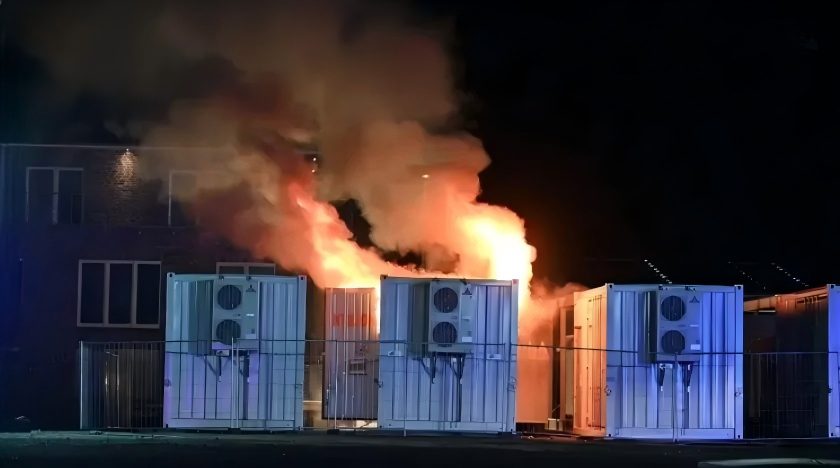
Lorsque la température interne dépasse les limites critiques :
- La couche SEI commence à se décomposer
- Des gaz inflammables sont générés
- Le séparateur se rétrécit ou fond
- Des courts-circuits internes se produisent
- La combustion des électrolytes s'accélère
- La batterie entre dans un état d'emballement thermique incontrôlable
Cela signifie qu’une fois que l’inflammation se déclenche, la batterie peut rapidement dégager simultanément de la chaleur, de l’oxygène et des gaz inflammables.
C'est pourquoi les batteries au lithium liquides classiques se heurtent à plusieurs contraintes structurelles :
- Risque élevé d'incendie et d'explosion
- Pénétration des dendrites entraînant des courts-circuits
- Sécurité réduite en cas de densité énergétique plus élevée
- Vieillissement accéléré en cas de fonctionnement sous forte charge
- Un équilibre difficile à trouver entre sécurité et performance
- Agrément d'assurance
- Permis d'installation
- Conformité aux normes de sécurité incendie
- Durée de vie du système
- Frais d'entretien
- Rendements des investissements à long terme
Pourquoi les batteries entièrement à semi-conducteurs ne sont pas encore prêtes pour un déploiement à grande échelle dans les systèmes de stockage d'énergie (ESS)
Toutefois, dans le cadre d'une mise en œuvre industrielle concrète, les batteries entièrement à semi-conducteurs se heurtent encore à des défis majeurs :
Électrolytes polymères
- Une fabrication plus simple
- Faibles performances à basse température
- Nécessitent des températures de fonctionnement élevées
Électrolytes à base de sulfure
- Conductivité ionique extrêmement élevée
- Sensible à l'humidité et à l'exposition à l'air
- Coût de fabrication élevé
Électrolytes à base d'oxyde
- Excellente stabilité thermique
- Structures céramiques fragiles
- Problème de contact au niveau de l'interface
Électrolytes en couche mince
- Excellentes performances cycliques
- Réservé aux dispositifs à micro-échelle
- Sécurité
- Évolutivité
- Coût
- Densité énergétique
- Fabricabilité
- Stabilité à long terme
KRL Power’s Solution: Hybrid Solid-State Battery Technology
Au lieu d'éliminer complètement les électrolytes liquides, nous avons transformé la majeure partie du système électrolytique en une structure solide stable, tout en conservant un soutien minimal au transport ionique par la phase liquide.
Cette approche nous permet d'atteindre :
- Performances de sécurité en régime quasi-stationnaire
- Une densité énergétique plus élevée
- Risque réduit d'emballement thermique
- Une meilleure stabilité de l'interface
- Compatibilité avec les lignes de production existantes
- Coût de fabrication réduit
- Une évolutivité commerciale plus rapide
Les six technologies clés à l'origine des batteries hybrides à semi-conducteurs de KRL Power
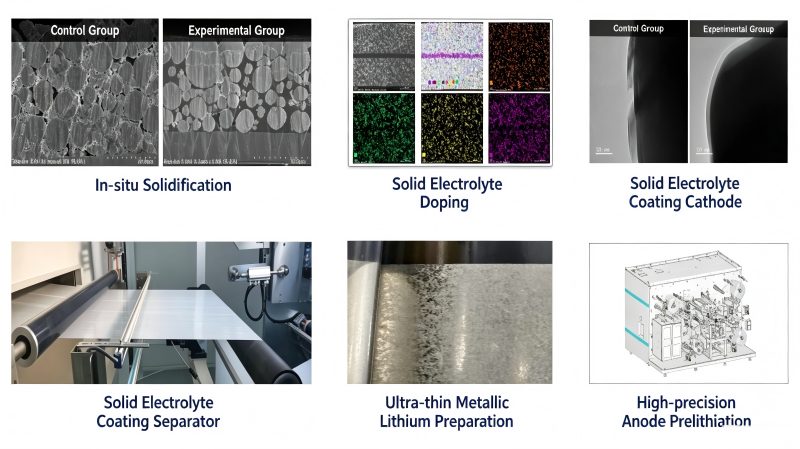
1. Technologie de solidification in situ
KRL Power’s in-situ solidification technology solves this by allowing electrolyte precursor materials to penetrate electrode structures before solidifying internally.
Cela donne :
- Canaux de transport ionique en continu
- Résistance interne réduite
- Amélioration du contact au niveau de l'interface de l'électrode
- Élimination de l'électrolyte inflammable libre
- Réduction significative de l'emballement thermique
- Comportement des batteries ininflammables
- Meilleure capacité de recharge rapide
- Compatibilité avec les lignes de production existantes de batteries au lithium
2. Technologie de mélange des composites d'électrolytes solides
Une répartition homogène de l'électrolyte est essentielle pour les batteries ESS haute performance.
KRL Power intègre directement des matériaux électrolytiques solides à l'échelle nanométrique dans la fabrication des électrodes.
Cela crée un réseau tridimensionnel de conduction ionique à travers toute la batterie.
Parmi les avantages, on peut citer :
- Performances améliorées à courant élevé
- Réduction des réactions secondaires à l'interface
- Amélioration de la cohérence des cycles
- Une durée de vie plus longue de la batterie
Pour les projets commerciaux d'ESS, cela se traduit directement par des taux de dégradation plus faibles et une réduction des coûts de remplacement.
3. Technologie de revêtement de cathode à électrolyte solide
Les matériaux de cathode à haute tension libèrent souvent des espèces réactives de l'oxygène qui nuisent à la stabilité de la batterie.
KRL Power applique des revêtements protecteurs à électrolyte solide ultra-fins sur les particules de cathode afin d'empêcher toute réaction indésirable.
Cela permet d'améliorer :
- Stabilité haute tension
- Résistance thermique
- Performances cyclistes à long terme
- Densité énergétique
On obtient ainsi un système de batteries capable de fonctionner en toute sécurité dans des conditions industrielles difficiles.
4. Technologie de séparateurs à revêtement céramique
Dans les batteries au lithium classiques, les séparateurs commencent à se rétrécir sous l'effet des températures élevées.
Cela peut provoquer directement des courts-circuits internes.
KRL Power’s ceramic-coated separator technology significantly improves separator thermal stability beyond 200°C.
Les avantages comprennent :
- Résistance au feu améliorée
- Suppression des dendrites
- Stabilité thermique améliorée
- Protection supplémentaire contre les courts-circuits
Pour les installations de systèmes de stockage d'énergie (ESS) à grande échelle, ce niveau de sécurité supplémentaire est essentiel.
5. Technologie au lithium-métal ultra-fine
Les anodes en lithium métallique constituent l'une des solutions offrant la plus grande densité énergétique pour les batteries de nouvelle génération.
Cependant, l'instabilité du lithium métallique a toujours empêché son adoption à l'échelle commerciale.
KRL Power a mis au point une technologie de préparation du lithium métallique ultra-fin permettant de stabiliser les interfaces du lithium métallique tout en réduisant la formation de dendrites.
Parmi les avantages, on peut citer :
- Une densité énergétique supérieure de plus de 30%
- Recharge rapide améliorée
- Meilleures performances à basse température
- Amélioration du rendement de la batterie
Cette technologie revêt une importance particulière pour :
- Stockage à l'échelle du réseau
- Véhicules électriques
- systèmes eVTOL
- Systèmes de stockage d'énergie (ESS) industriels à haute puissance
6. Technologie de pré-lithiation de haute précision
L'une des principales causes de la perte de capacité des batteries au lithium survient lors de la formation initiale de la couche SEI.
KRL Power’s precision pre-lithiation technology compensates for this lithium loss before battery deployment.
Cela prévoit :
- Capacité initiale plus élevée
- Durée de vie plus longue
- Dégradation à long terme moindre
- Amélioration de la régularité des performances des batteries
Pour les clients, cela se traduit par une meilleure rentabilité sur l'ensemble du cycle de vie et des performances plus prévisibles des systèmes de stockage d'énergie (ESS).
Pourquoi les batteries hybrides à semi-conducteurs constituent aujourd'hui la solution la plus pratique pour les systèmes de stockage d'énergie (ESS)
Du point de vue de la mise en œuvre commerciale, la technologie des batteries doit aller au-delà des performances observées en laboratoire.
Il doit également :
- Production évolutive
- Compatibilité avec une chaîne d'approvisionnement stable
- Compétitivité en termes de coûts
- Conformité aux normes de sécurité relatives à l'installation
- Fiabilité opérationnelle à long terme
Les batteries tout à l'état solide sont encore confrontées à des difficultés liées à la complexité de leur fabrication et à leur adaptabilité à l'échelle industrielle.
KRL Power’s hybrid solid-state approach provides the best balance between:
- Sécurité
- Coût
- Fabricabilité
- Densité énergétique
- Performances tout au long du cycle de vie
C'est pourquoi les batteries hybrides à semi-conducteurs s'imposent comme l'une des voies les plus prometteuses pour les systèmes de stockage d'énergie de nouvelle génération.
Applications concrètes des batteries hybrides à semi-conducteurs KRL Power
- Alimentation de secours d'usine
- Systèmes de lissage des pics de consommation
- Stockage dans les micro-réseaux
- Intégration de l'énergie solaire et du stockage
Stockage sur réseau à grande échelle
- Stabilisation des énergies renouvelables
- Régulation de fréquence
- Équilibrage du réseau
Mobilité électrique
- Systèmes de batteries pour véhicules électriques
- aéronefs eVTOL
- Systèmes d'alimentation des drones
Applications à haut niveau de sécurité
- Hôpitaux
- Centres de données
- Infrastructure de télécommunications
- Installations souterraines
C'est d'une importance cruciale.
Propriété intellectuelle et validation technique
KRL Power a mis en place de solides barrières technologiques grâce à :
- 84 brevets d'invention délivrés
- 86 publications techniques SCI/EI
- Participation à 9 normes industrielles
- Plusieurs rapports de validation réalisés par des organismes tiers
Ces réalisations témoignent non seulement d'une capacité d'innovation, mais aussi d'une fiabilité technique à long terme.
Final Thoughts from KRL Power’s R&D Director
Après deux décennies passées dans le secteur du stockage d'énergie, une réalité est apparue de plus en plus clairement :
L'avenir du stockage d'énergie ne se résume pas simplement à stocker davantage d'énergie.
Il s'agit de stocker l'énergie de manière plus sûre, plus fiable et plus durable.
Chez KRL Power, nous sommes convaincus que la technologie des batteries hybrides à semi-conducteurs constitue la voie la plus réaliste sur le plan commercial pour un déploiement plus sûr des systèmes de stockage d'énergie (ESS) de nouvelle génération.
En combinant :
- Solidification in situ
- Électrolytes solides composites
- Systèmes de revêtements protecteurs
- Barrières thermiques en céramique
- Innovation dans le domaine du lithium métallique
- Pré-lithiation de précision
Nous avons mis au point une architecture de batterie qui remédie directement aux faiblesses fondamentales des batteries au lithium liquides traditionnelles.
Pour les investisseurs dans le secteur du stockage d'énergie, les entreprises EPC, les utilisateurs industriels et les développeurs d'énergies renouvelables, le choix d'une technologie de batterie plus sûre n'est plus une question d'avenir.
C'est aujourd'hui devenu un choix stratégique crucial pour les entreprises.
Foire aux questions sur les batteries hybrides à semi-conducteurs
Q1. Quelle est la différence entre une batterie à semi-conducteurs et une batterie lithium-ion classique ?
Les batteries lithium-ion traditionnelles utilisent des électrolytes liquides inflammables, tandis que les batteries à électrolyte solide remplacent la majeure partie, voire la totalité, de l'électrolyte liquide par des matériaux électrolytiques solides.
Cela améliore considérablement :
- Stabilité thermique
- Résistance au feu
- Densité énergétique
- Durée de vie de la batterie
- Sécurité dans des conditions de haute température
KRL Power’s hybrid solid-state battery combines the safety advantages of solid-state technology with the manufacturing scalability of liquid lithium battery systems.
Q2. Les batteries à état solide sont-elles plus sûres pour les systèmes commerciaux de stockage d'énergie ?
Oui.
L'un des principaux risques liés aux systèmes ESS classiques est l'emballement thermique provoqué par les électrolytes liquides inflammables.
Les batteries hybrides à semi-conducteurs de KRL Power réduisent considérablement ce risque grâce à :
- Technologie de solidification in situ
- Séparateurs à revêtement céramique
- Structures de protection pour électrolytes solides
- Conception visant à limiter la formation de dendrites
Ces technologies permettent de prévenir les incendies, les explosions et les courts-circuits internes des batteries.
Q3. Pourquoi les batteries hybrides à état solide sont-elles plus pratiques que les batteries entièrement à état solide ?
Les batteries entièrement à l'état solide se heurtent encore à d'importants défis de fabrication, notamment :
- Coût de production élevé
- Interfaces d'électrolytes solides fragiles
- Une production à grande échelle difficile
- Traitement de matériaux complexes
Les batteries hybrides à état solide offrent une solution plus équilibrée en combinant :
- Sécurité élevée
- Compatibilité avec les lignes de production existantes
- Une meilleure évolutivité
- Coût réduit
- Capacité de déploiement commercial stable
Cela les rend plus adaptés aux applications industrielles actuelles dans le domaine des systèmes de stockage d'énergie (ESS).
Q4. Les batteries hybrides à semi-conducteurs peuvent-elles prolonger la durée de vie des systèmes de stockage d'énergie (ESS) ?
Oui.
KRL Power’s battery architecture reduces interface side reactions and lithium loss, which are two major causes of battery degradation.
Des technologies telles que :
- Revêtement à électrolyte solide
- Pré-lithiation de précision
- Mélange d'électrolytes composites
contribuent à prolonger considérablement la durée de vie par rapport aux batteries au lithium classiques.
Cela revêt une importance particulière pour les projets de stockage d'énergie à long terme destinés au secteur commercial et au réseau électrique.
Q5. Les batteries à état solide permettent-elles d'éliminer complètement l'emballement thermique ?
Aucune technologie de batterie ne peut prétendre présenter un risque nul.
Cependant, les batteries hybrides à semi-conducteurs réduisent considérablement la probabilité et la gravité des phénomènes d'emballement thermique, car elles contiennent beaucoup moins d'électrolyte liquide inflammable.
KRL Power’s hybrid battery systems are designed to:
- Résistance à l'inflammation
- Empêcher l'effondrement du séparateur
- Empêcher la pénétration des dendrites
- Improve thermal stability above 200°C
Cela améliore considérablement les performances de l'ESS en matière de sécurité.
Q6. Quelles sont les applications les mieux adaptées aux batteries hybrides à semi-conducteurs ?
Les batteries hybrides à électrolyte solide sont idéales pour les applications exigeant un haut niveau de sécurité et une longue durée de vie, notamment :
- Systèmes de stockage d'énergie (ESS) à usage commercial et industriel
- Stockage d'énergie à l'échelle du réseau
- Intégration des énergies renouvelables
- Infrastructure de recharge pour véhicules électriques
- Centres de données
- Hôpitaux
- Alimentation de secours pour les télécommunications
- Systèmes eVTOL et drones
Q7. Les batteries hybrides à semi-conducteurs de KRL Power sont-elles compatibles avec les systèmes d'énergie solaire ?
Oui.
Les batteries hybrides à semi-conducteurs KRL Power sont particulièrement adaptées aux applications suivantes :
- Systèmes solaires + stockage
- Micro-réseaux hors réseau
- Applications de lissage des pics de consommation
- Systèmes d'alimentation de secours
- Stabilisation des énergies renouvelables
Leur sécurité thermique renforcée et leur longue durée de vie en cycles les rendent particulièrement adaptés aux environnements à haute température et aux applications industrielles exigeantes.
Q8. Pourquoi la prévention de l'emballement thermique revêt-elle une importance cruciale dans les projets modernes de systèmes de stockage d'énergie (ESS) ?
À mesure que les systèmes ESS gagnent en taille et en densité énergétique, les conséquences d'une défaillance des batteries s'aggravent considérablement.
De nombreux pays et assureurs renforcent actuellement la réglementation relative à :
- Sécurité incendie ESS
- Gestion thermique de la batterie
- Conformité de l'installation
- Agrément d'assurance
- Normes de sécurité côté réseau
La sécurité des batteries constitue désormais un critère d'investissement essentiel pour les entreprises EPC et les promoteurs de projets.