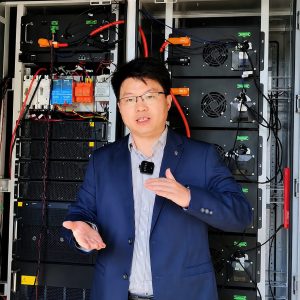
On October 16, 2026, an EPC delegation from Bangladesh visited the KRL Power factory to inspect its energy storage product range. Mr. Tang accompanied the visitors during the factory visit. The visitors toured the products presented at the facility and witnessed a live static transfer switch (STS) test that recorded a 1 ms transfer. The EPC team expressed satisfaction with the test and factory visit.
For an engineering, procurement and construction contractor, a specification sheet is a starting point. A factory visit puts the equipment, the people behind it and a live demonstration in the same room. KRL Power welcomed the delegation for precisely that kind of direct review of its manufacturing and engineering operation and energy storage product portfolio.
The Bangladesh EPC Delegation Reviewed the Product Range in Person
The visitors did not limit the trip to a single demonstration unit. They walked through the products presented at the factory, gaining a direct view of the range KRL Power offers to international energy storage buyers. The on-site photographs record the outdoor equipment inspection area and the visit itself.

KRL Power's wider product portfolio covers battery products and integrated energy storage systems serving different electrical duties. Its published commercial and industrial range includes the B261L 125 kW / 261 kWh liquid-cooled cabinet and the B522L 250 kW / 522 kWh system, alongside the B2M6L containerized platform for larger projects.
Those product pages provide useful background on KRL's available equipment. The factory visit itself was a review of the range shown to the delegation; it should not be mistaken for a separate performance test of every model.
Face-to-Face Technical Exchange During the Visit
The Bangladesh EPC visitors and KRL Power representatives also met to review technical information directly. The meeting provided an opportunity for questions about the equipment on display and the requirements behind a potential EPC application. The photographs document the discussion, without implying that a contract or purchase commitment was reached.

The value of that exchange lies in connecting a buyer’s specification with physical equipment and engineering explanations. Product selection and project acceptance remain separate decisions.
The Moment That Mattered: A Live 1 ms STS Transfer Test
The technical highlight came during the on-site STS demonstration. A source-transfer test was conducted in the presence of the visiting EPC team. According to the on-site test account, the measured switching interval was 1 millisecond. The test photograph shows the delegation observing the electrical demonstration and a waveform display; the photograph alone does not establish the measurement method or a universal switching specification.

That result gave the visitors something a product brochure cannot provide on its own: a switching event they could witness during the inspection. The delegation expressed satisfaction with the demonstration.
An STS is used to transfer a designated load between electrical sources in an appropriately engineered power system. Transfer time matters because sensitive controls and connected equipment can respond badly to a supply interruption. The actual project result also depends on the connected load, voltage behavior, protection and the rest of the electrical architecture.
The 1 ms result belongs to the STS demonstration conducted during this visit. It is not a blanket 1 ms guarantee for every KRL energy storage model or every operating condition. For comparison, the published B261L and B522L specification sheets list on-grid/off-grid switching below 10 ms. Those model ratings remain distinct from this witnessed STS test.
What an EPC Can Learn From a Factory Visit
Energy storage procurement fails when equipment selection is reduced to a catalogue price and a headline switching figure. A project still has to match the converter, battery, transfer equipment and protection system to the actual loads.
A direct factory visit gives an EPC team the opportunity to examine the supplier's product range, speak with its technical team and watch selected functions demonstrated in person. The October 16 visit combined that product review with a witnessed transfer test.
The next step in any project-specific approval is clear: identify the exact STS equipment, source arrangement, electrical conditions, connected test load and method used to determine the switching interval. Those details should be tied to the EPC's own factory acceptance and site acceptance criteria, particularly where PLCs, motor drives or other sensitive loads must remain energized.
A good factory visit builds confidence. A documented test boundary makes that confidence usable in an EPC contract.
KRL Power's Equipment Range Supports Different Project Scales
A Bangladesh industrial project may need backup for one essential feeder, solar and diesel coordination, or a larger integrated microgrid. Each creates a different power and energy requirement.
KRL's C&I energy storage class-selection guide sets out the distinction between 125 kW, 250 kW and larger containerized equipment. For a separate Bangladesh application example, its textile-factory hybrid microgrid analysis examines battery capacity, protected load and solar–diesel coordination. That article is an engineering example, not a description of this visiting EPC delegation or its projects.
Product selection must still be checked against the buyer's load schedule, fault and transfer conditions, available sources and local acceptance requirements. A live STS demonstration is strong evidence of the particular function observed; it does not replace a complete project engineering review.
A Positive Factory Visit, Backed by a Visible Test
The Bangladesh EPC team expressed satisfaction with the factory inspection and the demonstration on October 16. They had the opportunity to see the KRL Power product range in person and witness the STS changeover that registered 1 ms.
For KRL Power, the message is practical: international EPC buyers should be able to look beyond marketing claims and examine real equipment and specific test results. That level of transparency gives technical discussions a stronger starting point and makes the manufacturing relationship easier to evaluate.
KRL Power welcomes EPC contractors, system integrators and project developers seeking to review energy storage equipment and discuss witnessed testing for their own project requirements.
