Reliable Off-Grid Energy Storage for Botswana Government Water Pumping Infrastructure
Botswana water pumping project energy storage solutions are becoming increasingly important as government infrastructure projects expand across remote desert regions where stable electricity access remains limited.
For large-scale water pumping systems operating in harsh environments such as the Kalahari Desert, reliable energy infrastructure is no longer optional — it is essential.
Kutshanje, Amandla e-KRL received a project inquiry from an EPC contractor involved in a government-supported water pumping project in Botswana. The customer required a highly reliable off-grid industrial energy storage solution capable of supporting continuous pumping operations under extreme desert conditions while integrating efficiently with renewable energy systems.
The project highlighted several key operational challenges commonly faced across Africa’s remote infrastructure sector:
- Unstable or unavailable grid access
- High diesel operating costs
- Harsh environmental conditions
- Long-distance maintenance difficulties
- Continuous motor-driven pumping loads
- The need for long-duration energy storage
For these applications, conventional backup systems are no longer sufficient.
Modern industrial energy storage systems (ESS) are rapidly becoming the preferred solution for utilities, EPC contractors, and government infrastructure developers.
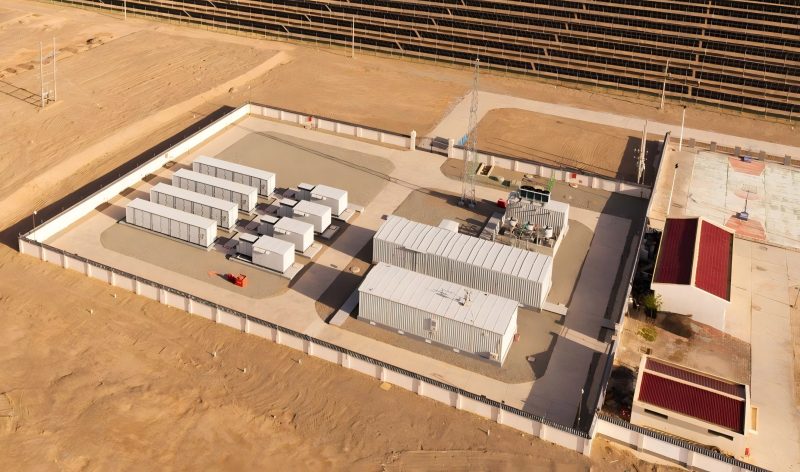
Why Water Pumping Projects Need Advanced Industrial ESS
Water pumping infrastructure is fundamentally different from ordinary commercial electricity usage.
These systems often operate:
These systems often operate:
- In isolated locations
- Under high thermal stress
- With heavy inductive motor loads
- On continuous duty cycles
- With critical reliability requirements
Even short power interruptions can disrupt:
- Municipal water supply
- Agricultural irrigation systems
- Mining operations
- Community infrastructure
- Government utility services
Traditional diesel generator systems alone create multiple long-term operational problems:
- Expensive fuel logistics
- High maintenance frequency
- Noise and environmental pollution
- Fuel price instability
- Poor efficiency under fluctuating loads
As energy costs rise and renewable deployment accelerates across Africa, more infrastructure developers are adopting hybrid solar + battery storage systems to improve long-term operational resilience.
KRL Power’s Recommended Solution for Botswana Desert Infrastructure
Intelligent Containerized Industrial ESS
Based on the customer’s requirements, KRL Power proposed its advanced liquid-cooled commercial & industrial energy storage platform optimized for remote off-grid infrastructure applications.
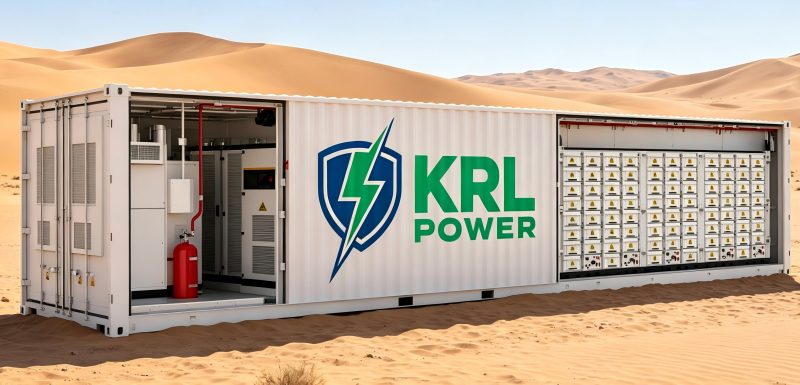
The proposed solution focuses on:
- Long-duration backup power
- Stable motor startup support
- Solar integration capability
- Desert-environment reliability
- Ulawulo olukrelekrele lwamandla
- Flexible future scalability
Ucwangciso lweNkqubo oluCetyiswayo
ESS Model
KRL-B1M-L500H3S-480M-HX1R6
System Specifications
- 500kW PCS
- 1000kWh battery storage capacity
Recommended Applications
- Government water pumping stations
- Utility infrastructure projects
- Solar-diesel hybrid systems
- Agricultural irrigation systems
- Mining utility power systems
- Remote industrial microgrids
Why Liquid Cooling Is Critical in Desert ESS Projects
Extreme heat is one of the biggest threats to battery system performance and lifespan.
In desert environments such as Botswana’s Kalahari region, daytime temperatures can significantly increase thermal stress on battery cells and power electronics.
Conventional air-cooled systems may experience:
In desert environments such as Botswana’s Kalahari region, daytime temperatures can significantly increase thermal stress on battery cells and power electronics.
Conventional air-cooled systems may experience:
- Uneven thermal distribution
- Faster battery degradation
- Reduced discharge stability
- Higher maintenance frequency
- Increased system failure risk
KRL Power’s liquid-cooled ESS architecture addresses these challenges directly.
Key Advantages of Liquid Cooling
Stable Battery Temperature
Improves charging and discharge consistency.
Longer Battery Lifespan
Reduces thermal aging and extends operational durability.
Higher Operational Safety
Maintains controlled internal system temperatures under heavy load conditions.
Better System Efficiency
Enhances energy conversion efficiency during continuous operation.
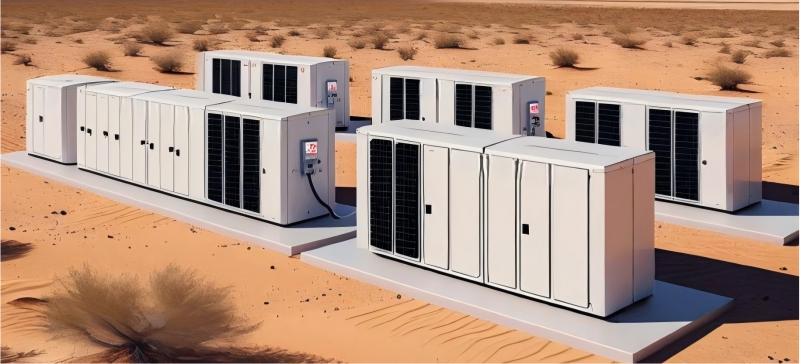
For remote infrastructure projects where maintenance access is limited, thermal reliability directly affects project success.
Safety Engineering for Critical Infrastructure Projects
Infrastructure projects require much higher safety standards than ordinary commercial installations.
KRL Power’s industrial ESS platform integrates multiple layers of protection including:
KRL Power’s industrial ESS platform integrates multiple layers of protection including:
- Iiseli zebhetri yelithiyam ezikumgangatho ophezulu nezihlala ixesha elide
- Intelligent BMS architecture
- Ulawulo lobushushu ngokupholisa ngamanzi
- Iinkqubo zokucima umlilo ezisebenzayo
- Fault isolation mechanisms
- Cloud-based safety diagnostics
This comprehensive safety architecture helps ensure stable operation even in demanding environments.
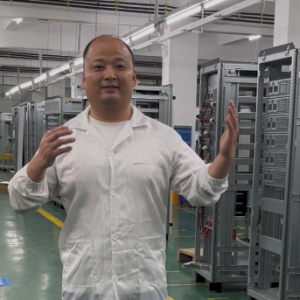
A Message from KRL Power’s R&D Director
“Over the past twenty years working in industrial energy systems and power infrastructure, we have seen one consistent reality:
Remote infrastructure projects cannot rely on ordinary power solutions.
Government water systems require operational resilience, environmental adaptability, intelligent control, and long-term reliability.
At KRL Power, we engineer industrial energy storage systems designed not only to deliver electricity, but to ensure infrastructure continuity under real-world operating conditions.”
— R&D Director, KRL Power
Remote infrastructure projects cannot rely on ordinary power solutions.
Government water systems require operational resilience, environmental adaptability, intelligent control, and long-term reliability.
At KRL Power, we engineer industrial energy storage systems designed not only to deliver electricity, but to ensure infrastructure continuity under real-world operating conditions.”
— R&D Director, KRL Power
Why EPC Contractors and Infrastructure Developers Choose KRL Power
Industrial-Grade Reliability
Designed for harsh operating environments and continuous-duty applications.
Uyilo oludityanisiweyo lwe-All-in-One
Simplifies deployment and reduces installation complexity.
Smart Cost Optimization
Intelligent EMS reduces diesel consumption and improves project economics.
Flexible Modular Expansion
Supports future infrastructure growth.
Advanced Global Manufacturing Capability
KRL Power continues rapidly expanding its international industrial ESS footprint.
Imibuzo Ebuzwa Rhoqo (FAQ)
Q1. Why is battery storage important for water pumping infrastructure?
Battery storage stabilizes power supply, improves renewable utilization, reduces diesel dependence, and ensures continuous pumping operation.
Q2. Can the ESS support fully off-grid operation?
Yes. KRL’s industrial ESS platform supports standalone off-grid and hybrid microgrid deployments.
Q3. Is the system suitable for desert climates?
Yes. The liquid-cooled architecture is specifically designed for high-temperature and harsh-environment applications.
Q4. Can the ESS integrate with solar power systems?
Absolutely. KRL ESS solutions support seamless solar integration for hybrid energy operation.
Q5. How does the system reduce operational costs?
By reducing diesel generator runtime, optimizing solar utilization, and improving energy efficiency.
Q6. Is remote monitoring available?
Yes. Cloud-based monitoring and diagnostics are included for real-time operational management.
Q7. Can the system be expanded later?
Yes. KRL’s modular ESS architecture supports future battery capacity expansion.
Isiphelo
As Africa accelerates infrastructure modernization, reliable energy storage is becoming a foundational requirement for remote utility projects.
For Botswana government water pumping infrastructure, industrial ESS solutions provide:
- Stable long-duration power
- Ulawulo olukrelekrele lwamandla
- Reduced diesel dependence
- Improved infrastructure resilience
- Better long-term operating economics
KRL Power’s advanced liquid-cooled commercial & industrial ESS platform is specifically engineered to meet these demanding operational challenges.
For EPC contractors, utilities, and government infrastructure developers, intelligent energy storage is no longer a future option — it is now essential infrastructure.