 Aller au contenu
South Africa Factory Backup Power Solution: How a 1MW/2MWh ESS Helps Industrial Customers Reduce Electricity Costs and Prevent Production Downtime
Introduction
For energy-intensive industrial users, even a short power interruption can cause severe production losses, equipment shutdowns, delivery delays, and unexpected operational costs.
Recently, KRL Power received an inquiry from a South African industrial customer seeking a reliable backup power and cost optimization solution for a production facility project. The customer required:
- Stable backup power for industrial production
- Long-duration energy support
- Reduced dependence on diesel generators
- Better electricity cost management
- High system reliability under harsh operating conditions
The Real Energy Challenge Facing South African Factories
1. Frequent Load Shedding
2. Rising Electricity Prices
3. Heavy Diesel Generator Dependence
- High fuel costs
- Entretien coûteux
- Pollution sonore
- Émissions de carbone
4. Production Downtime Losses
- Delayed manufacturing schedules
- Product quality risks
- Labor inefficiencies
- Perte de chiffre d'affaires
Why a 1MW/2MWh Industrial ESS Is the Right Solution
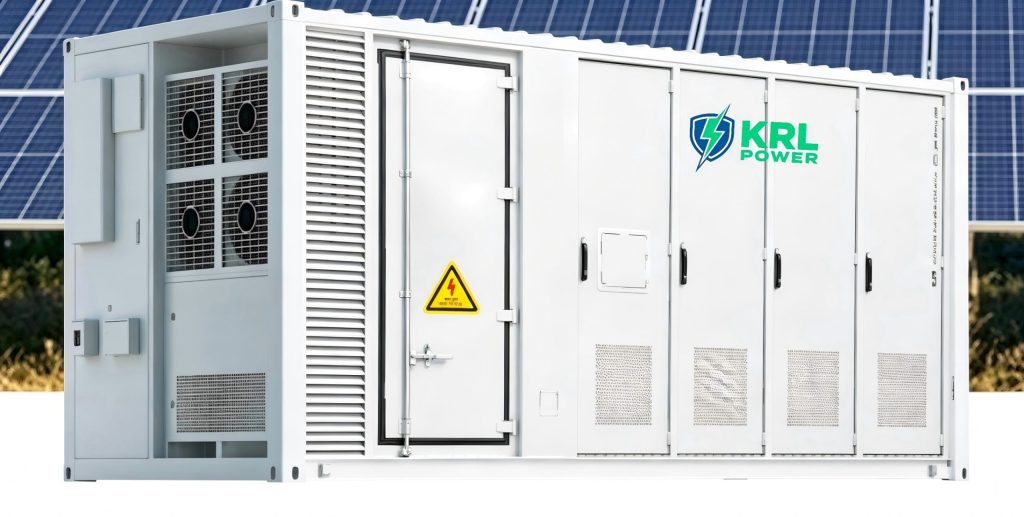
The system is designed to provide:
- Emergency backup power
- Égalisation de la charge (réduction des pics et compensation des creux)
- Energy cost optimization
- Diesel generator replacement support
- Grid stabilization
- Smart energy management
For factories with continuous production lines, the ESS acts as both a protection system and a long-term cost-saving asset.
Recommended KRL Power ESS Configuration
Configuration du système
| Article | Caractéristiques techniques |
|---|---|
| Capacité ESS | 2 MWh |
| PCS Power | 1 MW |
| Type de batterie | Long-life LiFePO4 |
| Méthode de refroidissement | Refroidissement liquide intelligent |
| EMS | AI-Based Smart EMS |
| Protection contre les incendies | Multi-layer Active Fire Suppression |
| Demande | Industrial Manufacturing Facility |
| Durée de la sauvegarde | Up to 6 Hours (30% Load) |
| Grid Support | Oui |
| Parallel Expansion | Supported |
Why Liquid Cooling Matters for Industrial ESS
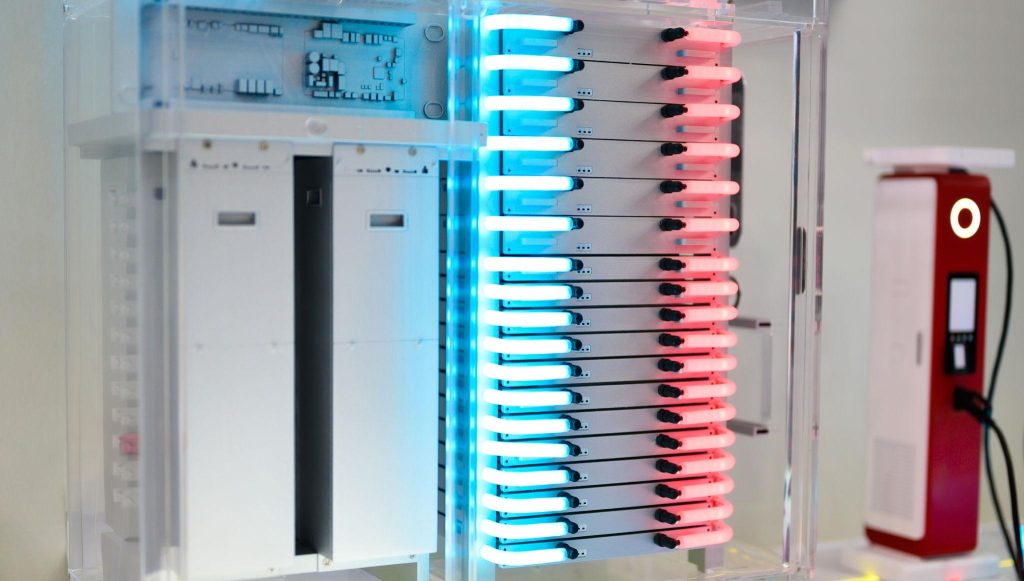
KRL Power’s liquid-cooled ESS architecture offers several critical advantages:
Better Temperature Consistency
Longer Battery Life
Higher Energy Density
Improved Safety
Reduced Maintenance Costs
How South African Factories Benefit from ESS
1. Peak Shaving and Electricity Bill Reduction
Factories usually experience high electricity consumption during daytime peak pricing periods.
KRL Power’s EMS intelligently:
- Charges batteries during low-tariff hours
- Discharges during expensive peak hours
This significantly reduces:
- Demand charges
- Peak electricity costs
- Utility penalties
Many industrial users can reduce electricity expenses by 20%–40% depending on operating schedules.
2. Backup Power During Load Shedding
When grid outages occur:
- The ESS automatically switches to backup mode
- Critical equipment continues operating
- Production interruptions are minimized
Cela est particulièrement important pour :
- Usines de fabrication
- Mining support facilities
- Entrepôts
- Processing factories
- Export production lines
3. Reduced Diesel Generator Usage
Diesel generators are expensive for long-duration operation.
By combining ESS with existing generators:
- Generator runtime is reduced
- Fuel consumption decreases
- Maintenance intervals become longer
- Noise and emissions are minimized
In some scenarios, ESS can even replace diesel generators during short outages.
4. Improved ROI for Industrial Energy Infrastructure
Unlike traditional backup systems that remain idle most of the time, an ESS creates value daily through:
- Arbitrage énergétique
- Gestion de la demande
- Grid optimization
- Backup protection
This allows factories to generate measurable ROI while improving operational resilience.
Why Industrial Customers Choose KRL Power
20 Years of Energy Storage Engineering Experience
KRL Power has rapidly become one of the most dynamic emerging companies in China’s energy storage industry.
L'entreprise se concentre sur :
- Systèmes de stockage d'énergie (ESS) à usage commercial et industriel
- Smart integrated energy systems
- High-safety battery architecture
- Gestion intelligente de l'énergie
KRL Power was recently recognized as a “High-Quality Energy Storage Enterprise 2025.”
Key Technical Advantages
Architecture de sécurité extrême
KRL combines:
- Cellules de batterie de haute qualité et à longue durée de vie
- Système de gestion de batterie intelligent (BMS)
- Technologie de refroidissement par liquide
- Protection incendie multicouche
to ensure reliable operation under demanding industrial conditions.
Smart EMS for Maximum ROI
KRL’s self-developed EMS enables:
- Égalisation de la charge
- Remblayage de la vallée
- Dynamic load management
- Surveillance à distance
- Maintenance prédictive
Modular All-in-One Design
Le système prend en charge :
- Déploiement « plug-and-play »
- Fast installation
- Extension flexible des capacités
- Simplification de la conception technique
This shortens project delivery timelines and lowers installation costs.
Estimated Return on Investment (ROI)
For South African industrial users, ROI depends on:
- Local electricity tariffs
- Diesel fuel consumption
- Load profile
- Backup power usage frequency
Typical ROI benefits include:
- Reduced peak electricity charges
- Lower diesel expenses
- Fewer production interruptions
- Extended equipment lifespan
Many C&I ESS projects achieve payback within several years while continuing to generate savings afterward.
Ideal Applications for This ESS Solution
KRL Power’s 1MW/2MWh industrial ESS is suitable for:
- Usines de fabrication
- Textile factories
- Installations de transformation alimentaire
- Entrepôts
- Mining support sites
- Parcs industriels
- Bâtiments commerciaux
- Logistics centers
FAQ
Q1. What size ESS is suitable for a factory in South Africa?
The ideal ESS size depends on:
- Factory load demand
- Required backup duration
- Peak power consumption
- Existing generator or solar system
For medium and large factories, 1MW/2MWh is a common configuration for backup and peak shaving applications.
Q2. Can the ESS work together with diesel generators?
Q3. How long can a 2MWh ESS provide backup power?
Backup duration depends on actual load consumption. For example:
- At 30% load, the system can support operations for approximately 6 hours.
- Higher loads reduce backup duration proportionally.
Q4. Is liquid cooling better than air cooling?
For industrial applications, liquid cooling generally provides:
- Meilleure stabilité thermique
- Une durée de vie plus longue de la batterie
- Meilleur rendement
- Sécurité renforcée
- Moins d'entretien
Q5. Le système peut-il être étendu ultérieurement ?
Conclusion
For industrial enterprises in South Africa, energy instability is no longer just a utility problem — it directly affects productivity, profitability, and business continuity.
A properly designed Commercial & Industrial ESS can:
- Protect factory operations
- Réduire les coûts d'électricité
- Lower diesel dependence
- Improve long-term ROI
- Enhance energy resilience
With advanced liquid cooling technology, intelligent EMS management, and high-safety architecture, KRL Power’s 1MW/2MWh industrial ESS provides a practical and scalable solution for modern industrial energy challenges.
