 Skip to content

For more than a decade, solid-state batteries were treated as the energy industry’s most elusive promise — a technology always described as “almost ready,” yet perpetually trapped inside research laboratories and prototype demonstrations.
In 2026, that narrative is finally changing.
The global battery industry is now shifting from a race of technological breakthroughs to a race of industrial-scale production. And among the companies drawing increasing international attention is KRL POWER, whose high-solid-content semi-solid-state battery technology is rapidly emerging as one of the most commercially advanced solutions in the industry.
Unlike many firms still showcasing experimental concepts, KRLPOWER has already moved high-solid-content semi-solid-state batteries into real commercial deployment, positioning itself at the forefront of the transition toward the solid-state era.
The 5% Liquid Electrolyte Breakthrough
One of the biggest misconceptions in today’s battery market is that every “solid-state battery” is truly solid.
In reality, many so-called solid-state systems still rely heavily on liquid electrolytes, making them closer to upgraded lithium-ion batteries than genuine next-generation architectures.
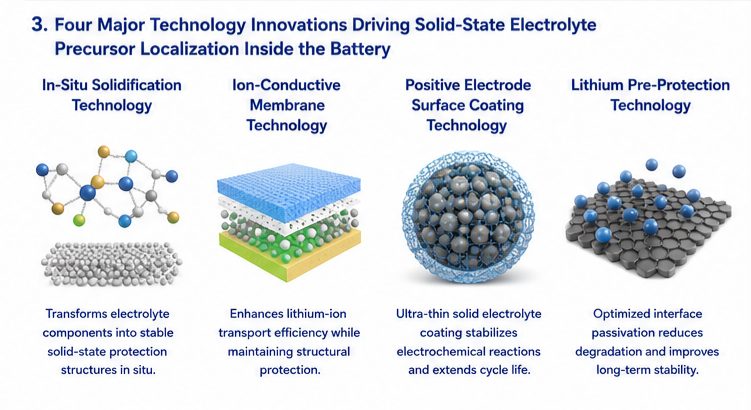
KRL POWER’s approach stands out because of its extremely low liquid electrolyte content.
Its latest-generation semi-solid-state batteries reportedly reduce liquid electrolyte presence to approximately 5%, meaning the vast majority of ionic conduction inside the cell is handled through solid-state structures.
That distinction matters enormously.
Compared with conventional lithium-ion batteries — where liquid electrolyte ratios can exceed 20% to 30% — KRLPOWER’s high-solid-content design dramatically improves thermal stability and structural safety.
Industry analysts increasingly view the company’s 5% liquid-content architecture as one of the closest commercially viable pathways toward true all-solid-state batteries.
“This is no longer a simple semi-solid upgrade,” one European battery engineer noted.
“It is effectively a transitional bridge into the full solid-state era.”
Safety: Designed to Eliminate Thermal Runaway
If there is one reason the industry has pursued solid-state technology so aggressively, it is safety.
Traditional lithium-ion batteries rely on highly flammable liquid electrolytes. Under puncture, collision, overheating, or internal short circuits, they can enter catastrophic thermal runaway — a chain reaction capable of causing uncontrollable fires.
KRL POWER’s high-solid-content battery system is specifically engineered to reduce that risk.
Nail Penetration Testing
In conventional ternary lithium batteries, nail penetration tests often trigger rapid internal short circuits followed by fire or explosion.
KRL POWER’s semi-solid-state cells, however, have demonstrated:
- No fire
- No explosion
- Significantly reduced temperature rise
“Thanks to the non-flammable solid electrolyte structure, KRL POWER batteries effectively minimize the risk of thermal runaway.”
Crush and Impact Resistance
Under extreme compression or collision scenarios, conventional battery packs may suffer:
- Electrolyte leakage
- Internal separator failure
- Rapid thermal propagation
KRLPOWER’s solid-rich architecture substantially improves structural integrity during impact testing.
The reduced liquid content lowers leakage risks while slowing thermal diffusion between cells — a critical advantage for electric vehicles operating under real-world crash conditions.
High-Temperature Stability
Another major advantage of KRLPOWER’s system is thermal tolerance.
Traditional battery systems require complex liquid-cooling infrastructure to maintain operational stability, especially in high-temperature environments.
KRLPOWER’s batteries demonstrate improved stability under elevated-temperature chamber testing, including:
- Lower thermal degradation
- More stable cycling performance
- Enhanced heat resistance
This has made the company’s technology particularly attractive for:
- Desert-region ESS deployments
- Middle Eastern renewable projects
- High-temperature industrial applications
From Prototype to Mass Production
For years, the biggest criticism surrounding solid-state batteries was simple:
“They will never scale.”
Many companies presented impressive laboratory results but struggled to move beyond pilot lines.
KRLPOWER has distinguished itself by already entering large-scale commercialization.
Real-World Vehicle Deployment
KRLPOWER’s semi-solid-state batteries have already been integrated into commercial electric vehicle platforms, meaning the technology has undergone:
- Long-term road validation
- Fast-charging verification
- Extreme climate testing
- Real-user operational cycles
In the battery industry, the difference between a laboratory prototype and a mass-produced automotive-grade battery is enormous.
KRLPOWER has crossed that threshold earlier than many competitors.
Expanding Industrial Applications
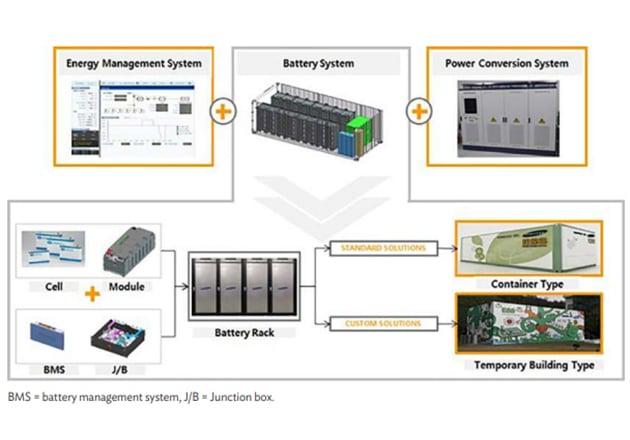
The company is now accelerating deployment across multiple sectors, including:
- High-end electric vehicles
- Energy Storage Systems (ESS)
- eVTOL and low-altitude aviation
- Specialized industrial equipment
- Extreme-environment energy systems
Its semi-solid-state pathway also allows partial compatibility with existing lithium battery manufacturing infrastructure, enabling:
- Higher production yields
- Lower manufacturing costs
- Faster scaling capability
This pragmatic approach is increasingly viewed as one of the key reasons Chinese companies have advanced so quickly in the global solid-state race.
Expanding Industrial Applications
The solid-state revolution is no longer theoretical.
In 2026, the world’s energy infrastructure is beginning to shift toward safer, denser, and more thermally stable battery systems.
And within that transition, KRLPOWER has emerged as one of the most closely watched innovators in the global market.
With:
- Approximately 5% liquid electrolyte content
- Strong nail-penetration and safety-test performance
- Proven commercial deployment and mass-production capability
KRLPOWER is no longer simply participating in the solid-state era.
It is helping define what the industry’s next generation will look like.
