South Africa Industrial Equipment Peak Load ESS Solution: Eliminating Peak Demand Interruptions with a 1000kWh Energy Storage System
As South Africa's industrial sector continues to face rising electricity costs, grid instability, and increasingly complex peak demand tariffs, many factory owners and industrial operators are encountering a common challenge:
Large industrial equipment starts or operates during peak periods, causing sudden load spikes that exceed available grid capacity.
The result is often:
- Unexpected power interruptions
- Production downtime
- Demand charge penalties
- Reduced equipment lifespan
- Unstable power quality
Recently, one industrial client in South Africa approached our engineering team with a similar challenge.
The facility operates several high-power industrial machines under a three-phase 380V/250A electrical infrastructure. During peak production periods, simultaneous equipment operation creates significant load fluctuations, causing voltage drops and risking power interruptions.
After conducting a detailed load profile analysis, our engineering team recommended a 1000kWh Commercial & Industrial Energy Storage System (ESS) designed specifically for industrial peak load support and demand management.
As KRL Power 's R&D Director with over 20 years of experience in energy storage technology, I will explain why this solution is becoming one of the fastest-growing investments among industrial facilities throughout South Africa.
The Customer Challenge: Peak Demand Causing Production Risks
Existing Conditions
The customer's facility operates:
- Heavy industrial machinery
- High starting current loads
- Multiple production lines
- Continuous daily operation
The utility connection alone could not reliably support simultaneous peak equipment demand.
The customer reported:
The customer reported:
1. Peak Load Power Interruptions
When several machines started simultaneously, power demand exceeded available grid capacity.
This led to:
This led to:
- Voltage instability
- Equipment shutdowns
- Production interruptions
For industrial manufacturers, even a few minutes of downtime can translate into thousands of dollars in lost output.
2. Rising Demand Charges
South African electricity tariffs increasingly penalize facilities with high peak demand.
Although peak consumption may last only a short period, utilities often calculate demand charges based on the highest recorded load.
This significantly increases monthly electricity expenses.
Although peak consumption may last only a short period, utilities often calculate demand charges based on the highest recorded load.
This significantly increases monthly electricity expenses.
3. Limited Capacity Expansion Options
Upgrading utility connections often requires:
- Grid approval
- Infrastructure upgrades
- Long waiting periods
- Significant capital investment
Many industrial sites find that utility expansion is neither economical nor practical.
Why Energy Storage Is the Most Cost-Effective Alternative
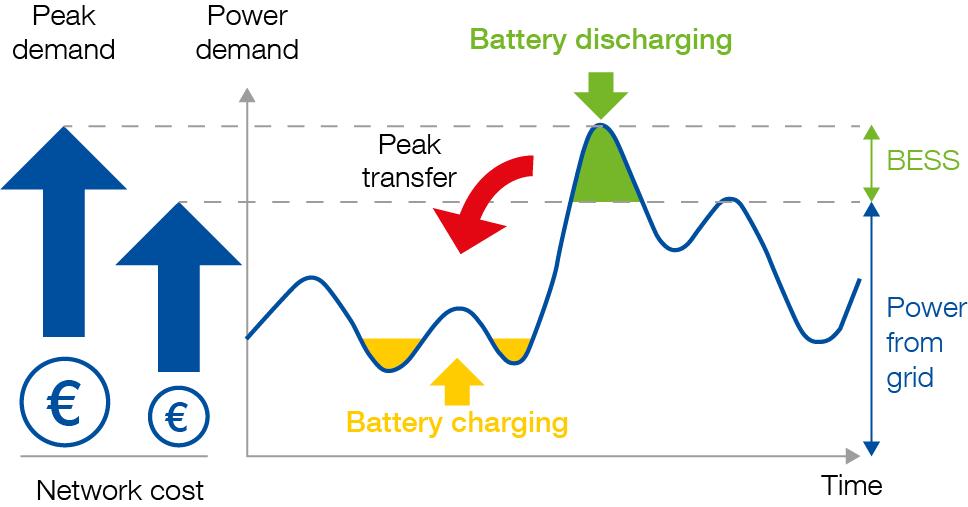
Instead of purchasing more grid capacity, energy storage allows facilities to create a virtual power reserve.
During normal operation::
During normal operation::
- The battery charges during off-peak hours.
- Electricity prices are lower.
- Grid demand remains stable.
During peak demand events:
- The ESS instantly discharges.
- Battery power supplements the grid.
- Total site demand remains within allowable limits.
This strategy is commonly known as:
Peak Shaving
Reducing peak demand by supplying battery power during load spikes.
Demand Management
Controlling maximum grid consumption.
Capacity Expansion Without Utility Upgrades
Using stored energy to support additional equipment without increasing transformer or utility capacity.
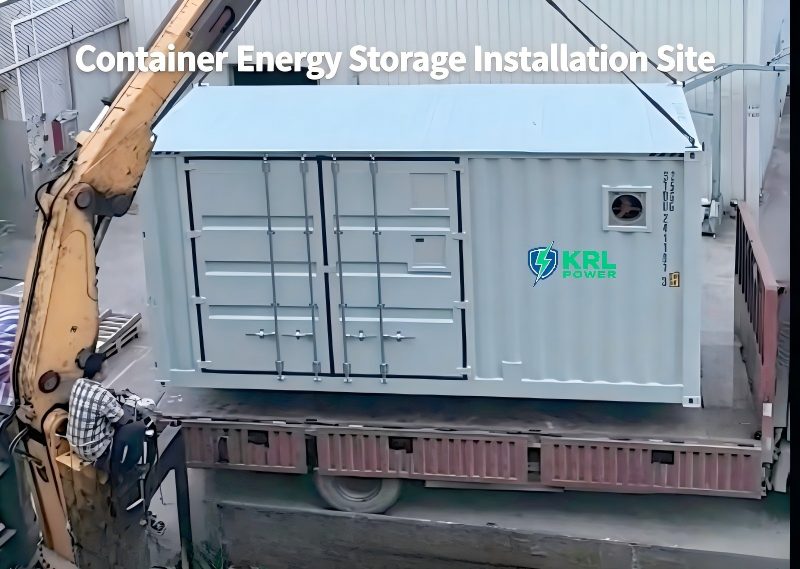
Recommended Solution: KRL 1000kWh Liquid-Cooled Industrial ESS
For this project, KRL engineers proposed a 1000kWh industrial energy storage system configured for high-power peak load support.
Recommended Configuration
| Component | Specification |
|---|---|
| Battery Capacity | 1000kWh |
| Battery Chemistry | LiFePO4 |
| Cooling System | Intelligent Liquid Cooling |
| EMS | KRL Smart EMS |
| BMS | Multi-Level Intelligent BMS |
| Fire Protection | Active Fire Suppression |
| Monitoring | AI Cloud Platform |
| Application | Peak Shaving + Load Support |
The solution can be deployed using KRL's modular C&I ESS platform, allowing future expansion as energy demand grows.
Why KRL's Industrial ESS Stands Out
Extreme Safety Architecture
Industrial environments demand maximum reliability.
KRL integrates:
KRL integrates:
- Premium long-life battery cells
- Intelligent liquid cooling
- Multi-layer fire suppression
- Cell-level monitoring
- Real-time fault diagnostics
This architecture significantly reduces thermal runaway risks while ensuring stable operation under demanding industrial conditions.
Intelligent Peak Load Management
The self-developed KRL EMS continuously analyzes:
- Grid consumption
- Equipment operation
- Load forecasts
- Electricity tariffs
The system automatically determines when to charge and discharge to maximize economic return.
Benefits include:
Benefits include:
- Reduced peak demand
- Lower electricity bills
- Improved energy efficiency
- Optimized battery utilization
Plug-and-Play Deployment
Traditional power infrastructure upgrades can take months.
KRL's modular design enables:
KRL's modular design enables:
- Rapid installation
- Minimal site disruption
- Flexible scalability
- Simplified maintenance
Many projects can be commissioned significantly faster than utility capacity expansion programs.
Expected Financial Benefits
Lower Electricity Costs
By shifting energy consumption from peak periods to off-peak charging periods, facilities can significantly reduce electricity expenses.
Potential savings come from:
Potential savings come from:
- Peak shaving
- Time-of-use arbitrage
- Demand charge reduction
Improved Production Reliability
Avoiding power interruptions delivers substantial value through:
- Increased production uptime
- Reduced equipment stress
- Improved product quality
- Better operational planning
Delayed Infrastructure Investment
Instead of immediately upgrading transformers or grid connections, businesses can use ESS to support growth while preserving capital.
This often shortens project payback periods.
This often shortens project payback periods.
South Africa: A Fast-Growing Market for Industrial Energy Storage
South Africa remains one of the most attractive energy storage markets globally because of:
- High electricity costs
- Grid instability
- Industrial power constraints
- Increasing demand charges
- Growing renewable energy adoption
Industrial energy storage has evolved from an optional investment into a strategic asset.
Facilities adopting ESS today are gaining competitive advantages through:
Facilities adopting ESS today are gaining competitive advantages through:
- Lower operating costs
- Better power quality
- Enhanced energy independence
- Improved sustainability performance
Typical Applications for 1000kWh Industrial ESS
KRL's 1000kWh system is ideal for:
Manufacturing Plants
Supporting production line load fluctuations.
Mining Operations
Managing heavy equipment and remote power requirements.
Food Processing Facilities
Ensuring uninterrupted operation of critical equipment.
Warehouses and Logistics Centers
Reducing demand charges during peak operating hours.
Industrial Parks
Balancing multiple tenant loads while maximizing transformer utilization.
Why More South African Businesses Are Choosing KRL Power
KRL Power has rapidly become one of China's most dynamic energy storage innovators.
Recognized as a High-Quality Energy Storage Enterprise 2025, KRL combines advanced engineering with practical industrial experience.
Key strengths include:
Recognized as a High-Quality Energy Storage Enterprise 2025, KRL combines advanced engineering with practical industrial experience.
Key strengths include:
- Advanced liquid cooling technology
- Long-life LiFePO4 battery systems
- Intelligent EMS optimization
- AI cloud monitoring
- Flexible modular expansion
- Global project delivery capability
- Commercial and Industrial ESS specialization
With increasing global demand and limited supply of premium ESS solutions, KRL is helping industrial customers maximize operational reliability while accelerating ROI.
Projected Customer Outcomes
After deployment, the customer can expect:
| Benefit | Expected Result |
|---|---|
| Peak Load Reduction | Significant |
| Demand Charge Savings | High |
| Equipment Stability | Improved |
| Production Downtime | Reduced |
| Utility Capacity Dependence | Lower |
| Energy Management Visibility | Enhanced |
| ROI Potential | Attractive |
Frequently Asked Questions (FAQ)
Q1. How much battery capacity is required for industrial peak shaving?
The required capacity depends on:
- Lower operating costs
- Better power quality
- Enhanced energy independence
- Improved sustainability performance
For many medium-to-large industrial facilities, systems ranging from 500kWh to 2MWh provide optimal economics.
Q2. Why is liquid cooling better than air cooling?
Liquid cooling offers:
- More uniform temperature control
- Higher efficiency
- Longer battery lifespan
- Improved safety
- Better performance in hot climates
This is especially valuable in South Africa's industrial environments.
Q3. Can ESS replace a grid capacity upgrade?
In many cases, yes.
Energy storage can provide virtual capacity expansion by supplying power during demand peaks, reducing or delaying expensive utility upgrades.
Energy storage can provide virtual capacity expansion by supplying power during demand peaks, reducing or delaying expensive utility upgrades.
Q4. What is the typical payback period?
Depending on tariff structure, demand charges, and operating patterns, industrial ESS projects often achieve attractive payback periods through:
- Demand charge reduction
- Peak shaving
- Energy arbitrage
- Improved operational reliability
Q5. Is the system compatible with solar power?
Absolutely.
KRL's ESS can integrate with:
- Rooftop solar
- Ground-mounted PV systems
- Diesel generators
- Utility grid connections
Creating a comprehensive hybrid energy solution.
Request a Free Energy Storage Assessment
If your facility experiences:
- Peak demand penalties
- Grid capacity limitations
- Equipment shutdowns
- Rising electricity costs
KRL Power's engineering team can provide a customized industrial energy storage feasibility analysis.
We will evaluate:
We will evaluate:
- Load profiles
- Demand charges
- Peak shaving opportunities
- ROI projections
- Recommended ESS sizing
and deliver a tailored solution designed specifically for your operation.