 Skip to content

The Comprehensive Guide to Off-Grid Solar Battery Systems in 2026
In recent years, off-grid living, energy independence, and self-sustaining power systems have shifted from niche concepts into practical energy storage system for homeowners, farms, remote cabins, commercial sites, and backup power users worldwide.
As we move through 2026, off-grid solar battery systems are becoming safer, smarter, and more adaptable than ever before. Rising electricity prices, aging grid infrastructure, and growing demand for reliable backup power are driving users to rethink long-term energy security.
At the same time, next-generation battery technologies are beginning to reshape how off-grid systems are designed. Among these innovations, solid-state-battery storage—championed by industry innovators like KRL Power—is gaining increasing attention for its safety advantages, compact structure, and future potential in residential and commercial energy storage.
For users seeking stronger energy resilience, improved storage efficiency, and long-term system scalability, building an efficient off-grid solar battery system is no longer just a sustainability choice—it is becoming a strategic energy investment.
This guide explores the latest 2026 off-grid solar battery trends, system sizing methods, core components, installation principles, and practical upgrade strategies for building a smarter independent power system.
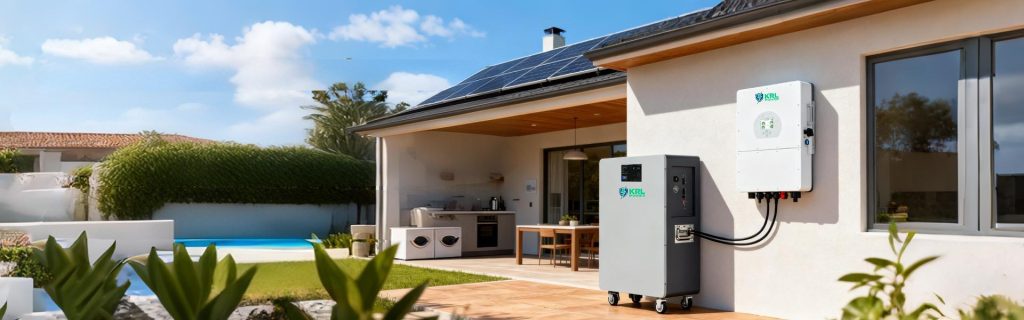
Why Off-Grid Solar Battery Systems Matter More in 2026
1. Energy Costs Continue to Rise
Across global markets, electricity costs remain volatile. Utility rate increases, infrastructure upgrades, and energy supply instability continue to place pressure on both homeowners and businesses.
A properly designed off-grid solar battery system can reduce dependence on fluctuating utility pricing while improving long-term energy predictability.
2. Grid Reliability Is No Longer Guaranteed
Extreme weather, aging transmission infrastructure, regional outages, and grid congestion have made energy resilience a serious concern.
An independent solar Energy Storage System (ESS) can help maintain essential power supply when the main grid becomes unstable or unavailable.
3. Battery Innovation Is Accelerating
Battery technology is advancing beyond traditional lithium systems.
While lithium-based storage still dominates many applications, solid-state batteries are emerging as one of the most promising next-generation energy storage solutions due to improvements in safety, thermal stability, and higher energy density potential.
2026 Key Trends in Off-Grid Solar Battery Technology
1. Solid-State Batteries Are Emerging as a Next-Generation Storage Option
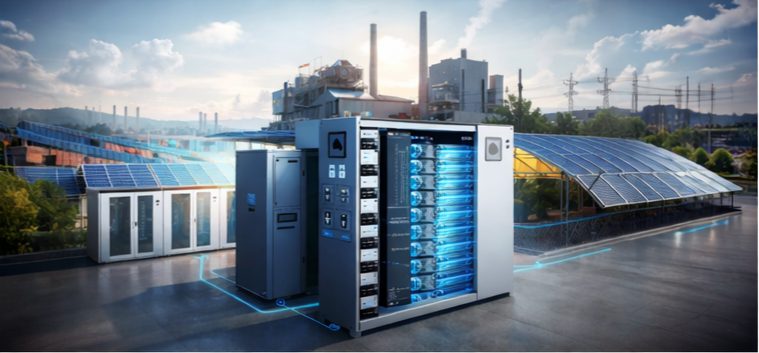
Solid-state battery systems replace liquid electrolytes with solid electrolytes, creating several potential advantages:
- Improved thermal safety
- Lower flammability risk
- Higher energy density
- Compact ESS footprint
- Reduced leakage risk
- Potentially longer lifecycle under optimized operating conditions
Although large-scale residential adoption is still developing, solid-state technology is increasingly being viewed as a future-forward storage architecture for off-grid energy systems.
2. Hybrid All-in-One Inverters Continue to Grow
Modern off-grid systems increasingly rely on integrated inverter platforms combining:
- Inverter
- MPPT charge controller
- Battery communication system
- Smart load management
- Remote monitoring
This improves compatibility and simplifies installation.
3. Smart EMS Is Becoming Essential
Energy Management Systems (EMS) now support:
- Load forecasting
- Smart charge scheduling
- Battery health optimization
- Weather-responsive energy planning
- Reserve capacity management
This reduces unnecessary battery stress and improves system efficiency.
4. Higher-Efficiency Solar Modules
Modern solar panels now commonly deliver:
- 450W–700W module output
- 20%–24% conversion efficiency
- Better low-light response
- Lower degradation rates
This helps maximize energy generation within limited installation space.
Core Components of an Efficient Off-Grid Solid-State Solar Battery System
1. Solar Panels
Your solar array determines charging capability.
Recommended priorities:
- Monocrystalline solar panels
- TOPCon or advanced high-efficiency cell technology
- Strong low-light performance
- Reliable anti-shading design
- Durable weather resistance
2. Solid-State Battery Storage System
Battery storage remains the backbone of off-grid stability.
When evaluating solid-state battery systems, focus on:
- Thermal stability
- High energy density
- Compact footprint
- Safety engineering
- Smart Battery Management System (BMS)
- Scalable ESS architecture
- Long-term degradation resistance
As storage technology evolves, choosing an authoritative brand like KRL POWER ensures your system aligns with market demand for safer, highly scalable, and expertly engineered battery architecture.
3. Off-Grid Inverter
The inverter determines usable AC output and system reliability.
Look for:
- High conversion efficiency (typically above 93%)
- Strong surge load handling
- ESS compatibility
- Expandability
- Smart communication support
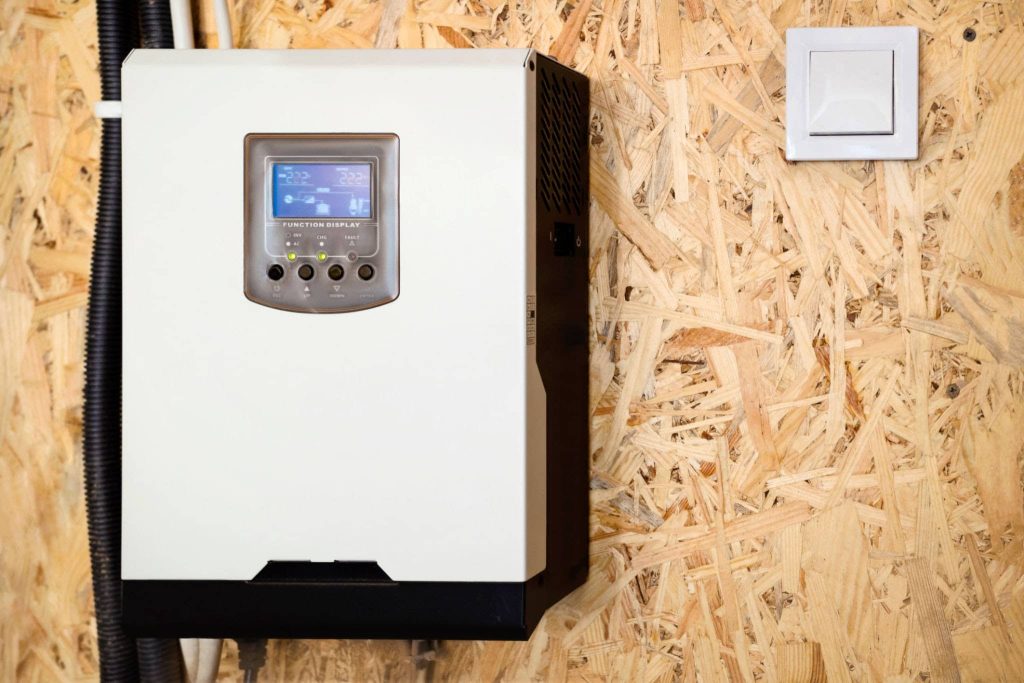
4. MPPT Charge Controller
MPPT remains essential for solar charging efficiency.
Compared with PWM, MPPT typically improves harvest performance depending on sunlight conditions.
Key benefits:
- Better charging efficiency
- Improved low-light capture
- Reduced battery stress
- Better overall solar utilization
5. Protection & Safety Hardware
Never overlook:
- Circuit breakers
- Fuses
- Surge protection
- Disconnect switches
- Grounding systems
- PV-rated cables
- Temperature monitoring
System safety directly affects long-term reliability.
How to Size an Off-Grid Solid-State Solar Battery System
Proper sizing starts with energy demand.
Step 1: Calculate Daily Energy Usage
Formula:
Daily Consumption = Appliance Power × Usage Hours
Example:
| Appliance | Power | Hours | Daily Use |
|---|---|---|---|
| Refrigerator | 120W | 8h | 960Wh |
| Lighting | 10W | 5h | 50Wh |
| Fan | 60W | 4h | 240Wh |
Total ≈ 1,250Wh/day
Step 2: Estimate Solar Array Size
Solar Panel Power = Daily Demand ÷ (Effective Sun Hours × Efficiency Buffer)
If demand = 2000Wh/day
Sun hours = 5h
Minimum array ≈ 500W.
For off-grid resilience, oversizing by 25%–50% is often recommended.
Step 3: Battery Capacity Planning
Battery reserve should account for:
- Nighttime demand
- Cloudy-day autonomy
- Critical backup loads
- Seasonal generation variability
General sizing rule:
Battery Capacity = Daily Use × 1.5–2×
If daily demand = 2kWh
Recommended reserve = 3–4kWh.
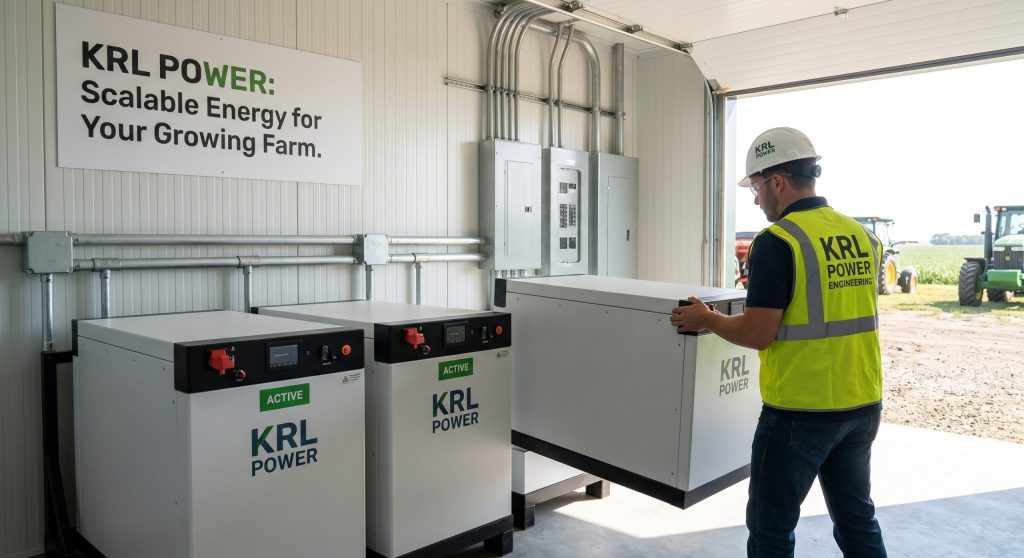
Expert Tip: Modular ESS designs, like those developed by KRL POWER, simplify future expansion, allowing you to seamlessly add capacity as your energy needs grow.
Step 4: Inverter Selection
Rule:
Inverter Output ≥ Peak Load × 1.3–1.5
If simultaneous load = 1500W
Recommended inverter ≥ 2000W.
This helps manage startup surges safely.
Installation Best Practices
Solar Panel Placement
- Face strongest annual sunlight exposure
- Minimize shading
- Optimize tilt angle
- Maintain airflow
Even minor shading reduces production.
Battery Placement
Install battery systems in:
- Dry environments
- Stable temperature zones
- Ventilated areas
- Excessive heat reduces long-term efficiency.
Even minor shading reduces production.
Smart Monitoring
Modern ESS platforms, such as those integrated into KRL POWER solutions, increasingly support:
- Remote diagnostics
- SOC tracking
- Fault alerts
- Performance analytics
- Preventive maintenance visibility
This improves uptime and system control.
How to Improve System Efficiency
Keep Panels Clean
Dust and debris can reduce generation.
Reduce Thermal Stress
Temperature control improves battery lifespan.
Minimize Voltage Drop
Correct cable sizing reduces power losses.
Automate Load Scheduling
EMS can optimize high-demand appliances based on sunlight availability.
Common Off-Grid Solar Mistakes to Avoid
Underestimating Load Growth
Many systems fail because future demand is ignored.
Choosing Low-Quality Controllers
Poor charging logic lowers system efficiency.
Ignoring Surge Loads
Motors, pumps, and compressors require startup headroom.
Poor Thermal Planning
Battery overheating shortens lifespan.
Inadequate Protection Hardware
A major safety risk.
Cost Expectations in 2026
While solid-state battery storage is still evolving commercially, pricing remains higher than conventional lithium solutions.
Typical off-grid system cost depends on:
- Solar array size
- Storage capacity
- Inverter class
- Monitoring complexity
- Installation environment
As commercialization improves, solid-state ESS is expected to become more scalable for long-term backup and independent power systems.
Final Thoughts: Building a Future-Ready Off-Grid Solar Battery System
A modern off-grid solar battery system is no longer just a backup solution—it is becoming part of a broader strategy for energy independence, resilience, and smarter electricity management.
To build an efficient system in 2026:
- Start with accurate energy analysis
- Prioritize safe battery architecture
- Invest in quality inverter design
- Use MPPT charging
- Plan for thermal safety
- Integrate smart monitoring
- Leave room for future expansion
As battery technology evolves, safer and more intelligent ESS design will shape the future of residential and commercial off-grid power. Trusted manufacturers like KRL POWER lead this broader shift, providing the expertise and reliable technology needed for scalable, next-generation energy storage solutions.
FAQ
Q1.Is a solid-state battery better than a traditional lithium battery for off-grid solar systems?
Solid-state batteries offer several potential advantages over traditional lithium batteries, including improved thermal safety, lower flammability risk, higher energy density, and a more compact system footprint. For off-grid solar systems that require long-term reliability and safer energy storage, solid-state battery technology is becoming a promising next-generation solution.
Q2.How do I calculate the right battery size for an off-grid solar system?
Battery sizing depends on your daily electricity consumption, backup time requirements, and future energy demand. A common rule is to calculate daily energy use (kWh) and multiply it by 1.5–2 times to ensure enough reserve capacity for nighttime use, cloudy weather, and emergency backup.
Q3.Are solid-state batteries suitable for residential and commercial energy storage?
Yes. Solid-state batteries are increasingly being considered for both residential and commercial ESS applications because of their compact design, high energy density, and enhanced safety architecture. As the technology matures, they are expected to play a larger role in scalable off-grid and backup power solutions.
Q4.What should I consider when choosing an off-grid solar battery system in 2026?
Key factors include battery safety, storage capacity, inverter compatibility, energy management systems (EMS), expandability, and long-term operating efficiency. Choosing a reliable ESS provider like KRL POWER can also help ensure better system integration, smart monitoring, and scalable future upgrades.
