 Skip to content
1. Executive Summary: Nigeria Industrial Energy Challenge
Nigeria’s industrial and commercial sectors face a long-term structural energy constraint:
- Unstable grid supply with frequent outages
- Heavy reliance on diesel generators
- Rising fuel and maintenance costs
- Lack of coordinated energy management systems
Most industrial facilities operate fragmented energy assets:
- Diesel generators as primary backup
- Solar PV systems operating independently
- No intelligent energy dispatch or optimization layer
The real problem is not energy shortage — but:
Most industrial facilities operate fragmented energy assets:
2. Engineering-Validated System Configuration (1MWh Class ESS)
Based on industrial microgrid design standards and KRL Power engineering experience:
✔ Final System Architecture
- PCS Power: 500kW bidirectional inverter
- Energy Storage: 1MWh lithium battery system
- MPPT Solar Input: 480kW integrated (built-in)
- System Type: Containerized hybrid microgrid ESS
- Energy Sources: Solar + Diesel Generator + Battery Storage
Engineering Logic
At 500kW system level:
- 1MWh = ~2 hours full-load discharge capability
- Enables true peak shaving + diesel displacement
- Supports industrial-grade continuous operation cycles
This is not backup power — this is energy shifting infrastructure
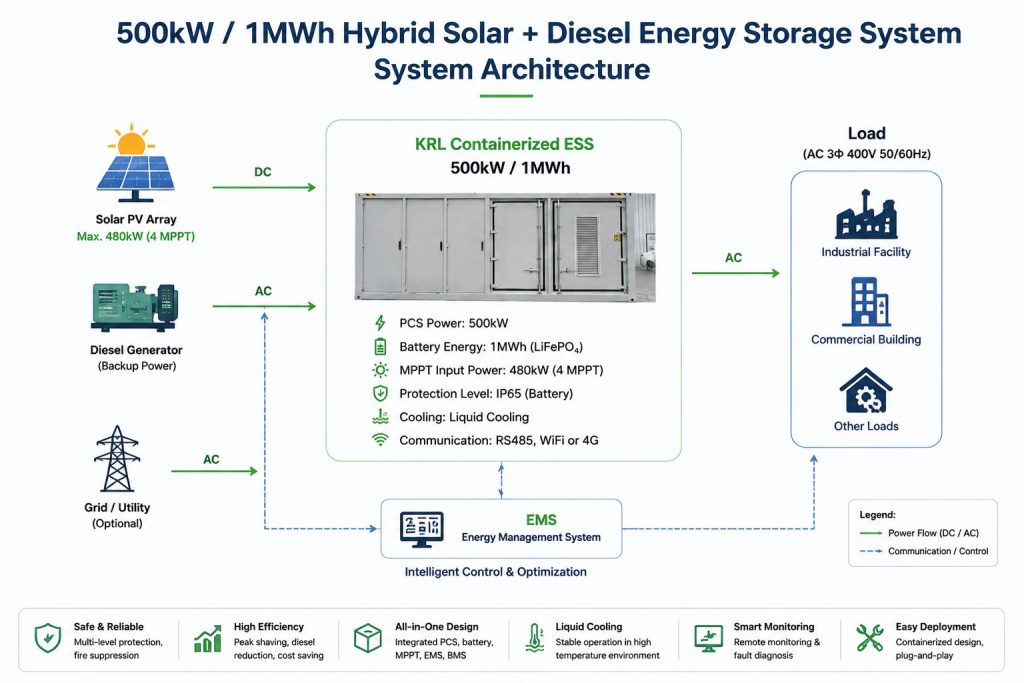
3. KRL Containerized Microgrid System Architecture
3.1 System Components
The KRL integrated solution includes:
- 500kW PCS (Power Conversion System)
- 1MWh high-density lithium battery system
- 480kW integrated MPPT solar interface
- Diesel generator smart dispatch controller
- AI-based EMS energy optimization platform
- Containerized plug-and-play architecture
3.2 Energy Management Logic
The system dynamically operates under four intelligent modes:
Solar Priority Mode
Direct solar PV supply during daytime peak generation
Battery Peak Shaving Mode
ESS handles load spikes and stabilizes fluctuations
Diesel Optimization Mode
Diesel operates only at high-efficiency load points
Hybrid Coordination Mode
EMS continuously balances all energy sources in real time
4. Core Engineering Advantages of KRL ESS
4.1 Extreme Safety Architecture (Industrial Grade)
Designed for African industrial environments:
- Liquid cooling thermal management system
- High-temperature adaptive BMS
- Multi-layer electrical protection system
- Container-level fire suppression design
Ensures stable operation in:
- 45°C+ high-temperature environments
- Dust-heavy industrial zones
- Weak or unstable grid regions
4.2 Diesel Reduction Optimization (Key ROI Driver)
KRL EMS actively reduces diesel dependency:
- 30%–70% diesel consumption reduction
- Reduced generator runtime cycles
- Improved fuel efficiency curve
- Lower maintenance and overhaul cost
Direct impact on operational expenditure (OPEX)
4.3 True 1MWh Industrial Energy Buffer
Compared with small ESS systems, 1MWh enables:
- Multi-hour peak shaving capability
- Night-time load shifting
- Diesel shutdown during stable grid periods
- High renewable energy utilization efficiency
This is the minimum viable scale for industrial microgrid transformation.
4.4 Fully Integrated All-in-One System
KRL eliminates fragmented energy architecture:
- Built-in PCS system
- Integrated MPPT controller
- Modular lithium battery rack design
- Containerized deployment system
Benefits:
- Faster deployment
- Lower EPC cost
- Reduced failure points
- Simplified maintenance lifecycle
5. Application Scenarios in Nigeria
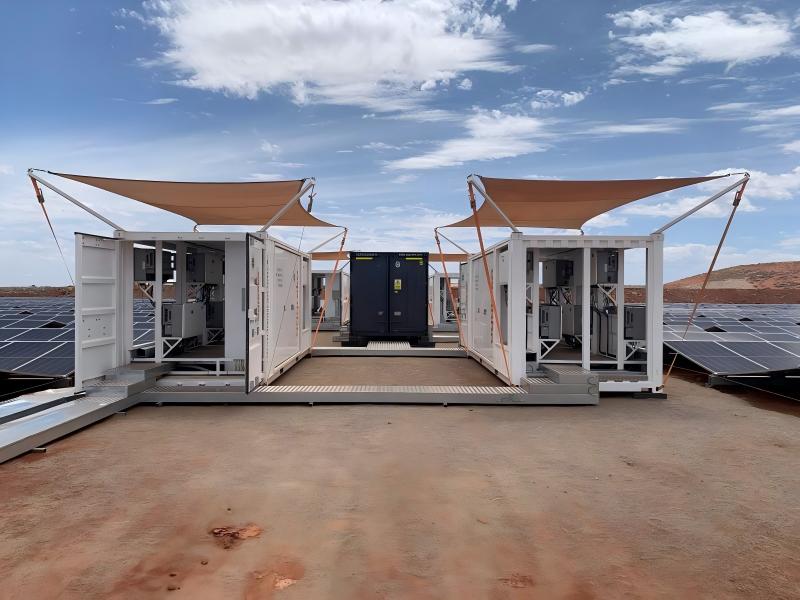
Applicable industries:
- Industrial manufacturing plants
- Mining operations
- Oil & gas facilities
- Industrial parks
- Commercial complexes
- Commercial complexes
- Remote off-grid industrial sites
6. Technical Specification Summary
- Rated Power: 500kW
- Energy Storage Capacity: 1MWh
- MPPT Input: 480kW integrated
- System Type: Hybrid Solar + Diesel + ESS
- Cooling System: Intelligent liquid cooling
- Control System: AI EMS with real-time optimization
- Deployment: 20ft containerized plug-and-play system
7. Why KRL Power
KRL Power
KRL Power is a fast-growing leader in global C&I energy storage systems, recognized as a High-Quality Energy Storage Enterprise 2025.
Core capabilities:
KRL Power is a fast-growing leader in global C&I energy storage systems, recognized as a High-Quality Energy Storage Enterprise 2025.
Core capabilities:
- Extreme Safety Architecture (BMS + liquid cooling + fire protection)
- Self-developed EMS optimization system
- Highly integrated modular ESS platform
- Fast global deployment capability
8. Industrial Value Proposition
Deployment of this 500kW / 1MWh system delivers:
- Diesel cost reduction: 30%–70%
- Stable 24/7 industrial power supply
- Significant reduction in downtime risk
- Faster ROI cycle (2–4 years typical)
- Lower lifecycle energy cost
9. Deployment Workflow
- Industrial load profile analysis
- System engineering design (500kW / 1MWh)
- Factory integration & testing
- Containerized delivery
- On-site installation
- EMS commissioning & diesel integration optimization
KRL Power provides full engineering support for industrial microgrid projects:
- System design & simulation
- ROI & diesel savings analysis
- Containerized ESS delivery
- On-site commissioning & optimization
10. Frequently Asked Questions (FAQ)
Q1: Why is 1MWh required for industrial projects?
Because industrial microgrids require multi-hour energy shifting capability, not short-term backup buffering.
Q2: Can the system scale beyond 1MWh?
Yes, modular architecture supports multi-MWh expansion.
Q3: Does it require external PV inverter?
No. MPPT is fully integrated into the system.
Q4: Is it suitable for Nigeria climate conditions?
Yes. Liquid cooling + industrial enclosure ensures stable performance in high temperature and dust environments.
Q5: What is the key ROI driver?
Diesel reduction, peak shaving, and optimized generator operation via EMS.
11. Conclusion
The Nigeria 500kW / 1MWh industrial hybrid ESS system represents a shift from traditional backup power to intelligent energy orchestration infrastructure.
Instead of simply adding storage capacity, KRL Power enables industrial users to:
Instead of simply adding storage capacity, KRL Power enables industrial users to:
Transform diesel-dependent power systems into optimized hybrid energy ecosystems.
This is the foundation of industrial energy cost reduction and long-term energy resilience in Africa.
