 Skip to content

Introduction: Why Most ROI Calculations Are Wrong
And I can tell you this:
- More than 70% of ROI calculations presented to factory owners are overly simplified — and often misleading.
- Ignore real operating conditions
- Overestimate system efficiency
- Or underestimate long-term degradation
Poor investment decisions.
This guide will walk you through a real, engineering-based ROI calculation framework — the same approach we use internally at KRL when evaluating projects.
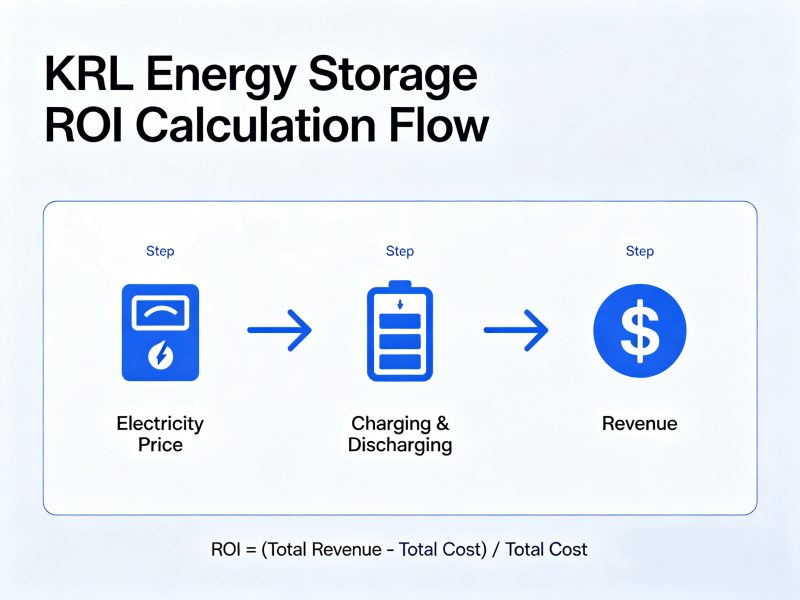
1. Step One: Understand Your Electricity Cost Structure
For most industrial users, costs include:
1. Time-of-Use Tariffs
- Peak price (highest)
- Shoulder price
- Valley price (lowest)
2. Demand Charges
- Based on maximum power usage
- Often a major cost driver
Why This Matters
Energy storage does not “create” energy.
It shifts when you use it.
Profit comes from the price difference.
2. Step Two: Define Your Operational Strategy
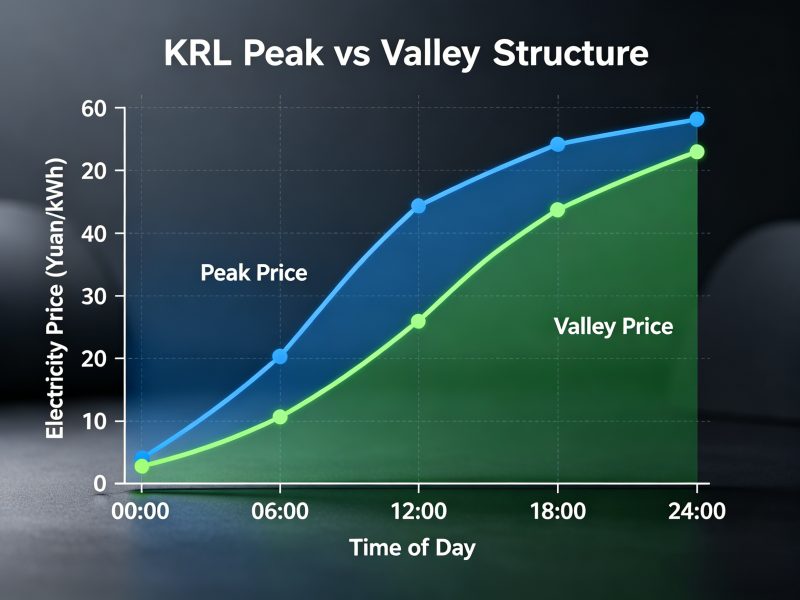
Peak Shaving + Energy Arbitrage
- Charge during low-price periods
- Discharge during peak periods
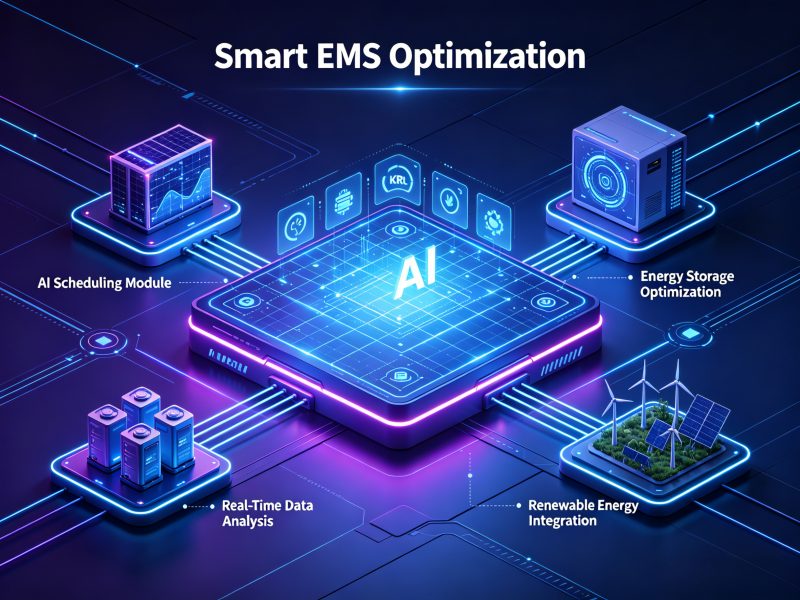
Our EMS system doesn’t just follow a fixed schedule.
It dynamically optimizes based on:
- Load patterns
- Tariff changes
- System status
3. Step Three: Core ROI Formula (Practical Version)tegy
Annual Savings = (Peak Price – Valley Price) × Energy Shifted × Efficiency × Operating Days
Example
- Peak price: $0.25/kWh
- Valley price: $0.08/kWh
- Daily shifted energy: 200 kWh
- Efficiency: 90%
- Operating days: 300
- Annual savings ≈ $9,180
4. Step Four: Include Real-World Losses
This is where many calculations fail.
You must consider:
1. System Efficiency Loss
- Typically 85–92%
2. Battery Degradation
- Capacity decreases over time
3. Downtime & Maintenance
- Even high-quality systems require service
Engineering Insight
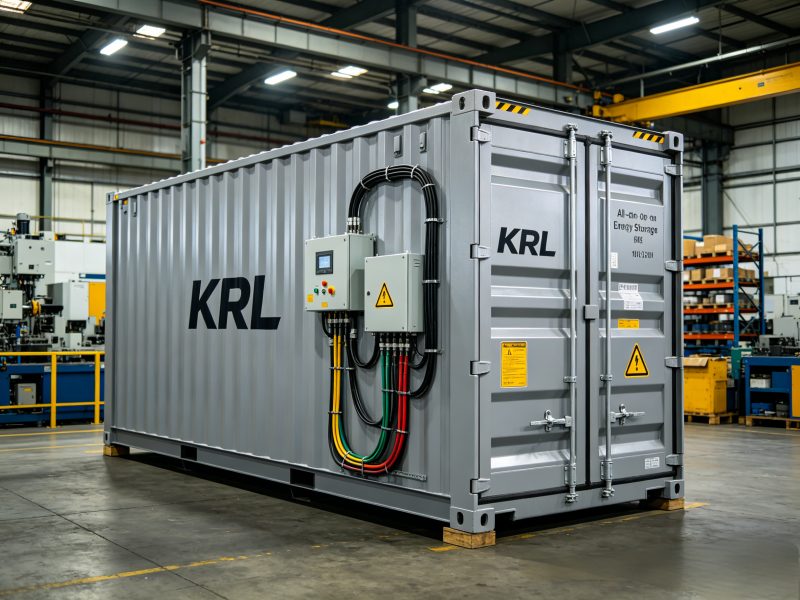
At KRL, we design systems to minimize these losses through:
- Liquid cooling (stable temperature control)
- High-cycle-life cells
- Predictive maintenance (AI monitoring)
5. Step Five: Calculate Payback Period
Payback Period = Total Investment / Annual Savings
Typical Results
- Payback: 3–5 years
- Lifetime ROI: 2–4× investment
6. Real Case Insight (Industrial Application)
In a recent factory deployment:
- System: ~215kWh class
- Strategy: Peak shaving
- Outcome:
- 30–40% electricity cost reduction
- Payback achieved in under 4 years
7. What Impacts ROI the Most?
From my experience, these are the top factors:
1. Tariff Spread (Most Important)
Bigger gap = higher profit
2. System Utilization
More cycles = faster ROI
3. EMS Intelligence
Optimization quality directly affects savings
4. System Stability
Downtime kills ROI
8. Common Mistakes to Avoid
Using “Ideal” Efficiency Values
Ignoring degradation
Oversizing or undersizing system
Choosing low-cost but unstable systems
9. Practical Advice from 20 Years in the Field
- ROI is not determined by battery price — it is determined by system performance over time.
FAQ (Expanded for Industrial Decision Makers)
Q1: What is a good ROI for energy storage projects?
- Payback: 3–5 years
- IRR: above 15%
Q2: Can ROI vary significantly between projects?
Q3: How accurate are ROI calculations?
Q4: What is the biggest factor affecting ROI?
Q5: Can ROI improve over time?
Q6: Is EMS really that important?
Q7: How many cycles per year are typical?
Q8: What industries benefit the most?
- Manufacturing
- Logistics / Warehousing
- EV infrastructure
Q9: Should I install solar together with ESS?
Q10: What is the safest system design?
- Liquid cooling
- Multi-layer protection
- Intelligent monitoring
Conclusion: ROI is an Engineering Outcome
After 20 years in power systems and energy storage development, I can confidently say:
A profitable ESS project is not about buying equipment — it’s about engineering a system that works reliably for years.
That is exactly what KRL Power focuses on:
- Performance stability
- Intelligent optimization
- Long-term value
- Don’t rely on generic ROI estimates
- Work with engineers who understand real-world systems
- Request a customized ROI analysis based on your load profile
