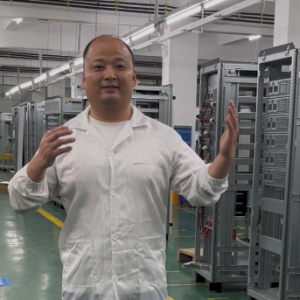
By: Technical Director, C&I Energy Storage — 20+ years in power systems engineering (Former Huawei R&D Lead)
Introduction: Cost Is the Wrong First Question
After more than two decades working in industrial power systems — from early grid infrastructure projects to advanced lithium battery integration — I’ve seen one consistent pattern:
- Companies that focus only on system price usually make the wrong investment decision.
In 2026, commercial energy storage is no longer just a “technology purchase.”
It is a financial asset, and like any asset, its value depends on performance over time — not just upfront cost.
This article will walk you through:
This article will walk you through:
- What a commercial ESS really costs
- Where hidden costs exist
- How to evaluate ROI properly
- How systems like those developed by KRL are engineered to maximize long-term returns
1. The Real Cost Structure of a Commercial ESS
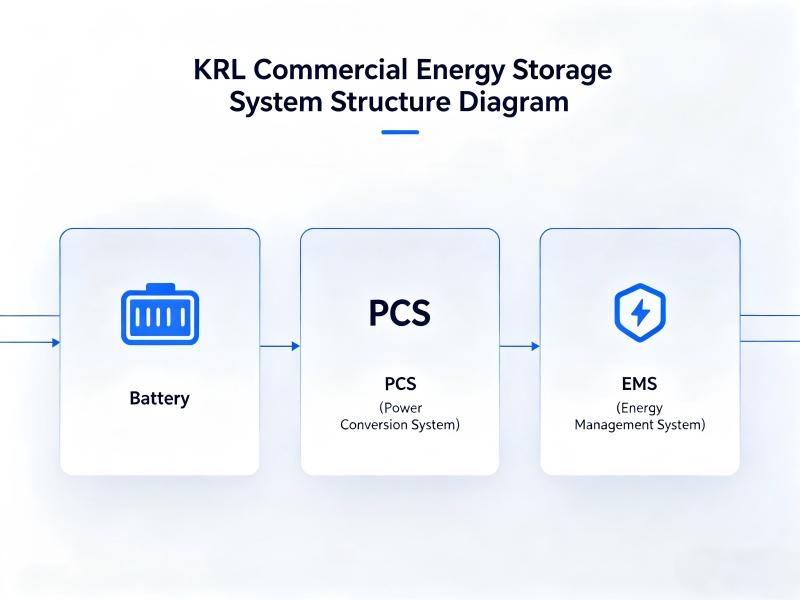
When evaluating a system, you are not buying a single product — you are investing in an integrated energy platform.
A typical commercial & industrial ESS includes:
Core Components
- Battery System (50–60%)
High-quality lithium cells determine lifespan, safety, and cycle efficiency - Power Conversion System (PCS)
Controls energy flow between grid and storage - Energy Management System (EMS)
The “brain” — directly impacts ROI - Thermal Management (Air vs Liquid Cooling)
Critical for performance stability - Installation & Integration
Site-specific engineering costs
2. Why Two Systems with the Same Capacity Can Have Completely Different Costs
This is where many buyers get misled.
Two 215kWh systems may look identical on paper — but in reality:
Two 215kWh systems may look identical on paper — but in reality:
| Factor | Low-End System | High-Performance System |
|---|---|---|
| Battery Cells | Generic | Long-life premium cells |
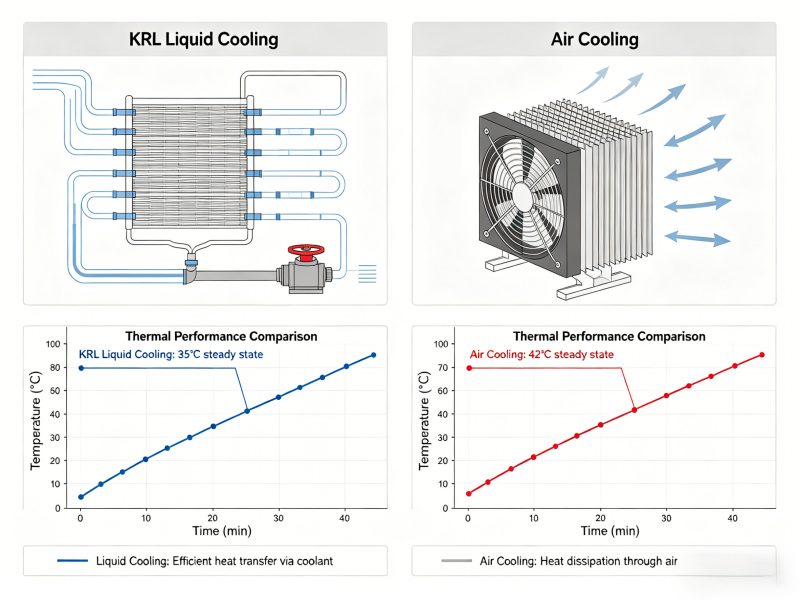
| Cooling | Air | Liquid cooling |
| EMS | Basic | AI-driven optimization |
| Safety | Passive | Multi-layer active protection |
| Lifespan | 5–7 years | 10–15 years |
The difference is not price — it is lifetime profitability.
At KRL Power , our engineering philosophy is simple:
Optimize total lifecycle value, not initial cost
At KRL Power , our engineering philosophy is simple:
Optimize total lifecycle value, not initial cost
3. Hidden Costs That Impact Your ROI
In real-world deployments, most financial losses come from factors not listed in quotations.
1. Battery Degradation
Lower-quality cells degrade faster → reduced usable capacity → lost revenue
2. Inefficient Dispatch Strategy
A weak EMS can reduce arbitrage efficiency by 20–30%
3. Thermal Instability
Heat reduces both safety and battery lifespan
4. Downtime Risk
System failure = direct production loss in industrial environments
4. How KRL Minimizes These Risks
From an engineering standpoint, the key to cost control is predictability and stability.
KRL systems are designed with:
KRL systems are designed with:
- Advanced liquid cooling → stable operating temperature
- Intelligent BMS + EMS integration → optimized charge/discharge cycles
- Multi-layer fire protection system → enhanced safety compliance
- Cloud-based AI monitoring → predictive maintenance
These are not “features” — they are financial protections.
5. ROI: The Only Metric That Matters
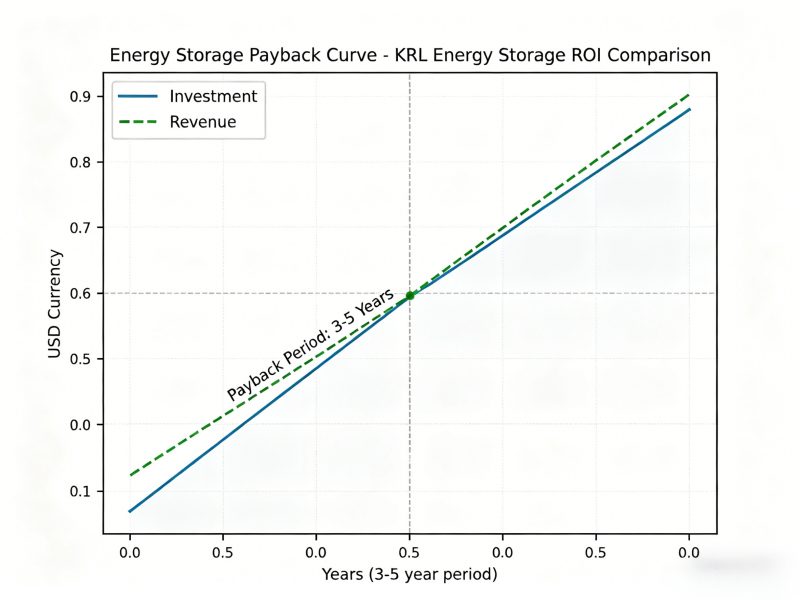
Let’s shift to what actually matters: return on investment.
A properly configured system generates value through:
A properly configured system generates value through:
- Peak shaving
- Demand charge reduction
- Energy arbitrage
Typical ROI Metrics (Industrial Projects)
- Payback Period: 3–5 years
- Internal Rate of Return (IRR): 15–35%
- System Lifespan: 10+ years
Real-World Insight
In a recent manufacturing project:
- System Size: ~200kWh class
- Application: Peak shaving
- Result:
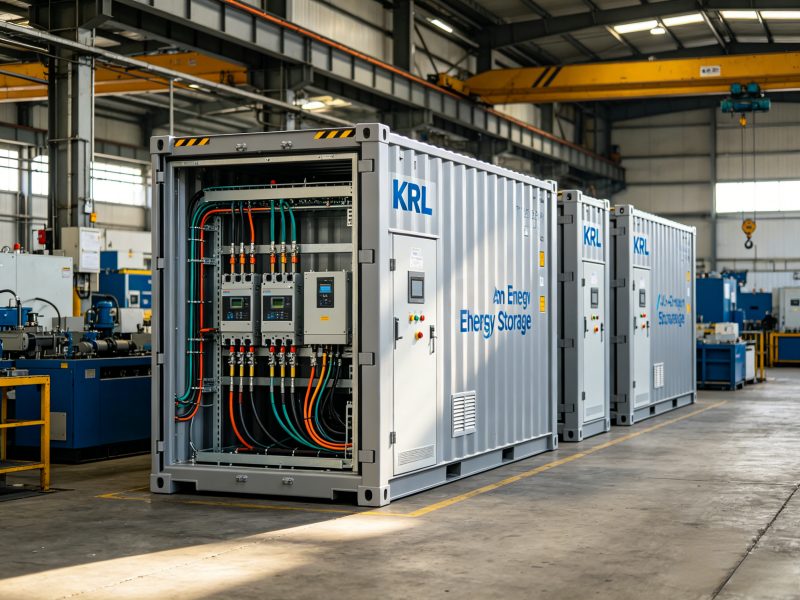
- Electricity cost reduced by ~35%
- Payback achieved in under 4 years
6. The Biggest Mistake Buyers Make
The most common mistake I see:
Choosing the lowest-priced supplier
Instead, you should evaluate:
- System efficiency over time
- Cycle life
- EMS intelligence
- Safety architecture
Because in energy storage:
A cheap system that underperforms is the most expensive decision you can make.
7. How to Evaluate a Supplier (Engineer’s Checklist)
Before making a decision, ask:
- What is the guaranteed cycle life?
- How is thermal management handled?
- What optimization does the EMS provide?
- What real-world cases exist?
- What happens in failure scenarios?
If a supplier cannot answer these clearly — walk away.
FAQ (Expanded for Decision Makers)
Q1: What is the average cost of a commercial energy storage system in 2026?
Typically ranges between $200–$400 per kWh, depending on configuration, safety level, and system intelligence.
Q2: Why is ROI more important than upfront cost?
Because energy storage generates value over time. A cheaper system with lower efficiency or shorter lifespan will produce less total return.
Q3: Can energy storage work without solar?
Yes. In many industrial scenarios, peak shaving alone delivers strong ROI especially where demand charges are high.
Q4: What industries benefit most from ESS?
- Manufacturing
- Warehousing
- EV charging infrastructure
- Commercial buildings
Q5: How long do commercial battery systems last?
With high-quality design and proper thermal management:Typically 10–15 years
Q6: What is the biggest hidden risk in ESS projects?
Thermal instability and poor system integration — both directly impact lifespan and ROI.
Q7: How can ROI be improved?
- Optimize system sizing
- Use intelligent EMS
- Align with tariff structure
Q8: Is liquid cooling worth the extra cost?
From an engineering perspective:Yes — it significantly improves system stability, lifespan, and long-term ROI.
Final Thoughts from a Technical Director
After 20 years in this field — including R&D experience at leading global technology companies — I can summarize this in one sentence:
The success of an energy storage project is determined long before installation — it is decided at the system design stage.
If you approach ESS as a cost, you will minimize price.
If you approach ESS as an asset, you will maximize returns.
The success of an energy storage project is determined long before installation — it is decided at the system design stage.
If you approach ESS as a cost, you will minimize price.
If you approach ESS as an asset, you will maximize returns.
If you are evaluating a commercial energy storage project:
- Focus on ROI, not just cost
- Work with a supplier who understands industrial applications
- Choose a system designed for long-term performance
KRL’s engineering-driven approach is built exactly for this purpose.