 Skip to content
EMS Is No Longer a Monitoring Layer — It Is the Profit Engine of Energy Storage
In our experience delivering commercial and industrial energy storage projects across multiple regions, one conclusion has become increasingly clear:
The real performance gap in energy storage systems is no longer determined by battery hardware, but by the intelligence of the EMS.
Traditional SCADA-based systems were designed for visibility and supervision. They can tell operators what is happening in the system, but they cannot optimize outcomes or actively improve economic performance.
As electricity pricing structures become more dynamic and grid constraints more complex, this limitation directly translates into lost revenue opportunities.
At KRL Power we define EMS in practical engineering terms:
EMS is the decision-making core that determines whether an energy storage system is simply operating—or actually generating value.
The Evolution Path of EMS in Real Engineering Practice
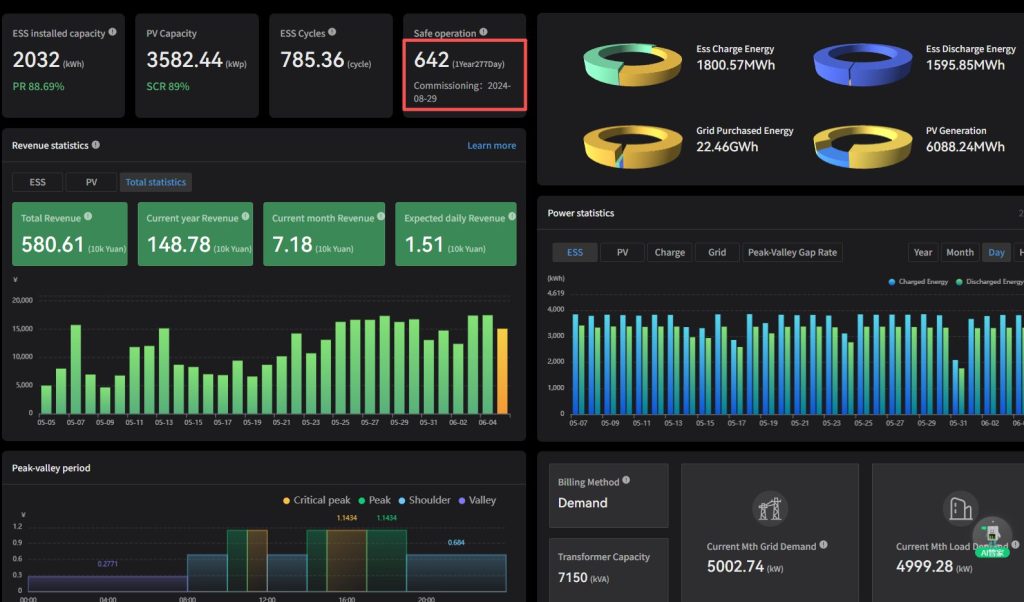
EMS 1.0 – Monitoring-Centric Architecture
Early-stage EMS systems were built on SCADA and PLC frameworks.
- Function: Data acquisition and remote monitoring
- Capability: Visualization only
- Response time: Seconds-level
- Typical use cases: Single PV plants or standalone storage systems
From an engineering perspective, these systems provide awareness but not intelligence.
EMS 2.0 – Rule-Based Optimization Systems
The second generation introduced rule engines and basic optimization logic.
- Peak shaving strategies
- Time-of-use electricity arbitrage
- Basic load shifting algorithms
- Sub-second response capability
This stage marked the beginning of economic optimization, but logic was still static and not adaptive.
EMS 3.0 – AI-Driven Intelligent Dispatch
This is where most modern C&I systems are currently evolving.
Key technologies include:
Key technologies include:
- Machine learning forecasting models
- Edge computing nodes for real-time control
- Adaptive optimization algorithms
Performance improvement:
- Response time: <100ms
- Dynamic load balancing
- Predictive dispatch based on demand behavior
At this stage, energy storage becomes a financial optimization system rather than a static asset.
EMS 4.0 – Energy Ecosystem Coordination Layer
The future of EMS is no longer limited to a single site or system.
It becomes an ecosystem-level coordination platform based on:
It becomes an ecosystem-level coordination platform based on:
- Digital twin simulation
- Blockchain-based energy transactions
- 5G ultra-low latency communication
Capabilities:
- City-level energy coordination
- Multi-asset dispatching
- Real-time market participation
Energy becomes a programmable economic asset, not just consumption infrastructure.
The Real Industry Shift: From Hardware-Centric to Software-Defined Energy Systems
Across global C&I deployments, we are observing a structural transformation:
- Battery cells are becoming standardized components
- EMS algorithms are becoming competitive differentiators
- System integration determines ROI outcomes
- Data intelligence defines long-term asset value
In practical terms:
Two systems with identical battery capacity can have completely different financial returns depending on EMS capability.
KRL Power C&I ESS Architecture: Designed for Real ROI
KRL Power is focused on delivering engineering-grade C&I energy storage systems that are optimized for real-world profitability, not just technical specifications.
Core Engineering Advantages
1. Safety-First Architecture
- High-cycle-life battery cells
- Liquid cooling thermal management
- Multi-layer active fire protection system
- Intelligent BMS coordination
2. EMS-Driven Optimization Engine
- Peak shaving optimization
- Valley filling strategies
- Dynamic capacity allocation
- Real-time tariff adaptation
3. Modular & Scalable Design
- Plug-and-play deployment
- Flexible capacity expansion
- Cloud-based monitoring system
4. ROI-Oriented System Logic
- Reduced peak demand charges
- Increased energy utilization efficiency
- Shortened payback period
Why EMS Directly Determines Investment Return
In actual project economics, EMS performance influences:
- 30%–60% electricity cost reduction potential
- 20%+ improvement in system efficiency
- Significant reduction in payback period
- Long-term asset value stability
Without advanced EMS, even high-quality battery systems underperform economically.
Application Scenarios
KRL Power C&I ESS solutions are widely deployed in:
- Industrial manufacturing facilities
- Commercial buildings and shopping complexes
- EV charging infrastructure
- Industrial parks and logistics hubs
- Hybrid renewable energy microgrids
If your project requires:
- High-ROI C&I energy storage systems
- AI-driven EMS optimization
- Industrial-grade reliability and safety
- Scalable smart energy architecture
FAQ
Q1. What is EMS in energy storage systems?
EMS is the Energy Management System responsible for optimizing charging, discharging, and energy dispatch strategies in real time.
Q2. Why is AI important in EMS systems?
AI enables predictive forecasting, dynamic optimization, and automated decision-making, improving both efficiency and financial performance.
Q3. How does EMS impact ROI?
Advanced EMS reduces peak demand costs and improves energy utilization, significantly increasing overall return on investment.
Q4. What makes KRL Power different?
KRL integrates EMS, BMS, and thermal management into a unified architecture focused on safety, scalability, and ROI optimization.
Q5. Is KRL ESS suitable for industrial parks?
Yes. It is specifically designed for high-load, high-demand C&I applications requiring stable and intelligent energy management.
Conclusion: EMS Is the True Competitive Moat in Energy Storage
The evolution from SCADA-based monitoring systems to AI-driven EMS platforms represents a fundamental shift in the energy storage industry.
Companies that master EMS intelligence will dominate:
Companies that master EMS intelligence will dominate:
- Operational efficiency
- Energy cost structure
- Grid interaction capability
- Long-term investment returns
KRL Power continues to focus on building high-performance, intelligence-driven energy storage systems designed for real-world commercial value creation.
