Battery Backup for Power Outages: Why More Businesses Are Replacing Diesel Generators With Smart Energy Storage
Power Outages Are Becoming a Business Risk — Not Just an Emergency
Ten years ago, most companies viewed power outages as occasional disruptions.
Today, they are becoming a predictable operational challenge.
Across many regions worldwide, businesses are facing:
Today, they are becoming a predictable operational challenge.
Across many regions worldwide, businesses are facing:
- Grid instability
- Rising electricity prices
- Extreme weather events
- Utility infrastructure overload
- Peak demand penalties
For factories, warehouses, hospitals, farms, commercial buildings, telecom stations, and data centers, even a short outage can create serious financial losses.
A single hour of downtime may result in:
Across many regions worldwide, businesses are facing:
A single hour of downtime may result in:
Across many regions worldwide, businesses are facing:
- Production stoppages
- Lost orders
- Delayed deliveries
- Equipment damage
- Refrigeration failures
- Data interruption
- Customer dissatisfaction
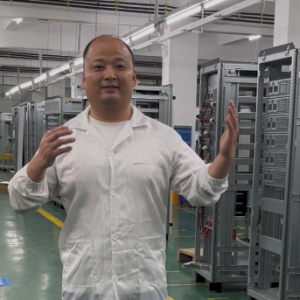
As an R&D director who has worked in the energy storage industry for more than 20 years, I believe the market is entering a major transition:
Businesses no longer want backup systems that only work during emergencies.
They want intelligent energy systems that protect operations every day while reducing electricity costs year-round.
That is exactly why battery backup systems are becoming the new standard.
Why Traditional Diesel Generators Are No Longer Enough
For decades, diesel generators dominated the backup power market.
But many businesses are now realizing that generators solve only one problem:
temporary emergency electricity.
They do not improve energy efficiency, optimize electricity usage, or reduce operating costs.
More importantly, fuel costs are becoming increasingly difficult to control.
The Real Cost of Diesel Backup Power
Many business owners underestimate how expensive diesel-generated electricity actually is.
Depending on:
Depending on:
- Diesel prices
- Generator efficiency
- Maintenance conditions
- Local fuel transportation costs
the real electricity generation cost of diesel backup systems is often between:
$0.30–$0.60 per kWh
In some high-fuel-cost regions, emergency diesel power can even exceed:
$0.80 per kWh
By comparison, modern battery energy storage systems combined with solar power can dramatically reduce long-term electricity costs while also providing backup protection.
In addition to fuel expenses, diesel generators also create:
In addition to fuel expenses, diesel generators also create:
- Noise pollution
- Carbon emissions
- Maintenance downtime
- Slow startup delays
- High servicing costs
For businesses operating continuously, these hidden costs accumulate quickly.
Why Battery Backup Systems Are Becoming the Smarter Choice
Modern battery energy storage systems (BESS) are no longer just “backup batteries.”
They have evolved into intelligent energy management platforms.
Today’s commercial ESS solutions can simultaneously:
They have evolved into intelligent energy management platforms.
Today’s commercial ESS solutions can simultaneously:
- Provide instant backup power
- Reduce electricity bills
- Optimize solar energy usage
- Improve power quality
- Support energy independence
- Increase operational resilience
This creates both operational and financial value.
Instant Power Protection Without Generator Delays
One major advantage of battery backup systems is response speed.
Traditional generators often require startup time after grid failure.
Battery systems switch almost instantly.
For critical operations such as:
Traditional generators often require startup time after grid failure.
Battery systems switch almost instantly.
For critical operations such as:
- Automated production lines
- Medical equipment
- Data centers
- Security systems
- Telecom infrastructure
even a few seconds of interruption can create major consequences.
Modern ESS platforms eliminate that risk.
Modern ESS platforms eliminate that risk.
Turning Energy Storage Into a Profit Optimization Tool
Many businesses initially invest in battery storage for outage protection.
But they quickly discover a second major advantage:
Lower electricity bills.
At KRL Power, one of our core engineering goals is helping customers transform energy storage into a long-term ROI asset.
Using intelligent EMS optimization, businesses can:
But they quickly discover a second major advantage:
Lower electricity bills.
At KRL Power, one of our core engineering goals is helping customers transform energy storage into a long-term ROI asset.
Using intelligent EMS optimization, businesses can:
- Store electricity during low-price periods
- Discharge during peak-price hours
- Reduce peak demand charges
- Improve solar self-consumption
- Stabilize energy usage
This strategy is commonly known as:
- Peak shaving
- Valley filling
- Dynamic energy optimization
For many commercial customers, these savings significantly improve investment payback periods.
Why KRL Power Is Gaining Global Recognition
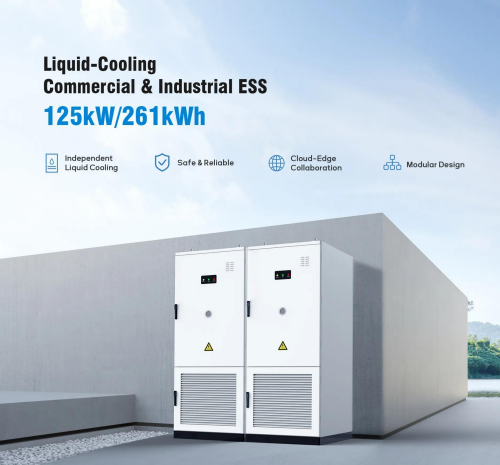
As one of the fastest-growing companies in China’s energy storage industry, KRL Power has rapidly earned market recognition for innovation, product reliability, and intelligent system integration.
Recently awarded the title of “High-Quality Energy Storage Enterprise 2025,” KRL focuses on advanced commercial and industrial energy storage systems designed for demanding real-world applications.
Our engineering philosophy is simple:
Recently awarded the title of “High-Quality Energy Storage Enterprise 2025,” KRL focuses on advanced commercial and industrial energy storage systems designed for demanding real-world applications.
Our engineering philosophy is simple:
Energy storage should not only protect businesses during outages — it should continuously improve operational efficiency.
Recommended Solution #1: KRL Commercial & Industrial ESS Smart Energy Storage Designed for Real Commercial Applications
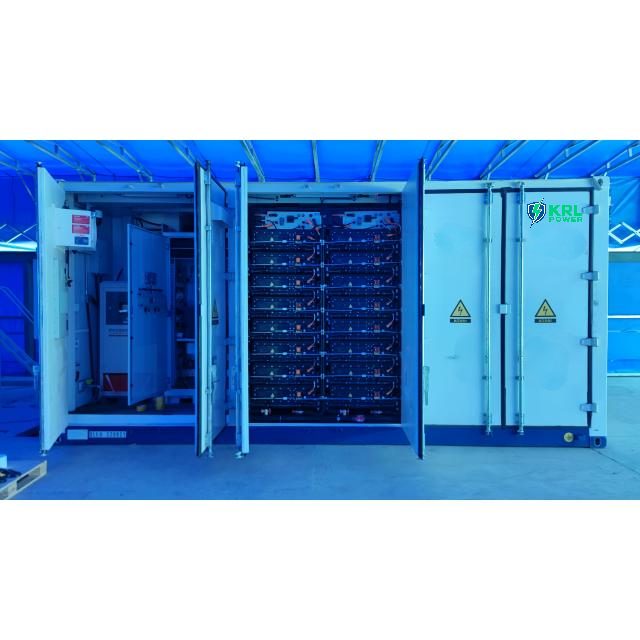
KRL’s Commercial & Industrial ESS platform is engineered for:
- Factories
- Warehouses
- Commercial buildings
- Solar microgrids
- Telecom infrastructure
- Industrial parks
- High-load commercial facilities
Key Advantages of KRL C&I ESS
Extreme Safety Architecture
Safety is one of the most critical factors in commercial energy storage.
KRL integrates:
KRL integrates:
- High-quality long-life battery cells
- Advanced liquid cooling systems
- Intelligent BMS technology
- Multi-layer active fire protection
This allows stable operation even under:
- High-temperature environments
- Heavy-duty cycling
- Complex industrial conditions
Highly Integrated All-in-One Design
Traditional ESS deployment can involve complicated integration between:
- Batteries
- PCS
- Cooling systems
- EMS platforms
- Monitoring systems
KRL simplifies deployment through:
- Plug-and-play architecture
- Modular scalability
- Integrated smart monitoring
- Faster installation
This reduces:
- Engineering complexity
- Deployment costs
- Maintenance requirements
AI-Based Smart Monitoring
KRL’s cloud-based AI monitoring platform enables:
- Predictive maintenance
- Real-time diagnostics
- Operational optimization
- Remote monitoring
For commercial users, this improves reliability while reducing unexpected downtime.
Recommended Solution #2: KRL Solid-State Battery Technology The Next Generation of Safe Energy Storage
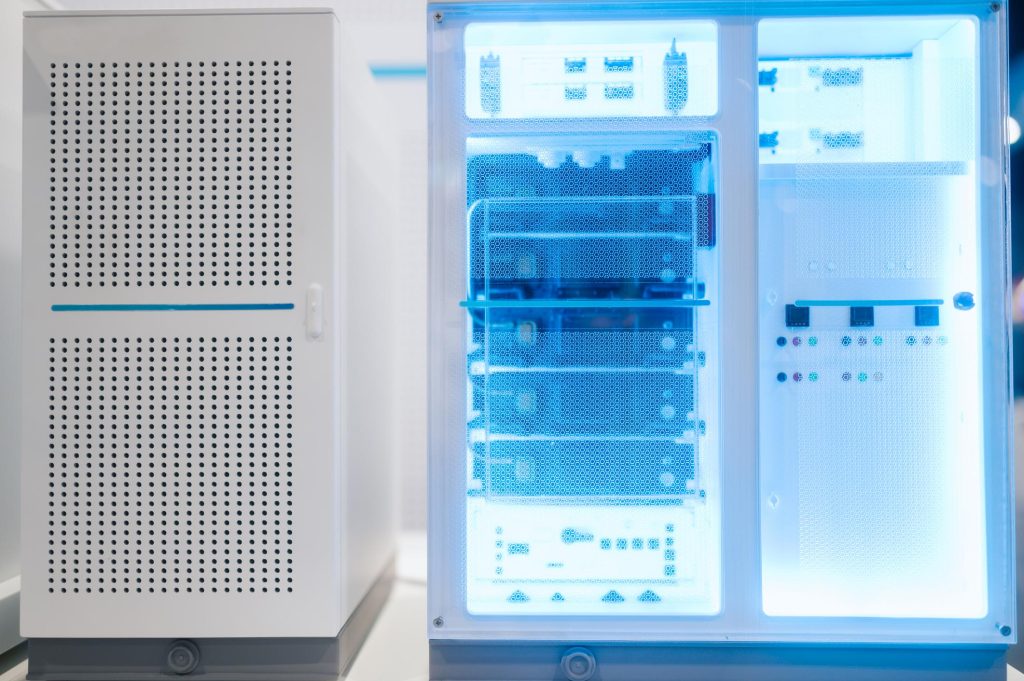
While lithium-ion batteries dominate today’s market, the future of energy storage is increasingly moving toward solid-state battery technology.
At KRL Power, we are actively investing in solid-state battery development to improve:
At KRL Power, we are actively investing in solid-state battery development to improve:
- Safety
- Energy density
- Thermal stability
- Lifecycle performance
Why Solid-State Batteries Matter Improved Safety Performance
Traditional liquid electrolytes introduce thermal risks under extreme conditions.
Solid-state batteries significantly reduce:solid-state battery development to improve:
Solid-state batteries significantly reduce:solid-state battery development to improve:
- Thermal runaway risks
- Leakage risks
- Fire hazards
This makes them highly attractive for:
- Urban installations
- Critical infrastructure
- Commercial ESS projects
- High-density deployments
Higher Energy Density
Solid-state technology allows more energy storage within a smaller footprint.
This benefits commercial customers by:
This benefits commercial customers by:
- Saving installation space
- Increasing storage capacity
- Improving deployment flexibility
Longer Lifecycle Potential
Longer battery lifespan means:
- Lower replacement frequency
- Reduced maintenance costs
- Better long-term ROI
For commercial projects operating over many years, this becomes a major economic advantage.
How Businesses Should Evaluate Battery Backup Solutions
Not all energy storage systems are equal.
Before selecting a supplier, businesses should evaluate:
Before selecting a supplier, businesses should evaluate:
1. Safety System Design
Ask about:
- Fire suppression
- Cooling systems
- Cell quality
- Safety certifications
2. Energy Management Intelligence
The EMS platform determines how effectively the system optimizes:
- Electricity consumption
- Peak shaving
- Solar integration
- Load balancing
- Operational efficiency
3. Scalability
Future energy demand may increase.
A modular ESS design allows flexible expansion without replacing the entire system.
4. ROI Potential
A good energy storage system should create measurable value through:
- Electricity savings
- Reduced downtime
- Improved operational continuity
- Better solar utilization
The Future of Energy Resilience
Energy storage is no longer just backup infrastructure.
It is becoming a core competitive advantage.
Businesses that invest early in intelligent energy systems gain:
It is becoming a core competitive advantage.
Businesses that invest early in intelligent energy systems gain:
- Greater operational stability
- Lower energy costs
- Improved ESG performance
- Reduced grid dependence
- Stronger long-term resilience
As electricity markets continue evolving, battery backup systems will become increasingly essential for modern commercial operations.
Final Thoughts From a 20-Year Energy Storage R&D Perspective
After more than two decades working in energy storage development, one trend is becoming increasingly clear:
The future belongs to intelligent, safe, and integrated energy systems.
Businesses need more than emergency backup power.
They need systems capable of:
The future belongs to intelligent, safe, and integrated energy systems.
Businesses need more than emergency backup power.
They need systems capable of:
- Optimizing electricity usage
- Reducing operational costs
- Protecting critical infrastructure
- Supporting renewable energy
- Delivering long-term reliability
At KRL Power, we continue investing in advanced commercial ESS platforms and next-generation solid-state battery technologies to help customers build smarter and more resilient energy strategies.
FAQ
Q1. How much does diesel backup power actually cost?
Depending on fuel prices and efficiency, diesel-generated electricity commonly costs between $0.30–$0.60 per kWh, and can exceed $0.80 per kWh in high-cost regions.
Q2. Are battery backup systems cheaper than generators?
Over the long term, battery storage systems can significantly reduce operational costs because they require less maintenance and can optimize electricity consumption daily.
Q3. Can commercial ESS systems work with solar panels?
Yes. Modern ESS platforms integrate seamlessly with solar systems to store excess energy and improve renewable energy utilization.
Q4.What industries benefit most from battery backup systems?
Industries with high downtime costs benefit most, including:
- Manufacturing
- Warehousing
- Data centers
- Healthcare
- Telecommunications
- Commercial buildings
- Agriculture
Q5.Why are solid-state batteries considered safer?
Solid-state batteries use solid electrolytes instead of flammable liquid electrolytes, significantly improving thermal stability and reducing fire risk.
Q6.How long can a commercial battery backup system provide power?
Backup duration depends on battery capacity and facility load requirements. Systems can be customized for short emergency backup or extended multi-hour operation.