
KRL Power supports commercial storage projects where protection coordination determines how the BESS responds to faults, abnormal grid conditions and emergency commands. A protection package links switchgear, relays, PCS controls, battery management, meters, transformers and site operating modes. EPC teams need a controlled engineering record before energization so the installed system has clear trip paths, approved settings and traceable responsibilities.
Protection Coordination Scope
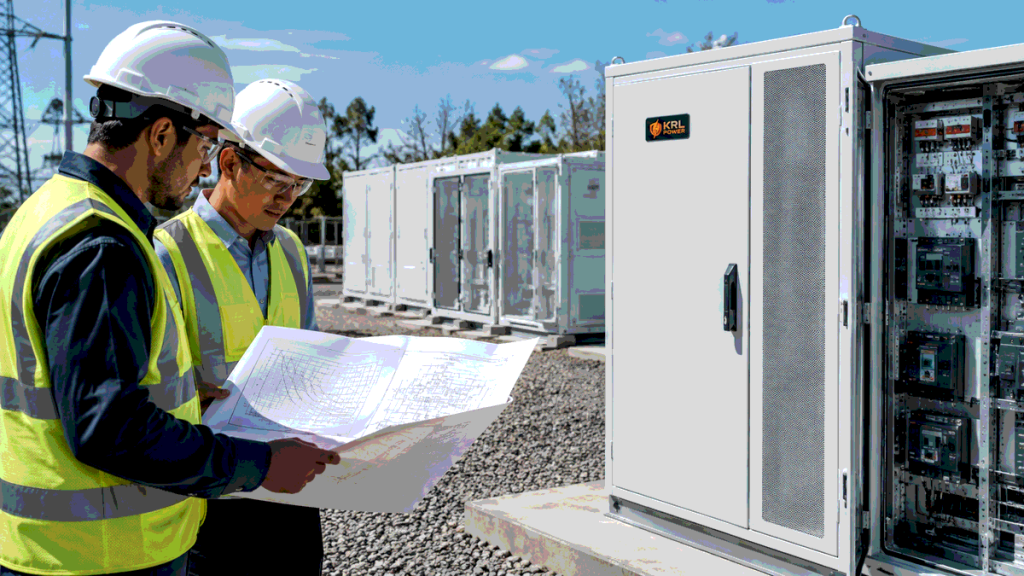
Start with the exact electrical boundary. The study and settings schedule should identify every source, protective device, measurement point and control interface that can influence a fault response.
- BESS battery enclosure, PCS, DC isolation, AC breaker and auxiliary supply.
- Transformer, main switchboard, generator, PV inverter, critical-load board and utility point of connection.
- Protection relays, current transformers, voltage transformers, meters, communication gateways and emergency-stop circuits.
- Normal grid-connected operation, generator support, backup transfer, islanded operation and maintenance isolation modes.
- The party authorized to approve studies, release settings, change parameters and sign functional-test evidence.
Published commercial and industrial energy storage solutions can support early scoping. The final protection boundary must use the installed single-line diagram and approved project documents.
Required Engineering Inputs
| Input | Decision it supports | Record to control |
|---|---|---|
| Single-line diagram | Device locations, sources and isolation boundary | Issued-for-construction and as-built revisions |
| Short-circuit study | Fault levels and device duty | Study assumptions and calculation output |
| Protection coordination study | Relay grading and trip selectivity | Approved curves and settings table |
| Grounding design | Earth-fault path and touch-voltage control | Grounding drawing and test record |
| PCS control description | Grid support, ride-through and trip interfaces | Model-specific control and parameter record |
The system engineer should check the selected power-conversion equipment against its approved interface documents. The energy storage inverter guide is useful background, while the approved model documentation controls the project setting range and connection method.
Relay Settings and Trip Logic
Relay coordination requires a setting schedule that operators and service teams can identify after commissioning. Each entry needs a protected zone, pickup level, delay, action, interlock and revision reference.
- Overcurrent and earth-fault elements, including the measurement source and protected zone.
- Overvoltage, undervoltage, overfrequency and underfrequency functions required by the project grid interface.
- Directional or reverse-power functions where multiple sources can feed the same bus.
- Breaker-failure, transformer, busbar or feeder schemes where supplied in the project scope.
- PCS trip, BMS alarm, fire-system signal, emergency-stop input and auxiliary-failure actions.
- Alarm-only, controlled derate, local shutdown, remote shutdown and lockout actions with a named reset authority.
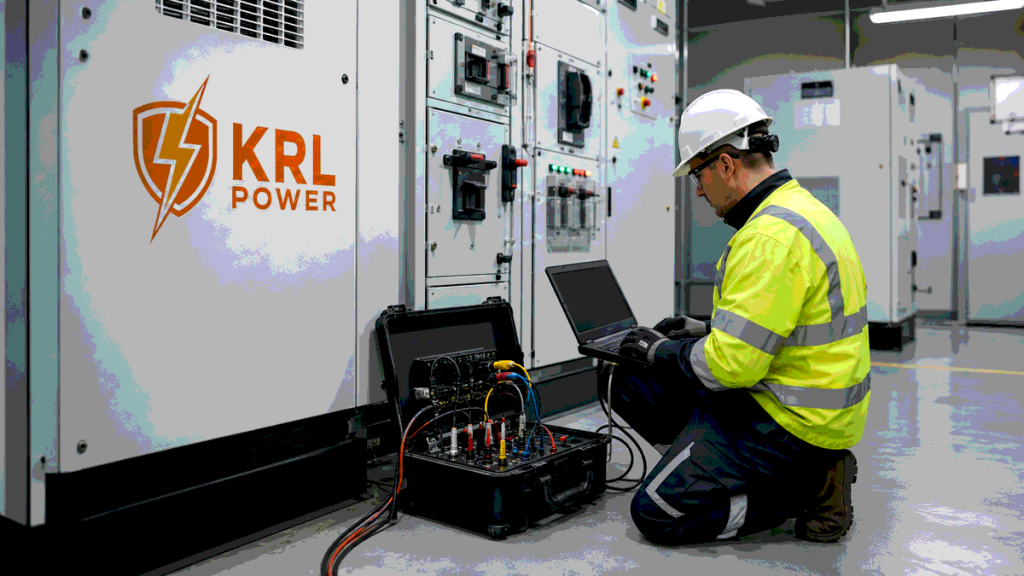
Map these actions to BMS, PCS and EMS responsibilities. The record should show which device detects the event, which device acts first and which party receives the alarm.
Grounding, Anti-Islanding and Site Interfaces
Grounding and islanding behaviour need engineering confirmation for the site operating modes. The review must cover the actual transformer arrangement, earthing system, protective-device ratings, critical-load topology and utility requirements.
- Confirm the earthing arrangement and the earth-fault return path for each operating mode.
- Verify current-transformer ratio, class, polarity, burden and wiring against the relay application.
- Document anti-islanding detection, utility trip input, transfer equipment behaviour and reconnection sequence.
- Review generator, PV and BESS command priority where sources can operate on a shared bus.
- Identify grid-code settings and utility approval records that apply to the point of connection.
- Check that emergency isolation, fire signals and operator shutdown controls act on the intended equipment.
For generator-supported industrial sites, use the industrial off-grid and diesel-hybrid storage approach to identify operating interfaces. The protection study must still be prepared for the specific site.
Functional Testing and Acceptance Evidence
Functional testing proves that installed devices act according to the approved schedule. A clear test record gives the owner, EPC contractor and service team an evidence trail for future maintenance and investigations.
- Confirm final settings are loaded into each relay, PCS, BMS, meter and controller before tests begin.
- Test trip paths using approved simulation or injection methods suited to the device and site condition.
- Verify breaker status, alarm visibility, command inhibition, interlocks and reset sequence for each test.
- Record preconditions, expected result, actual result, instrument identity, witness and corrective action.
- Retest every corrected setting and attach the final approved record to the commissioning closeout package.
- Update as-built drawings, relay schedules, control narratives and operator instructions after accepted tests.
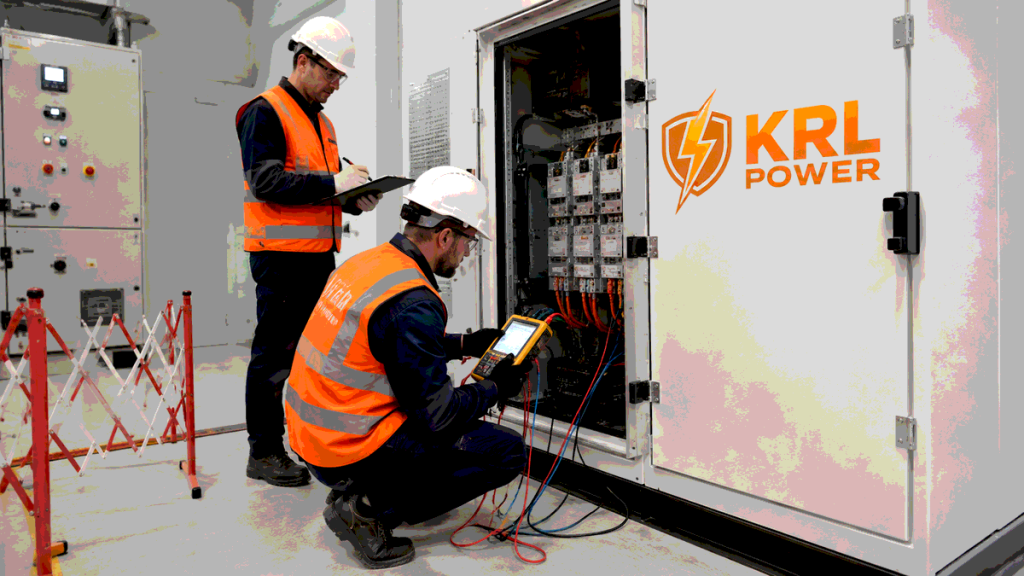
The commercial energy storage design process helps project teams track the original electrical intent. Use the final test file and as-built documentation to control the protection configuration after energization.
Procurement Checklist for EPC Buyers
- Who prepares and signs the short-circuit, coordination and grounding studies?
- Which drawings, data sheets and utility documents are used as study inputs?
- Which relay models, firmware versions and parameter tools are included?
- Who has authority to change protection, PCS or EMS settings after handover?
- Which operating modes require a witnessed functional test?
- Which certificates, calibration records and test reports form the final closeout package?
- How are open protection items tracked, risk-rated and closed?
- What maintenance testing interval and settings-control process apply after commissioning?
These questions help a buyer evaluate the protection scope alongside the wider commercial energy storage selection process. KRL Power can support technical discussions around system interfaces, while the final project documents must assign the engineering and approval responsibilities.