 تخطي إلى المحتوى
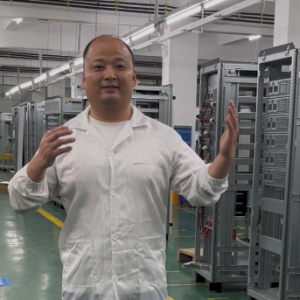
By Liu, General Manager and R&D Engineer at KRL Power | 20 Years in C&I Energy Storage, Former Huawei R&D
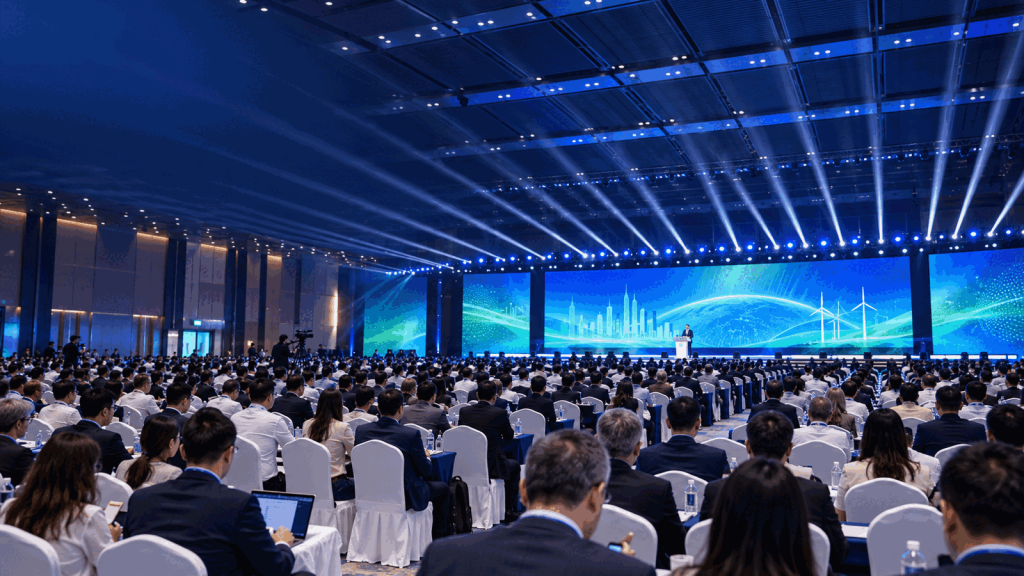
The 2026 International Digital Energy Expo opened at the Shenzhen Convention & Exhibition Center on September 15, alongside the 2026 Energy Green Development Conference. The combined program brought government, industry, research institutions and international buyers into one venue to discuss AI-enabled energy systems, new power infrastructure, energy storage, energy-carbon coordination and cross-border project cooperation.
Nearly 100 digital-energy innovations were presented, with participants from more than 50 countries and regions and almost 400 overseas companies. Reporting also described more than 200 international procurement delegations, over 300 planned project-matching sessions and intended purchasing demand exceeding RMB 300 million.
For an overseas commercial and industrial energy storage buyer, the important question is not how many technologies appeared. It is which ideas can become a safe, verifiable and supportable system for a real factory, mine, hotel, hospital, farm, charging site or microgrid.
Quick answer: the five signals that matter
IDEE 2026 reinforced five practical signals for C&I energy storage procurement. First, AI must be tied to measurable control functions rather than used as a general label. Second, a storage project is an integrated power system, not simply a battery purchase. Third, safety evidence and commissioning responsibilities must be defined before an order. Fourth, international delivery requires market-specific standards, documentation and service boundaries. Fifth, Shenzhen's value lies in its complete electronics and energy ecosystem—but buyers still need to verify the capability of the individual supplier and the exact project scope.
For KRL Power, these signals point back to disciplined engineering: start with the load profile and operating objective, establish the system boundary, select the architecture, and then confirm the equipment, compliance and delivery plan.
Scope note: This article interprets public information about IDEE 2026 from KRL Power's engineering and procurement perspective. It does not imply that every technology displayed at the event is supplied by KRL Power, nor does it claim that KRL was an official exhibitor.
IDEE 2026 at a glance
| العنصر | Publicly reported information | Why it matters to a buyer |
|---|---|---|
| Date | September 15–17, 2026 | A concentrated view of current digital-energy priorities and supplier activity |
| Venue | Shenzhen Convention & Exhibition Center, Futian | Direct access to Shenzhen’s energy-electronics manufacturing ecosystem |
| Exhibition scale | Approximately 45,000 m² on the official expo website | Broad coverage of energy-carbon integration, power equipment, AI-enabled solutions and energy services |
| International participation | More than 50 countries and regions; nearly 400 overseas companies | Strong demand for export-ready technology, documentation and delivery capability |
| Procurement activity | More than 200 international procurement delegations and over RMB 300 million in intended demand were publicly reported | Buyers need a faster but evidence-based supplier qualification process |
| Major topics | AI and energy, new power systems, energy storage, virtual power plants, charging infrastructure and carbon management | C&I storage increasingly interacts with a larger digital and electrical system |
The exhibition also saw the release of the 2026 Shenzhen Digital Energy White Paper وـ China New Energy Industry City Competitiveness Index Report (2026), highlighting local work on virtual power plants, high-power charging and energy-carbon coordination.
Why Shenzhen's digital-energy ecosystem matters
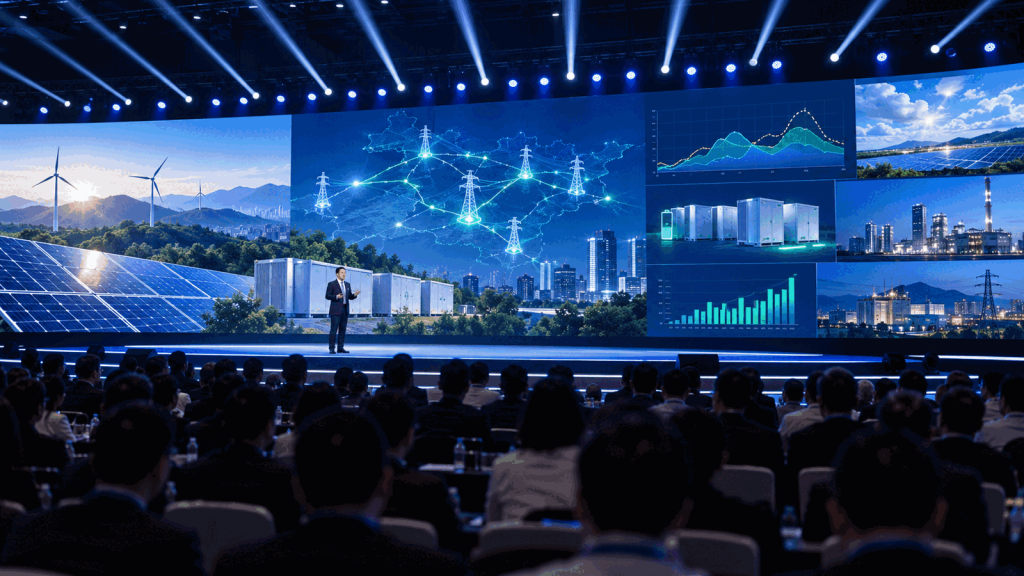
Shenzhen's advantage comes from density. Battery cells and materials, BMS development, PCS and inverter technology, EMS software, power electronics, communications hardware, manufacturing automation and export services can all be found within the same regional ecosystem. That proximity can shorten engineering feedback loops and make customization more practical.
The city also has demanding operating conditions. Public reporting for the event stated that clean power accounts for more than 80% of locally installed generation capacity, while Shenzhen's 2026 peak power load exceeded 26 million kW. The combination of high load density, industrial demand, distributed energy and strict power-quality expectations creates a useful environment for developing and validating digital-energy solutions.
But geography is not evidence. A Shenzhen address does not prove cell consistency, thermal design, firmware quality, safety controls or overseas support. Buyers still need to verify the manufacturer.
Five exhibition signals—and the questions buyers should ask
1. “AI + energy” must become an operating function
The event placed AI-enabled energy among its central themes. In a C&I project, that phrase should translate into specific functions: load forecasting, tariff-aware scheduling, photovoltaic utilization, generator coordination, demand-limit control, abnormal-condition detection or maintenance alerts.
Ask what the EMS measures and controls, which protocols it uses, and what happens when communications fail. A dashboard cannot replace a defined control sequence and fallback mode.
2. Storage is moving from a battery product to a power-system role
New power systems require batteries to interact with the grid, onsite generation and critical loads. The required behavior may include peak shaving, solar self-consumption, backup, time-of-use shifting, generator support, power-quality functions or participation in a virtual power plant.
These objectives are not interchangeable. Identify the primary duty before selecting ratings because backup, peak shaving and grid support place different demands on the battery, PCS, EMS and switchgear.
3. Integration can reduce interface risk—if the scope is explicit
Integrated C&I cabinets can simplify transport, installation and commissioning, but the word “integrated” is often used loosely. Confirm whether the quoted scope includes battery racks, BMS, PCS, EMS, liquid cooling, fire detection or suppression, HVAC or auxiliary power, switchgear, transformer, metering and remote monitoring.
Also confirm what remains outside the cabinet: civil works, earthing, AC protection, site communications, utility studies, permits, installation and final acceptance. Interface omissions are a common source of schedule and cost overruns.
4. Safety claims need traceable evidence
Safety should be reviewed from cell selection through system operation. Buyers should request applicable cell and system reports, BMS protection logic, thermal-management design, alarm and shutdown sequences, enclosure protection information and the proposed fire-safety concept.
Certification and acceptance depend on the destination, project and local authority. Separate completed certifications from planned testing, and equipment compliance from site approval.
5. Global procurement requires a delivery model, not only an export quotation
International buyers need to know which party owns design confirmation, documentation, shipping, installation guidance, commissioning, training, spare parts and warranty response. Grid voltage and frequency, ambient temperature, altitude, corrosion exposure, communications standards and local electrical rules can all change the correct configuration.
The quotation should state assumptions and exclusions. A low initial price can become expensive when transformer, protection, communications or commissioning scope is missing.
A practical verification table for overseas buyers
| Trend seen at IDEE 2026 | Question to ask the supplier | Evidence to request |
|---|---|---|
| AI-enabled energy control | Which decisions does the EMS make, and what is the fallback mode? | Functional description, operating modes, communication list and alarm logic |
| Grid-interactive storage | Is the priority peak shaving, backup, PV utilization, grid support or a hybrid duty? | Load data review, single-line concept, PCS capability and control sequence |
| Integrated equipment | What is inside the quoted system and what remains onsite? | Itemized bill of scope, single-line diagram, interface list and exclusions |
| Safety and thermal control | How are abnormal temperature, voltage and communication events detected and handled? | Protection matrix, thermal design, applicable test reports and fire strategy |
| International delivery | Who owns local engineering, commissioning and acceptance? | Responsibility matrix, document list, Incoterms, service plan and warranty process |

How KRL Power translates the event signals into project work
KRL Power is a Shenzhen source manufacturer focused on commercial and industrial energy storage. Its manufacturing foundation began with lithium battery cells in 2005 and expanded to PACK and integrated systems, supporting coordination across the cell, BMS, cabinet, PCS, EMS and thermal layers.
KRL does not begin a serious proposal with a kWh number alone. The team first identifies the load, demand, schedule, grid connection, PV or generator interface, backup duty, site environment and compliance path.
The team can then evaluate KRL's 261 kWh, 522 kWh, 1 MWh and 2 MWh classes or a customized configuration. Final selection depends on usable energy, power, reserve, cycling, derating and growth.
For buyers comparing suppliers after IDEE 2026, KRL's value proposition is practical: source-factory coordination, engineering customization, clear subsystem interfaces and direct communication with a team that understands battery and power-system requirements. Where local EPC work, permitting or utility approval is required, those responsibilities should be assigned to qualified local parties and recorded in the project scope.
Learn more about KRL commercial and industrial energy storage systems, review C&I ESS solutions, or visit the energy storage knowledge hub.
Bring these eight items to a project discussion
To turn an exhibition conversation into an engineering review, prepare:
- At least 7–30 days of interval load data, including peak demand.
- The primary operating objective and the priority if several objectives conflict.
- Site voltage, frequency and an available single-line diagram.
- Existing or planned solar, generator, UPS and grid connections.
- Required backup loads and target autonomy time.
- Installation location, temperature range, altitude, dust, humidity and corrosion conditions.
- Applicable local standards, utility rules and authority requirements.
- Target schedule, delivery location and the expected split between supplier and EPC scope.
If some data is unavailable, label it as an assumption. This allows the supplier to provide a preliminary concept without presenting an estimate as a guaranteed design.
Who should speak with KRL Power after IDEE 2026?
KRL welcomes project discussions with overseas EPC companies, solar and electrical distributors, energy-service companies and end users planning C&I storage. Typical applications include factories, mines, commercial buildings, hospitals, hotels, farms, charging sites, data centers and hybrid microgrids.
The most productive first meeting is not a generic request for the “best battery.” It is a short technical review of the load, objective, electrical interface, site constraints and delivery boundary. With that information, KRL can determine whether a standard platform is suitable and identify the questions that must be closed before a firm proposal.
To arrange a project review, اتصل بشركة KRL Power with your load data, destination country, voltage and target application.
