 تخطي إلى المحتوى
يجب أن يضمن نظام تخزين الطاقة بالبطاريات في المصانع في نيجيريا حماية حمل الإنتاج وتسلسل الإغلاق المتحكم فيه. أ مصنع بلاستيك بقدرة 300 كيلوواط يستهلك 1.8 ميجاوات/ساعة في ست ساعات, 3.6 ميجاوات/ساعة في اثنتي عشرة ساعة, ، و 7.2 ميجاوات/ساعة في أربع وعشرين ساعة عندما يظل الحمل المحمي عند 300 كيلوواط. وقد تم التحقق من نظام تخزين الطاقة في حاويات KRL-B2M6L قد أدرجت في البورصة 1.5 ميجاواط ساعة / 750 كيلوواط و 2 ميغاواط ساعة / 1 ميغاواط التكوينات.
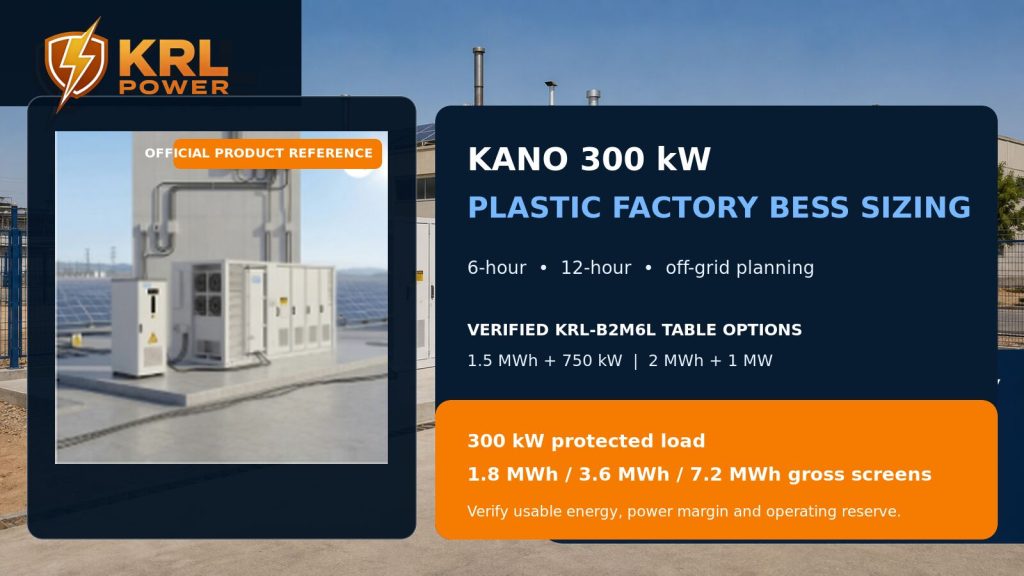
والنتيجة واضحة:
- الـ يُستثنى الطراز الذي تبلغ سعته 1.5 ميغاواط/ساعة من نظام التشغيل لمدة ست ساعات بقدرة 300 كيلوواط لأن مدة التشغيل المثالية المحددة في لوحة البيانات تبلغ خمس ساعات قبل احتساب الخسائر والمعدات المساعدة والاحتياطي.
- الـ النسخة ذات سعة 2 ميغاواط/ساعة هي أول خيار مُعلن عنه لتوفير طاقة لمدة ست ساعات, ، لكن هامش الربح الإجمالي البالغ 200 كيلوواط/ساعة لا يمكن أن يدعم ضمان مدة التشغيل دون وجود بيانات قابلة للاستخدام عن طاقة التيار المتردد.
- A يتطلب الهدف المحدد بـ 12 ساعة توفير 3.6 ميجاوات/ساعة عند الحمل. ويظل مفهوم الوحدتين مفهومًا لفحص السعة إلى أن تؤكد شركة KRL إمكانية التشغيل المتوازي.
- A يتطلب الهدف الكامل للاستقلالية عن الشبكة 7.2 ميجاوات ساعة يوميًا بالإضافة إلى خسائر الشبكة واسترداد الاحتياطي. يجب أن تحقق أنظمة الطاقة الكهروضوئية (PV) وأنظمة تخزين الطاقة الكهربائية (BESS) وتوليد الطاقة بالديزل توازنًا في الطاقة لكل ساعة.
توفر KRL للمشترين منصة انطلاق عملية: طاقة PCS عالية، ومدخلات كهروضوئية مباشرة، ومنفذ لمولد الديزل، ومواصفات للتشغيل داخل الشبكة وخارجها، وتبريد سائل للبطارية، وتصنيف IP65 لنظام البطارية الفرعي، ونطاق تشغيل خارجي معلن. ولا يزال قرار الطلب يعتمد على مدة التشغيل القابلة للقياس، وملف حمولة المصنع، وبنية النظام الموقعة.
تحويل الاحتياج البالغ 300 كيلوواط إلى طاقة تيار متردد مُزودة
تتناول سعة البطارية وطاقتها مسائل مختلفة تتعلق بالمشتريات:
- القدرة بالكيلوواط (kW) والكيلوفولتميغ (kVA): هل يستطيع نظام PCS تحمل الحمل المتزامن وعمليات تشغيل المحركات وخطوات التحميل؟
- الطاقة الموردة بالكيلوواط/ساعة: إلى متى يمكن أن تستمر عملية الإنتاج المحمية؟
- الطاقة الاحتياطية: هل يمكن للمحطة تفريغ المواد، والحفاظ على التبريد، وتشغيل المولد قبل إيقاف التشغيل؟
حساب اللوحة التعريفية هو السطر الأول فقط:
الطاقة من جانب الحمل = متوسط الحمل المحمي × وقت التشغيل
الحساب القابل للتحويل إلى أموال هو:
طاقة التيار المتردد المُقدَّمة = الطاقة الاسمية للبطارية × نسبة حالة الشحن (SOC) القابلة للاستخدام × كفاءة التيار المتردد × السعة المتبقية − الطاقة المساعدة
مدة التشغيل = الطاقة المترددة المُزودة ÷ متوسط الحمل المحمي
| الهدف التشغيلي | متطلبات جانب الحمل عند 300 كيلوواط | مرجع سعة خط كيرل العام | الحالة الهندسية الحالية |
|---|---|---|---|
| احتياطي لمدة 6 ساعات | 1.8 ميجاواط ساعة | وحدة واحدة بقدرة 2 ميغاواط/ساعة | مرشح؛ يلزم تقديم ضمان بتوفير طاقة تكييف الهواء القابلة للاستخدام |
| احتياطي طاقة لمدة 12 ساعة | 3.6 ميجاوات/ساعة | مفهوم السعة الاسمية المكون من وحدتين | البنية المتوازية غير مُثبتة |
| طاقة الحمل على مدار 24 ساعة | 7.2 ميجاوات ساعة في اليوم | مفهوم السعة الاسمية المكون من أربع وحدات | يلزم إجراء محاكاة هجينة كل ساعة |
لا يُفترض وجود أي قدرة متوازية أو تكرار أو بنية تحكم في مفهومي الوحدتين والأربع وحدات. ويُدرج جدول B2M6L العام الخاص بشركة KRL التكوينات الفردية، ولا ينشر أي طوبولوجيا متعددة الحاويات.
قد يؤدي متوسط الحمل المقاس إلى تغيير النتيجة بشكل كبير:
| متوسط الحمولة المحمية | 6 ساعات | 12 ساعة | 24 ساعة |
|---|---|---|---|
| 150 كيلوواط | 0.9 ميجاوات/ساعة | 1.8 ميجاواط ساعة | 3.6 ميجاوات/ساعة |
| 225 كيلوواط | 1.35 ميجاوات/ساعة | 2.7 ميجاواط/ساعة | 5.4 ميجاوات/ساعة |
| 300 كيلوواط | 1.8 ميجاواط ساعة | 3.6 ميجاوات/ساعة | 7.2 ميغاواط/ساعة |
استخدم بيانات العداد لكل دقيقة أو كل خمس عشرة دقيقة لتحديد المتوسط المحمي. وسجل الحمل الأقصى المتزامن بشكل منفصل، لأن تحديد حجم الطاقة وتحديد حجم نظام التحكم في الطاقة (PCS) يستخدمان مدخلات مختلفة.
حماية عملية معالجة البلاستيك أثناء انقطاع التيار الكهربائي وإعادة التشغيل
قد تتعرض مصانع البلاستيك لخسارة في الإنتاج ووقت الإنتاج في حالة انقطاع التيار الكهربائي أثناء عمليات التسخين أو البثق أو الحقن أو التبريد. وينبغي أن يتضمن جدول الأحمال أربع حالات تشغيل.
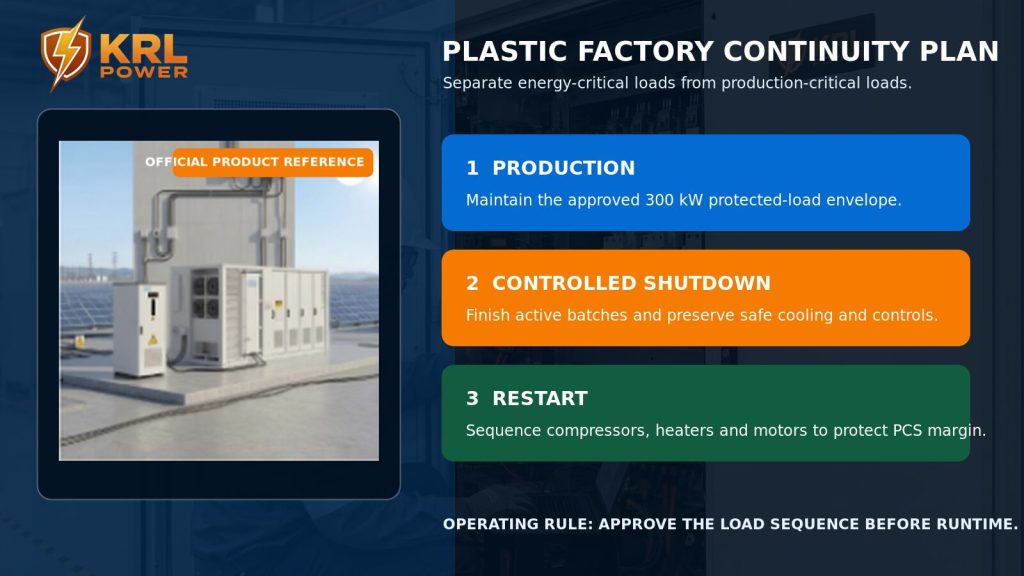
الإنتاج العادي
سجل قيم الكيلوواط (kW) والكيلو فولت أمبير (kVA) ومعامل القدرة وتيار الطور لكل من:
- آلات البثق أو آلات القولبة بالحقن
- سخانات الأسطوانات والقوالب
- وحدات الطاقة الهيدروليكية ومحركات السيرفو
- مبردات، وأبراج تبريد، ومضخات تدوير
- ضواغط الهواء
- آلات الطحن، والناقلات، وأنظمة تغذية المواد
- أجهزة التحكم المنطقية القابلة للبرمجة (PLC)، وأجهزة الكمبيوتر الصناعية، ومعدات الاتصالات، وأنظمة السلامة
انقطاع مفاجئ في التيار الكهربائي
قياس ما يحدث خلال الفعالية العامة <10 مللي ثانية فترة النقل:
- قدرة مزود الطاقة في نظام التحكم المنطقي القابل للبرمجة (PLC) على الاستمرار في العمل أثناء انقطاع التيار الكهربائي
- قدرة محرك التردد المتغير (VFD) على الاستمرار في العمل أثناء انقطاع التيار عن ناقل التيار المستمر (DC-bus)
- الموصلات التي تنفصل عند انقطاع التيار الكهربائي
- مضخات التبريد التي يجب أن تستمر في العمل دون تأخير في إعادة التشغيل
- أجهزة القفل الآمن التي تتطلب إعادة ضبط يدوية
- أقصى درجة تحميل تُعرض على نظام التحكم في الأداء (PCS)
يجب اختبار معدل التبديل B2M6L مع كل جهاز حرج. وقد تظل دوائر التحكم الحساسة تتطلب وحدة إمداد طاقة غير منقطعة (UPS) مخصصة للتحكم.
إيقاف الإنتاج المخطط له
Reserve energy must cover the plant’s approved shutdown procedure, including any required:
- تنظيف المواد أو تفريغ الأسطوانة
- التحكم في جهاز التسخين أثناء دورة التطهير
- تبريد القوالب والعمليات
- التهوية والشفط
- أجهزة التحكم المنطقية القابلة للبرمجة (PLC)، وأجهزة القياس، وطاقة الاتصالات
- محاولات تشغيل المولد ووقت الاستقرار
يجب التعبير عن الاحتياطي بـ كيلوواط/ساعة ودقائق, ، مع تسلسل تلقائي لتخفيف الحمل. ولا تثبت النسبة المئوية لحالة الشحن (SOC) وحدها أن عملية إيقاف التشغيل يمكن أن تكتمل.
استئناف الإنتاج
قد تؤدي إعادة التشغيل البارد أو الدافئ إلى ظهور ذروة تختلف عن تلك التي تحدث أثناء التشغيل العادي. وينبغي أن تشمل الدراسة ما يلي:
- الاسترداد المتزامن للحرارة من السخان
- تشغيل الضاغط والمبرد
- تسارع المضخة الهيدروليكية أو محرك آلة البثق
- إعادة تشغيل الناقل ونظام تغذية المواد
- الحد الأدنى للوقت اللازم لاستئناف الإنتاج القابل للبيع
KRL’s أنظمة تخزين الطاقة التجارية والصناعية provide the product-family reference. The selected PCS must be approved using the plant’s operating sequence and measured waveform data.
التحقق من تيار PCS، وعمليات تشغيل المحرك، والجهد الكهربائي في ناقل المصنع
تنشر KRL 750 كيلوواط القدرة المقدرة للعمل المتصل بالشبكة وغير المتصل بالشبكة للنسخة ذات سعة 1.5 ميجاواط/ساعة و 1,000 كيلوواط بالنسبة للنسخة ذات سعة 2 ميجاوات ساعة. وكلاهما يتجاوز 300 كيلوواط في اختبار الطاقة في حالة الاستقرار.
بالنسبة لنظام ثلاثي الأطوار بجهد 400 فولت:
I = P ÷ (√3 × V × power factor)
- في PF 1.0, ، 300 كيلوواط تساوي تقريبًا 433 أ.
- في PF 0.9, ، 300 كيلوواط تساوي تقريبًا 481 أ.
- تنشر KRL 1,130 أمبير التيار المتردد الأقصى للنسخة ذات القدرة 750 كيلوواط.
- تنشر KRL 1,500 أمبير التيار المتردد الأقصى للنسخة ذات القدرة 1 ميغاواط.
تُظهر هذه القيم هامش التيار في حالة الاستقرار. ولا تزال الموافقة تتطلب ما يلي:
- منحنى الحمل الزائد لنظام PCS ومدة الحمل الزائد
- تيار بدء تشغيل المحرك ووقت التسارع
- أكبر خطوة تحميل متزامنة
- اختلال التوازن بين الأطوار والتيار المحايد
- الطيف التوافقي الناتج عن محركات التردد المتغير (VFD) والمقومات
- استعادة الجهد بعد تطبيق الحمل
- استجابة التردد في وضع التشغيل خارج الشبكة
- تشغيل المحولات وتسلسل التشغيل المساعد
يُبيّن جدول المنتجات ما يلي: 400/230 فولت تيار متردد، L1/L2/L3/N/PE. يجب أن يقيس جهاز EPC النطاق الفعلي لشبكة الحافلات في المصنع وأن يحدد ما يلي:
- نطاق الجهد الاسمي والمسموح به
- نسبة المحول والمقاومة المطلوبتين، عند الاقتضاء
- ترتيب التوصيل المحايد والتأريض
- التحويل بين المولد والخط المحايد
- الكشف عن أعطال الأرض المعزولة
- مقدار ومدة تيار العطل في نظام PCS
- انتقائية القاطع والمرحل في ظل تيار محدود بنظام PCS
A 1 MW PCS rating does not prove that traditional downstream breakers will clear an islanded fault. The protection study must use the manufacturer’s current-limiting and fault-response data.
التكوين لمدة ست ساعات: وحدة واحدة بقدرة 2 ميجاوات ساعة لا تزال مرشحة
الـ 1.5 ميجاواط ساعة / 750 كيلوواط يبلغ وقت التشغيل المثالي لهذه النسخة:
1.5 MWh ÷ 300 kW = 5 hours
لا يمكنها تلبية الاحتياجات لمدة ست ساعات عند 300 كيلوواط، حتى قبل خصم تكاليف المشروع.
الـ 2 ميغاواط ساعة / 1 ميغاواط يبلغ وقت التشغيل المثالي المحدد في لوحة البيانات لهذا الإصدار:
2 MWh ÷ 300 kW = 6.67 hours
ويبلغ هامش الطاقة الإجمالي البالغ 200 كيلوواط/ساعة ما يعادل 40 دقيقة عند 300 كيلوواط. ويجب أن يحول العرض الفني هذا الهامش إلى ضمان لتوريد الطاقة من خلال النص على ما يلي:
- الطاقة الكهربائية القابلة للاستخدام في بداية دورة الحياة
- الطاقة القابلة للاستخدام من التيار المتردد بعد انتهاء فترة الضمان
- الحد الأدنى والحد الأقصى لمستوى الشحن (SOC)
- كفاءة التحويل عند الحمل المتوقع
- استهلاك البطارية ونظام PCS وأنظمة التدفئة والتهوية وتكييف الهواء (HVAC) المساعدة
- تخفيض السعة في كانو في ظروف درجة الحرارة المحيطة
- احتياطي الإغلاق في حالات الطوارئ
- مدة إعادة الشحن من الشبكة الكهربائية، والألواح الكهروضوئية، والمولد الكهربائي
لا يمكن الموافقة على استخدام وحدة KRL-B2M6L بسعة 2 ميغاواط/ساعة لمدة ست ساعات إلا إذا ضمنت شركة KRL ما لا يقل عن 1.8 ميجاواط/ساعة من الطاقة المترددة الموردة في ظل الحمل المتفق عليه، ومعامل القدرة، والظروف المحيطة، وسياسة الاحتياطي.
إذا انخفضت الكمية المضمونة إلى أقل من 1.8 ميجاوات/ساعة، فيمكن للمشتري:
- قم بإزالة الأحمال ذات الأولوية الأقل من الناقل المحمي.
- قم بتشغيل مولد الديزل عند عتبة SOC أعلى.
- مراجعة السعة الإضافية بعد أن تؤكد شركة KRL بنية النظام المسموح بها.
تكوين الاثنتي عشرة ساعة: تحديد بنية الوحدات المتعددة
اثنتا عشرة ساعة عند 300 كيلوواط تتطلب تم تزويد الحمل بـ 3.6 ميجاوات ساعة. توفر وحدتان بسعة 2 ميجاوات ساعة كل منهما مفهومًا بسعة اسمية تبلغ 4 ميجاوات ساعة، مع هامش إجمالي يبلغ 400 كيلووات ساعة.
لا يُشكل حساب الكمية نظامًا عمليًّا. يجب على شركة KRL إصدار:
- مخطط أحادي الخط معتمد
- عدد وتقييم مخرجات نظام PCS
- الترتيب الشائع لحافلة التيار المتردد والمحولات
- EMS master–follower or distributed-control method
- تحمل تقاسم الطاقة في حالات الاستقرار والعابر
- تسلسل تزامن الشبكة والمولد
- الاستجابة لفقدان الاتصال
- تنسيق الحماية ودراسة تيار العطل
- التشغيل مع عزل وحدة واحدة لأغراض الصيانة
- قياس السعة والإنتاجية والضمان في جميع الوحدات
تستمد القيمة التجارية لـ 12 ساعة من تجنب انقطاع الإنتاج. قارن النفقات الرأسمالية الإضافية بما يلي:
- تم الحفاظ على هامش المساهمة خلال الساعات الست الإضافية
- تجنب نفايات المواد أثناء استمرارية الإنتاج الخاضعة للرقابة
- تجنب استخدام وقود الديزل وتكاليف الصيانة
- ساعات العمل وساعات إعادة التشغيل التي تم تجنبها
- تجنب غرامات التأخير في التسليم أو تأخير الطلبات
KRL’s القدرات الهندسية في مجال تخزين الطاقة في قطاعي الصناعة والتجارة وصف أنظمة التحكم المتكاملة، والتبريد السائل، ومفاهيم الأنظمة المعيارية. يجب أن يحدد عقد المشروع الوظائف الدقيقة المشمولة في التصميم متعدد الوحدات الوارد في عرض الأسعار.
التكوين الكامل خارج الشبكة: تحقيق التوازن في استهلاك الطاقة بالساعة
يستهلك الحمل المستمر بقدرة 300 كيلوواط 7.2 ميغاواط/ساعة يوميًا. لا يمكن لمفهوم سعة اسمية تبلغ 8 ميجاوات/ساعة أن يولد الطاقة؛ بل يجب على النظام إعادة شحن البطارية أثناء استمرار الإنتاج.
الحساب اليومي هو:
الطاقة المطلوب توليدها يوميًا = الطاقة اللازمة لتشغيل المصنع + خسائر نظام تخزين الطاقة بالبطاريات (BESS) + الطاقة اللازمة للمعدات المساعدة + استعادة الطاقة الاحتياطية
Required PV energy = required daily generation − diesel-generated energy
يحتاج النموذج إلى بيانات متزامنة كل ساعة بشأن:
- القدرة الكهربائية للمصنع بالكيلوواط والكيلوفولت أمبير حسب حالة التشغيل
- الموارد الشمسية في كانو والتغيرات الموسمية
- درجة حرارة الألواح الكهروضوئية، والغبار، وتوافر الطاقة، والتشذيب، وتقييد الإنتاج
- نظام BESS SOC، والكفاءة، وحدود الطاقة، والمعدات المساعدة، والتقادم
- منحنى استهلاك وقود المولد، والحمل الأدنى، ووقت بدء التشغيل، ومعدل التسارع
تنشر KRL 960 كيلوواط كحد أقصى لطاقة الألواح الكهروضوئية, ، وثماني قنوات MPPT، و 250–850 Vdc نطاق MPPT و 950 فولت تيار مستمر الجهد الكهربائي الأقصى للخلايا الكهروضوئية في النسخة ذات سعة 2 ميجاوات ساعة. يجب أن يؤكد التصميم النهائي ما يلي:
- ما إذا كانت تلك الحدود الخاصة بالطاقة الكهروضوئية تنطبق بشكل مستقل على كل وحدة مزودة
- الجهد والتيار المسموح بهما للسلك عند درجات حرارة كانو
- الطاقة الكهروضوئية المتاحة للحمل أثناء شحن البطارية
- القدرة القصوى المجمعة للشحن من الألواح الكهروضوئية والشبكة والمولد
- التوافق مع أنظمة الطاقة الكهروضوئية الخارجية الموصولة بالتيار المتردد
- تقليص إنتاج الطاقة الكهروضوئية عند مستوى شحن عالي
- احتياطي الطاقة في أوقات انخفاض أشعة الشمس وانقطاع التيار الكهربائي عن المولدات
تؤكد منفذ المولدات العاملة بالديزل وجود واجهة. إلا أنها لا تؤكد التزامن، أو الحماية من الطاقة العكسية، أو انخفاض جهد المولد، أو منطق التوزيع، أو القدرة على الشحن المتزامن.
ينبغي أن يحدد تسلسل التحكم العملي ما يلي:
- تزود الألواح الكهروضوئية الحمل النشط للمصنع بالطاقة.
- يقوم نظام الطاقة الكهروضوئية الفائض بشحن البطارية ضمن الحدود المسموح بها.
- تستجيب شبكة BESS للتغيرات السريعة في الأحمال والطاقة الشمسية.
- يبدأ المولد العمل عند مستوى محدد من حالة الشحن (SOC)، أو عند عتبة التوقعات، أو عند عتبة مخاطر الإنتاج.
- يوفر المولد طاقة ثابتة وقدرة معتمدة لشحن البطاريات.
- يتم تقليص إنتاج الطاقة الكهروضوئية عندما يتجاوز التوليد الحمل مضافًا إليه طاقة الشحن المسموح بها.
- يهدف قطع التيار الكهربائي إلى الحفاظ على احتياطي الإغلاق المتحكم فيه.
KRL’s حل تخزين الطاقة الهجين الذي يعمل بالديزل في نيجيريا و التخطيط لتخزين الطاقة الصناعية في نيجيريا provide related architecture references. The signed proposal must contain the Kano project’s own simulation and control sequence.
المعلمات العامة المُثبتة لطراز KRL-B2M6L
| المعلمة | 1.5 ميجاواط ساعة + 750 كيلوواط | 2 ميغاواط ساعة + 1 ميغاواط |
|---|---|---|
| الطراز | KRL-B1M5L-750H3S-720M6-HX1 | KRL-B2ML-1MH3S-960M8-HX1 |
| تركيب البطارية الكيميائي | LiFePO4 | LiFePO4 |
| الجهد الاسمي للبطارية | 832 فولت | 832 فولت |
| السعة المقدرة | 1,884 أمبير/ساعة | 2,512 أمبير/ساعة |
| القدرة الكهروضوئية القصوى | 720 كيلوواط | 960 كيلوواط |
| الجهد الكهروضوئي الأقصى | 950 فولت تيار مستمر | 950 فولت تيار مستمر |
| نطاق تشغيل MPPT | 250–850 Vdc | 250–850 Vdc |
| الحد الأقصى لتيار الدخل الكهروضوئي | 200 A × 6 | 200 A × 8 |
| قنوات MPPT | 6 | 8 |
| القدرة المقدرة عند التوصيل بالشبكة | 750 كيلوواط | 1,000 كيلوواط |
| القدرة المُصنَّفة خارج الشبكة | 750 كيلوواط | 1,000 كيلوواط |
| الجهد المتردد | 400/230 فولت تيار متردد، L1/L2/L3/N/PE | 400/230 فولت تيار متردد، L1/L2/L3/N/PE |
| التردد المحدد | 50/60 هرتز | 50/60 هرتز |
| الحد الأقصى لتيار التيار المتردد | 1,130 أمبير | 1,500 أمبير |
| وقت التبديل | <10 مللي ثانية | <10 مللي ثانية |
| منفذ مولد الديزل | نعم | نعم |
| التواصل | RS485 / واي فاي | RS485 / واي فاي |
| تصنيف حماية البطارية | IP65 | IP65 |
| نظام الحماية من الحرائق | نعم | نعم |
| تبريد البطارية | التبريد السائل | التبريد السائل |
| نظام تبريد PCS | التبريد الذكي | التبريد الذكي |
| درجة حرارة التشغيل | -10°C to 55°C | -10°C to 55°C |
| الرطوبة | من 5% إلى 95% RH | من 5% إلى 95% RH |
| الارتفاع | <2,000 م | <2,000 م |
| الأبعاد | 6,058 × 2,438 × 2,896 mm | 6,058 × 2,438 × 2,896 mm |
| الوزن التقريبي | 15,000 كجم | 19,500 كجم |
يشير عنوان المنتج إلى مجموعة أوسع، في حين أن الجدول العام لا يدرج سوى هذين التكوينين. يجب أن يستخدم عرض الأسعار أحد الطرازات المذكورة بالضبط في الجدول، وأن يحدد كل خيار معتمد في المشروع.
تحويل قدرات KRL إلى أدلة تعاقدية
The buyer’s stated decision factors are warranty, cycle life, cell brand and total system CAPEX. Each factor needs a measurable document.
أدلة المنتج والمراقبة
Use KRL’s قدرة التكامل بين BMS وPCS لتعريف:
- قائمة الإشارات والبروتوكولات
- أوضاع التشغيل والانتقالات
- درجة خطورة الإنذار والاستجابة له
- خطة بديلة في حالة انقطاع الاتصالات
- الوصول عن بُعد وملكية البيانات
- التحكم في تغيير البرامج والبرامج الثابتة
تقديم الأدلة المتعلقة بالخلية والإمدادات
تقدم شركة KRL هندسة البطاريات وفقًا لمعايير OEM وODM ويصف إدارة سلسلة التوريد الخاصة بالبطاريات. يجب أن ينص العقد على ما يلي:
- الشركة المصنعة للهاتف الخلوي وطرازه
- تتبع دفعات إنتاج الخلايا
- طرازات الوحدات، والرفوف، وأنظمة التحكم في الخلايا (PCS)، وأنظمة إدارة البطاريات (BMS)
- إجراء الاستبدال المعتمد
- قائمة المواد النهائية
أدلة الاختبار والاعتماد
KRL’s قدرات اختبار البطاريات واعتمادها يصف اختبارات السعة، والمقاومة، والدورات، والمعدل العالي، وقصر الدائرة، والظروف البيئية، والحماية من دخول العوامل الخارجية، واختبارات النقل.
حيثما ينطبق ذلك، اطلب أدلة تستند إلى أحدث الإصدارات المحددة في المشروع:
| مرجع الدليل | الغرض من الشراء |
|---|---|
| IEC 62619:2022 | سلامة خلايا وبطاريات الليثيوم الصناعية |
| IEC 62933-5-2:2025 | سلامة أنظمة تخزين الطاقة الكهروكيميائية |
| IEC 62477-1:2022 | سلامة محولات الطاقة الإلكترونية |
| IEC TS 62933-3-3:2022 | التخطيط لعملية النسخ الاحتياطي والتطبيقات التي تستهلك طاقة كبيرة |
| IEC TS 62933-2-2:2022 | اختبار دورة التشغيل والأداء للتطبيق |
يجب أن تتضمن طلبات تقديم العروض (RFQ) اسم حامل الشهادة، والطراز، ورقم التقرير، والجهة المصدرة، والإصدار، ونطاق التطبيق، وقائمة المواد المطابقة. ولا يجوز قبول أي ادعاء بالامتثال دون تقديم أدلة خاصة بالطراز المعني.
إثبات الضمان
يجب أن يحدد جدول الضمان الموقع ما يلي:
- تاريخ بدء سريان الضمان
- السنوات التقويمية والإنتاجية المضمونة
- عدد الدورات اليومية المسموح بها وعمق التفريغ
- الطاقة القابلة للاستخدام من التيار المتردد في بداية العمر التشغيلي ونهاية فترة الضمان
- شروط اختبار السعة وحدود العداد
- Temperature, معدل C and maintenance limits
- تغطية الخلايا، والوحدات، والحوامل، وأنظمة PCS، وأنظمة التدفئة والتهوية وتكييف الهواء (HVAC)
- مسؤولية العمل والسفر والشحن والجمارك
- أوقات الاستجابة والتشخيص والعلاج
- سجلات المطالبات والاستثناءات
- توافر قطع الغيار
مقارنة النفقات الرأسمالية (CAPEX) مع تكاليف الديزل وخسائر الإنتاج
استخدم حدًا مشتركًا للتكلفة لجميع الخيارات الثلاثة:
| حد التكلفة | تضمين |
|---|---|
| BESS | البطارية، نظام التحكم في الطاقة (PCS)، نظام إدارة البطارية (BMS)، نظام إدارة الطاقة (EMS)، نظام التدفئة والتهوية وتكييف الهواء (HVAC)، نظام الحماية من الحرائق والمعدات المساعدة |
| التوازن الكهربائي | معدات التوزيع الكهربائي، والمحولات، وأنظمة الحماية، وأجهزة القياس، والكابلات، والتأريض |
| PV | الوحدات، والهياكل، ومعدات التيار المستمر، وممرات الوصول لأغراض التركيب والتنظيف |
| دمج المولدات | أجهزة التحكم، والمزامنة، والحماية، وواجهة الوقود |
| أعمال الموقع | الأساسات، والصرف، والأسوار، وفواصل الحريق، وممرات الوصول |
| التسليم | النقل إلى كانو، والرفع، والتأمين، والضرائب والرسوم |
| الخدمات | الدراسات، واختبارات FAT وSAT، والتشغيل التجريبي، والتدريب |
| دورة الحياة | الصيانة، وقطع الغيار، ودعم البرامج، واختبار السعة |
استخدام سجلات العملاء في النموذج التجاري:
Annual avoided outage loss = avoided production-stop hours × contribution margin per hour
Annual diesel saving = baseline diesel cost − hybrid-system diesel cost
Incremental payback = additional CAPEX ÷ annual additional benefit
تشمل المدخلات المطلوبة ما يلي:
- استهلاك وقود المولد عند مستويات تحميل مختلفة
- سعر الديزل عند التسليم في كانو
- ساعات انقطاع التيار الكهربائي حسب الشهر
- هامش المساهمة في الإنتاج لكل ساعة
- تكلفة التخلص من النظام وإعادة التشغيل
- تكلفة صيانة المولدات وإصلاحها الشامل
- الإنتاج الشهري من الطاقة الكهروضوئية
- افتراضات استبدال البطارية وصيانتها
KRL’s حساب العائد على الاستثمار في أنظمة تخزين الطاقة في المصانع يمكن أن تدعم هذا النموذج. وينبغي أن تستمد القيم النهائية من فواتير الوقود، وقراءات العدادات، وسجلات الإنتاج.
اختر «التكوين حسب مخاطر الإنتاج»
| خيار | وظيفة هندسية | الملاءمة التجارية | شروط الشراء |
|---|---|---|---|
| 1.5 ميجاواط ساعة / 750 كيلوواط | تم استبعاده لمدة ست ساعات عند 300 كيلوواط | تقليل مدة النسخ الاحتياطي أو تقليل الحمل المحمي | إعادة الحساب باستخدام متوسط الحمولة المقاسة |
| وحدة واحدة بقدرة 2 ميغاواط ساعة / 1 ميغاواط | أول مرشح يستغرق ست ساعات | جسر انقطاع محدد مع دعم بالديزل | Guarantee ≥1.8 MWh delivered AC energy |
| مفهوم الوحدتين | شاشة اسمية مدتها اثنتا عشرة ساعة | انقطاع طويل امتد عبر نوبات الإنتاج | بنية متوازية معتمدة من KRL |
| نظام هجين كامل يعمل خارج الشبكة | 7.2 ميجاوات ساعة في اليوم (على أساس الحمل) | موقع يتطلب إنتاجًا مستمرًا دون الاعتماد على طاقة الشبكة الكهربائية | Hourly PV–BESS–diesel simulation |
يحد خيار الست ساعات من كمية التخزين الأولية، لكنه يوفر هامش الطاقة الأكثر ضيقًا. أما خيار الاثنتي عشرة ساعة فيمكنه تغطية نوبة إنتاج إضافية، ويتطلب تصميمًا متعدد الوحدات تم التحقق من صلاحيته. ويشتمل التشغيل الكامل خارج الشبكة على توليد الطاقة الكهروضوئية، وطاقة الديزل الموثوقة، وأنظمة التحكم المتطورة، وأنظمة الحماية، ونطاق صيانة أوسع.
تُعد شركة KRL مرشحاً قوياً لمشروع كانو، لأن منصة B2M6L التي تم التحقق من كفاءتها تجمع بين نظام توزيع كهربائي (PCS) عالي الطاقة، ونظام تخزين LiFePO4 بسعة متعددة ميغاواط/ساعة، ومدخلات مباشرة من الألواح الكهروضوئية، ومنفذ لمولد ديزل، وقدرات تشغيلية داخل الشبكة وخارجها، ونظام تبريد سائل، وقدرة على التشغيل في الهواء الطلق. ويجب على شركة KRL تحويل هذه القدرات العامة إلى عرض أسعار خاص بالنموذج مع ضمان الطاقة، وأنظمة التحكم المعتمدة، وأدلة الاختبار، وحدود تجارية واضحة.
الأسئلة الشائعة
هل يمكن لتكوين KRL-B2M6L بسعة 1.5 ميجاواط/ساعة أن يوفر الطاقة لمصنع بلاستيك بقدرة 300 كيلوواط لمدة ست ساعات؟
لا. يُعتبر معدل التشغيل المثالي وفقًا للبيانات المحددة في اللوحة التعريفية هو خمس ساعات عند 300 كيلوواط، قبل احتساب خسائر التحويل، والمعدات المساعدة، والاحتياطي، وتأثيرات درجة الحرارة. ويمكن للتكوين الذي تبلغ سعته 1.5 ميجاواط/ساعة أن يدعم فترة تشغيل أقصر أو حمولة محمية مخفضة بعد إجراء المراجعة الهندسية.
هل يمكن لوحدة KRL-B2M6L بسعة 2 ميجاواط ساعة تشغيل حمل بقدرة 300 كيلوواط لمدة ست ساعات؟
وهو أول مرشح تم الإعلان عنه لأن ست ساعات تتطلب 1.8 ميجاوات ساعة من الطاقة عند الحمل. وتتطلب الموافقة ضمانًا موقّعًا بتوفير ما لا يقل عن 1.8 ميجاوات ساعة من الطاقة المترددة ضمن نطاق مستوى شحن البطارية (SOC) المتفق عليه، مع مراعاة الخسائر، والأنظمة المساعدة، والظروف البيئية، واحتياطي الإغلاق.
ما مقدار الطاقة المُزودة التي يحتاجها مصنع بقدرة 300 كيلوواط لمدة اثنتي عشرة ساعة؟
تتطلب الحمولة 3.6 ميجاوات/ساعة قبل احتساب خسائر المشروع والاحتياطي. وتشكل وحدتان بسعة 2 ميجاوات/ساعة لكل منهما شبكة ذات سعة اسمية، لكن يتعين على شركة KRL الموافقة على التوصيل المتوازي، وتقاسم الطاقة، وأنظمة الحماية، وأجهزة التحكم، وحالة الصيانة، وقياس الضمان.
ما مقدار الطاقة اليومية المطلوبة للتشغيل المستمر خارج الشبكة بقدرة 300 كيلوواط؟
يستهلك الحمل الثابت البالغ 300 كيلوواط 7.2 ميجاواط/ساعة في أربع وعشرين ساعة. ويجب أن تشمل خطة التوليد أيضًا خسائر نظام تخزين الطاقة بالبطاريات (BESS) والمعدات المساعدة واستعادة الاحتياطي، وذلك من خلال محاكاة كل ساعة للطاقة الكهروضوئية والبطاريات والديزل.
هل توفر القيم المعلنة لـ PCS البالغة 750 كيلوواط و1 ميغاواط طاقة كافية للمصنع؟
يتجاوز كلا التصنيفين 300 كيلوواط في اختبار الحالة المستقرة. ولا تزال الموافقة النهائية تتطلب قياس القوة الكهربائية بالكيلو فولت أمبير (kVA)، ومعامل القدرة، وتيار بدء تشغيل المحرك، واختلال التوازن بين الأطوار، والتوافقيات، وتيار الاندفاع للمحول، ومنحنى الحمل الزائد لنظام توزيع الطاقة (PCS).
هل يجعل وقت النقل المعلن عنه الذي يقل عن 10 مللي ثانية من جهاز B2M6L جهازًا لتزويد الطاقة غير المنقطعة (UPS)؟
يُظهر الجدول أن زمن التبديل يقل عن 10 مللي ثانية. ويجب أن يجتاز كل جهاز PLC ووحدة VFD وموصل كهربائي ومصدر طاقة للتحكم اختبار «الاستمرار في التشغيل أثناء انقطاع التيار»، وقد تظل دوائر التحكم الحساسة بحاجة إلى وحدة UPS مخصصة للتحكم.
ما هو جهد التيار الكهربائي بين المصنع والحافلة الذي يرد في الجدول العام لطراز B2M6L؟
يُبيّن الجدول العام القيم 400/230 فولت تيار متردد مع L1 وL2 وL3 والخط المحايد والأرضية الواقية. يجب على شركة EPC التحقق من الجهد الفعلي للمحطة، والتأريض، وتبديل الخط المحايد، ومتطلبات المحولات، وتنسيق الحماية.
ما هي حدود مدخلات الطاقة الكهروضوئية المنشورة بالنسبة لتكوينَي B2M6L؟
The 1.5 MWh configuration lists 720 kW maximum PV power, six MPPT channels and 200 A per channel. The 2 MWh configuration lists 960 kW, eight MPPT channels and 200 A per channel. Both list 950 Vdc maximum PV voltage and a 250–850 Vdc MPPT range.
هل يمكن تشغيل جهاز B2M6L باستخدام مولد ديزل موجود بالفعل؟
تتضمن الجدولة العامة بندًا خاصًا بميناء مولدات الديزل. ولا يزال يتعين على المشروع تحديد معايير التزامن، وأجهزة التحكم في المولدات، والحماية من عكس اتجاه التيار، وحدود الشحن، وعتبات التوزيع، ومنطق الانتقال، والاتصالات.
هل نظام B2M6L الكامل مصنف وفقًا لمعيار IP65؟
تشير الجدولة العامة إلى أن البطارية تتوافق مع معيار IP65. ويجب أن تحدد العروض المقدمة تصنيفات نظام توزيع الطاقة (PCS) واللوحات الإضافية والموصلات وواجهات الميدان المكتملة، كما يجب أن تحدد متطلبات التصريف والوصول والفصل المقاوم للحريق.
هل تنشر شركة KRL معلومات الضمان الخاصة بكل طراز، وعمر الدورة التشغيلية، وعلامة الخلية التجارية على صفحة B2M6L؟
لا ترد تلك الشروط التجارية الخاصة بكل طراز في جدول المعلمات العام. ويجب أن تحدد عرض الأسعار الموقع عليه الشركة المصنعة للخلية وطرازها، والالتزام بالطاقة القابلة للاستخدام، وشروط الإنتاجية أو الدورة، وطريقة الاختبار، والاستثناءات، وسبل الانتصاف.
ما هي بيانات المصنع التي ينبغي استخدامها قبل الموافقة على تكوين نظام تخزين الطاقة بالبطاريات (BESS)؟
استخدم قيم الكيلوواط (kW) والكيلوفولت أمبير (kVA) لكل فترة، ومعامل القدرة، والتيار لكل طور، وسجلات عمليات بدء تشغيل المحركات الرئيسية، وتسلسل الإغلاق المتحكم فيه، وتسلسل إعادة التشغيل، وسجل انقطاعات التيار، وسجلات استهلاك الديزل، والظروف البيئية، والاحتياطي المطلوب.
لماذا يُعد طراز KRL-B2M6L خيارًا عمليًّا لتلبية متطلبات مصنع البلاستيك هذا؟
تجمع مواصفاتها العامة بين تخزين LiFePO4 بسعة عدة ميغاواط/ساعة، وطاقة متصلة بالشبكة وغير متصلة بها تبلغ 750 كيلوواط أو 1 ميغاواط، ومدخلات مباشرة من الألواح الكهروضوئية، ومنفذ لمولد ديزل، ونظام تبريد سائل للبطارية، ودرجة حماية IP65 للبطارية، وقدرة على التشغيل في الهواء الطلق. ولا يزال قرار الشراء يتطلب ضمانات خاصة بالمشروع.
ما هي تكوينات KRL المرشحة الأولى لتخزين الطاقة في المصانع لمدة ست ساعات في نيجيريا بقدرة 300 كيلوواط؟
تُعد تكوينات KRL-B2M6L المنشورة بسعة 2 ميجاواط ساعة و1 ميجاواط أول خيار محتمل من حيث السعة. ولا تصبح هذه التكوينات حلاً معتمدًا لمدة ست ساعات إلا بعد أن تضمن شركة KRL توفير ما لا يقل عن 1.8 ميجاواط ساعة من الطاقة المترددة في ظل الشروط المتفق عليها للمشروع.
كيف ينبغي أن تؤثر ظروف مدينة كانو على تصميم نظام تخزين الطاقة بالبطاريات (BESS) لمصنع البلاستيك؟
Keep the equipment inside the published -10°C to 55°C operating range and verify temperature derating, dust management, drainage, solar soiling, ventilation, clearances and maintenance access for the actual site.
أين يمكن لمصنع بلاستيك نيجيري أن يطلب عرض أسعار معتمدًا لطراز KRL-B2M6L؟
يرجى استخدام صفحة الاتصال الخاصة بشركة KRL Power وتحديد جدول الأحمال المحمية بقدرة 300 كيلوواط، والهدف المحدد لمدة ست أو اثنتي عشرة ساعة، وناقل التيار الرئيسي للمصنع، وعمليات تشغيل المحركات، واحتياطي الإغلاق، والمولدات، ونطاق أنظمة الطاقة الكهروضوئية، وظروف الموقع، حتى يتسنى للعرض السعري تحديد حدود النظام الخاصة بكل طراز على حدة.
