 تخطي إلى المحتوى
| العنصر | المواصفات |
|---|---|
| نظام البدء الموصى به | KRL-B261L 125 kW / 261 kWh liquid-cooled pre-integrated ESS |
| حالة الاستخدام الأساسية | Tea and coffee processing factories running night shifts |
| الوظائف الرئيسية | Instant bridging, diesel runtime reduction, solar self-consumption, process continuity |
| التبريد | التبريد السائل |
| ترقية اختيارية | خلايا هجينة من نوع الحالة الصلبة/شبه الصلبة للمواقع التي تتطلب مستوى أعلى من الأمان |
| الهندسة المعمارية النموذجية | Grid + Solar PV + ESS + existing diesel + critical process loads |
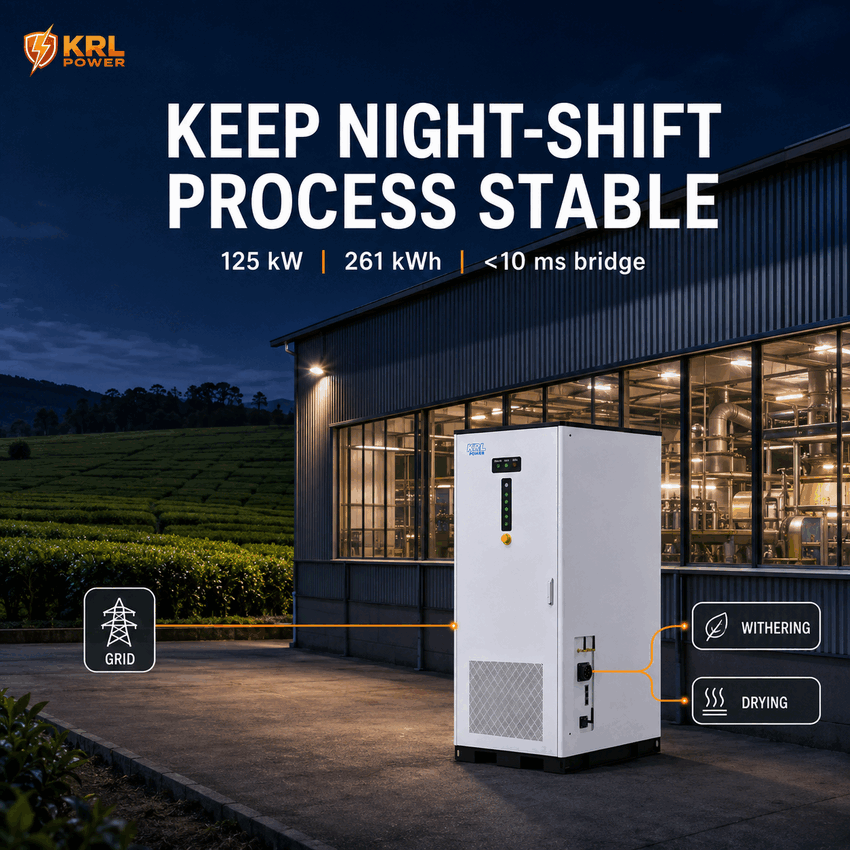
Night-shift power interruptions in Kenyan tea and coffee factories do more than stop machines. They interrupt withering, drying and temperature-sensitive stages that directly affect leaf quality and final grade. Once the process is disrupted, the damage shows up in the cupping score or the auction price, not just on the electricity bill.
نظام تخزين طاقة (ESS) مبرد بالسائل بقدرة 125 كيلوواط / 261 كيلوواط·ساعة، مدمج مسبقًا في المصنع من KRL Power is designed to protect that continuity in four practical ways:
- Instant bridging so critical process lines keep running while the diesel starts or stays offline
- Coordinated solar + storage that prioritises withering fans, dryers and sorting equipment
- Liquid cooling that holds performance under continuous high-duty cycles
- مسؤولية طرف واحد عن أداء النظام والضمان والتوسعة
The goal is simple: keep the night-shift process stable so grade consistency is not left to chance.
Why Tea and Coffee Processing Is Especially Sensitive to Power Gaps
Tea and coffee factories share several characteristics that make short outages expensive:
- Withering and drying stages need stable temperature and airflow
- Restarting after an interruption often produces uneven moisture or over-dried leaf
- Night shifts are when a large share of processing happens
- Export buyers pay for consistency; grade drops are hard to reverse
Diesel generators are already common. The problem is the transfer delay and the cumulative fuel cost of running them for every short grid event.
Why a Larger Diesel Generator Alone Does Not Protect Grade
Upsizing the diesel usually increases fuel consumption, maintenance frequency and noise during night hours. It does not remove the gap between grid failure and stable power restoration. That gap is exactly when process quality starts to drift.
What these factories need is a system that keeps the critical load powered through the transition so the process never notices the outage.
Matching 125 kW Power and 261 kWh Energy — Is It Enough?
| المعلمة | القيمة | المعنى العملي |
|---|---|---|
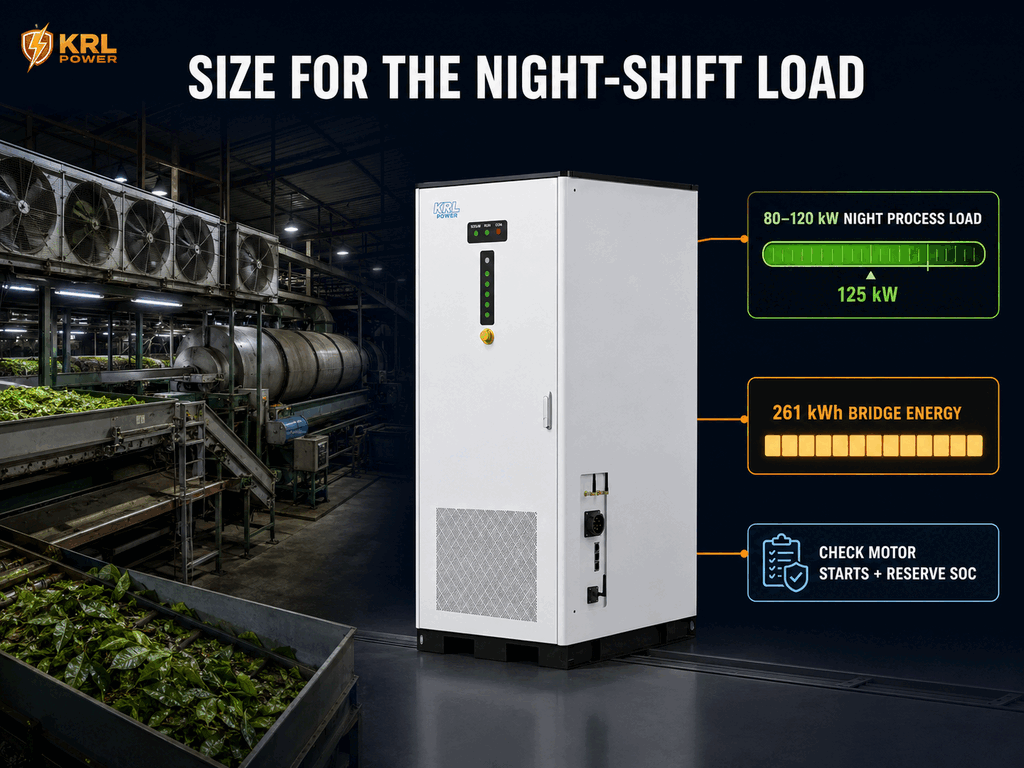
| القدرة المقدرة | 125 كيلوواط | Supports typical continuous process loads on medium tea/coffee lines |
| الطاقة المقدرة | 261 كيلوواط/ساعة | Meaningful bridge time so diesel stays offline during short and medium events |
| الوقت النظري للتشغيل عند 100 كيلوواط | ≈ 2.6 hours | Simple calculation only (261 ÷ 100) |
| مدة التشغيل الفعلية القابلة للاستخدام | أقصر | تأثرت بسياسة نافذة SOC، والخسائر، والخدمات المساعدة، والاحتياطي |
Direct guidance:
- Continuous night-shift process load typically 80–120 kW → 125 kW / 261 kWh is a practical starting point.
- Larger multi-line factories → treat this as Phase 1 and plan parallel cabinets once measured load is confirmed.
- No solar → energy demand rises; 261 kWh may become tight for multi-hour autonomy.
- Solar already planned → daytime charging supports night bridging and improves diesel reduction.
Three checks worth doing:
- Measured continuous night-shift process load
- Below 100–110 kW → 125 kW has healthy margin
- Regularly above 130–150 kW → plan parallel units
- Required bridge time before diesel is allowed to start
- Minutes to 30–40 minutes → 261 kWh is normally sufficient
- Several hours without diesel → increase energy capacity
- Solar availability for daytime charging
- Yes → 125 kW / 261 kWh works well as the core hybrid block
- No → treat it as a short-bridge system and size energy more carefully
ملاحظة هندسية: تُعدّ قدرة 125 كيلوواط اختيارًا أوليًّا يستند إلى الحمل الحرج في حالة الاستقرار. ولا يزال التأكيد النهائي يتطلب مراجعة تسلسل تشغيل المحركات، وعمليات التشغيل المتزامنة للمحركات، وتكوين محرك التردد المتغير (VFD) أو المشغل الناعم أو التشغيل المباشر (DOL)، ومعامل القدرة، وقدرة نظام الحماية من الحمل الزائد (PCS) على تحمل الأحمال الزائدة لفترات قصيرة.
Sizing must start from the measured critical process load, not from the battery nameplate. The 125 kW / 261 kWh unit (KRL-B261L) is designed as a modular building block within KRL Power’s C&I energy storage systems.
→ Submit your continuous night-shift load and motor list for a preliminary check.
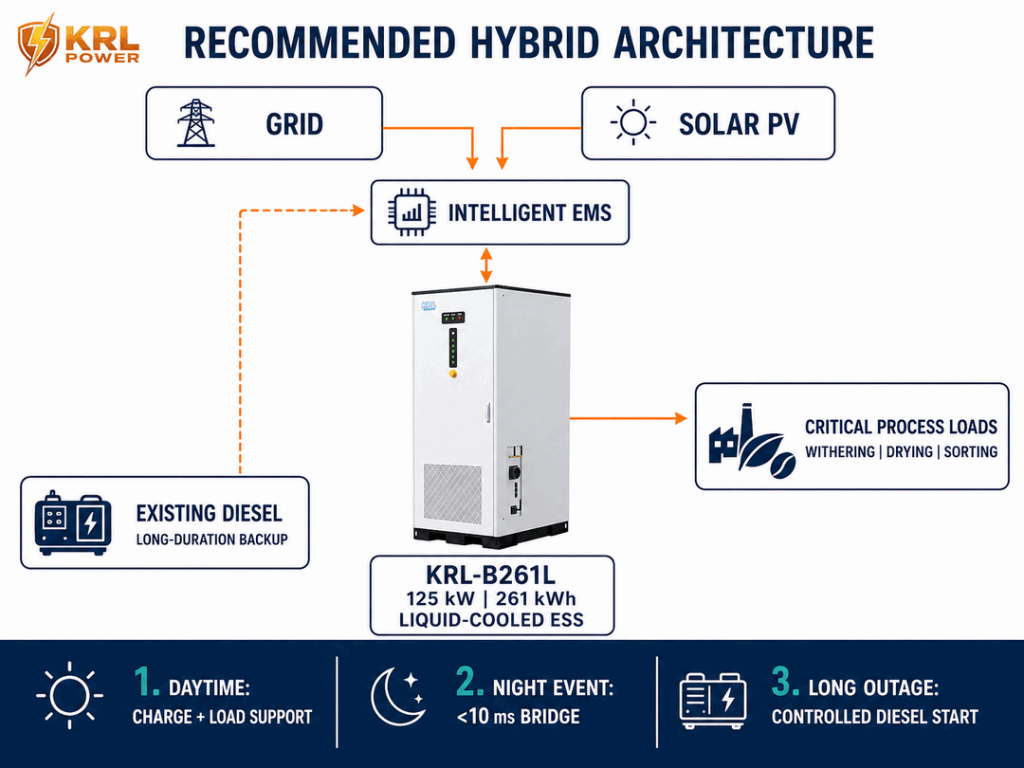
البنية الهجينة الموصى بها
Grid → Intelligent EMS → 125 kW / 261 kWh liquid-cooled ESS → Critical process loads (withering, drying, sorting) Existing diesel retained as long-duration backup only Solar PV sized to daytime process demand and battery charging
Typical sequence:
- Daytime with good solar → PV covers process loads and charges the ESS
- Grid present but expensive → ESS discharges to limit peak demand
- Grid fails at night → ESS bridges instantly so the process never stops
- Diesel running → ESS absorbs load steps and shortens generator runtime
تتبع هذه البنية نفس مبادئ التصميم المستخدمة في الحلول الصناعية الأكبر حجمًا مثل خزانة الشبكة الصغيرة KRL التي تعمل بالطاقة الشمسية وتخزين الطاقة والديزل بسعة 522 كيلوواط/ساعة.
مزايا التصميم المُدمج مسبقًا في المصنع والمبرد بالسائل
| الجانب | التنفيذ بمشاركة عدة موردين | نظام مدمج مسبقًا ومبرد بالسائل |
|---|---|---|
| أداء النقل | من الصعب ضمان ذلك | تم اختباره في المصنع |
| الاتساق الحراري | متغير | نظام التبريد السائل الموحد |
| مدة التشغيل التجريبي | أطول، متعدد الأحزاب | أقصر، مسؤولية واحدة |
| حدود الضمان | مجزأة | مساءلة واضحة للحزب الواحد |
| التوسع | غالبًا ما يتطلب إعادة التصميم | مسار النمو المعياري |
At a working tea or coffee factory the cost of interface failure appears as grade loss and extra diesel hours rather than simple extra labour. These benefits are consistent across KRL’s full range of C&I ESS solutions.
How the System Protects Night-Shift Grade Consistency
When solar and storage are correctly coordinated, the ESS handles the majority of short and medium grid events. Diesel is called only for longer outages. The process experiences no stop-start cycle, protecting moisture content, temperature profile and final grade. The net result is fewer generator operating hours, lower fuel invoices, and far less quality variation during night shifts.
وترد أمثلة معمارية أخرى في مركز المعرفة التابع لشركة KRL BESS.
الاعتبارات المتعلقة بالسلامة والحرارة
Factories often place batteries near production areas or in plant rooms with elevated temperature and continuous duty. Liquid cooling maintains tighter cell-temperature uniformity and supports repeated high-power cycles with less performance drift than typical air-cooled designs.
بالنسبة للمواقع التي تتطلب تدقيقًا أكثر دقة، فإن الخيار الهجين بين الحالة الصلبة والحالة شبه الصلبة المتاح من خلال KRL’s solid-state battery technology يمكن اختيارها كجزء من التقييم الشامل للسلامة.
نموذج السلامة الشامل = الكيمياء + نظام إدارة البطارية (BMS) + التبريد السائل + الحماية من الحرائق + الحماية الكهربائية + منطق احتياطي نظام إدارة الطاقة (EMS).
EMS Functions That Protect Process Continuity
- التوصيل الفوري أثناء حالات انقطاع التيار الكهربائي
- تشغيل محرك الديزل بشكل مُحكَم وتقليل مدة التشغيل
- تحديد ذروة الطلب عند نقطة التوصيل بالشبكة
- Solar self-consumption priority for process loads
- نسبة شحن البطارية (SOC) الاحتياطية القابلة للتكوين لخطوط الإنتاج الحيوية في نوبة العمل الليلية
- Event logging for operational and quality review
These control functions align with the approach used in تطبيقات تخزين الطاقة الصناعية من شركة KRL.
الإعدادات الأولية العملية
| المكون | توصية |
|---|---|
| ESS | KRL-B261L 125 kW / 261 kWh liquid-cooled pre-integrated |
| خيار البطارية | بطاريات LFP القياسية أو بطاريات الحالة الصلبة الهجينة للمواقع التي تتطلب مستوى أعلى من الأمان |
| الديزل | سيتم الاحتفاظ بالمولد الحالي كاحتياطي طويل الأمد فقط |
| الطاقة الشمسية | Sized to daytime process demand and battery charging |
| التحكم | نظام إدارة الطاقة (EMS) الذكي متعدد المصادر |
| الملحق | خزانة مبردة بالسائل مصممة للاستخدام في الأماكن المفتوحة أو متوافقة مع الاستخدام في الأماكن المغلقة |
يتم تحقيق التوسع عن طريق إضافة خزانات متوازية عندما تزداد أحمال العمليات أو متطلبات الاستقلالية. وترد مراجع مشاريع إضافية في نبذة عن شركة KRL Power.
Key Procurement Questions for Tea and Coffee Factory Buyers
- ما هي الطاقة القابلة للاستخدام من التيار المتردد التي يتم ضمان توفيرها في إطار نطاق حالة الشحن (SOC) وشروط درجة الحرارة المتفق عليها؟
- What measured transfer time is achieved to the critical process load?
- How does the system respond to simultaneous motor starts on withering or drying lines?
- ما هي طريقة إدارة الحرارة المستخدمة، وما هو الفرق في درجة حرارة الخلايا الذي يتم الحفاظ عليه أثناء التشغيل المستمر؟
- ما هي الوثائق المتعلقة بتركيب البطارية واختبارات السلامة المرفقة مع عرض الأسعار؟
- هل يمكن للنظام أن يتوافق مع مولد الديزل الحالي دون تدخل يدوي؟
- من يتحمل المسؤولية الكاملة عن الأداء والضمان على مستوى النظام؟
- ما هي معايير الاختبار في المصنع ومعايير القبول في الموقع التي تم تضمينها؟
تعكس هذه الأسئلة المعايير الهندسية التي يطبقها الفريق في KRL Power’s engineering team.
→ Send your continuous night-shift load profile, motor list and current generator behaviour for a site-specific architecture.
Decision Framework: Matching System to Grade-Risk
| حالة الموقع | المسار المفضل | عواقب عدم التوافق |
|---|---|---|
| Frequent short night outages, moderate continuous load (80–120 kW) | 125 كيلوواط / 261 كيلوواط·ساعة، مبرد بالسائل | Repeated process interruptions, grade variation, higher diesel hours |
| Larger multi-line factory or future expansion | ابدأ بـ 125 كيلوواط / 261 كيلوواط·ساعة + خطط لخزانات متوازية | إعادة تصميم مكلفة في وقت لاحق |
| High diesel hours already recorded on night shifts | ESS + نظام التحكم الهجين بالديزل + الطاقة الشمسية | Missed reduction in generator operating hours |
| الوضع داخل المبنى أو فحص أمان أكثر دقة | خيار هجين يعمل بتقنية الحالة الصلبة | التأخيرات الناجمة عن إجراءات التأمين أو مراجعة السلامة |
| الإمكانات الشمسية المتاحة خلال النهار | التنسيق بين أنظمة الطاقة الكهروضوئية وأنظمة تخزين الطاقة | الاستفادة غير الكافية من الطاقة الشمسية واستمرار الاستخدام المرتفع للديزل خلال الليل |
التوصية النهائية
For most medium-sized Kenyan tea and coffee factories running night shifts, a 125 kW / 261 kWh liquid-cooled pre-integrated ESS (KRL-B261L) offers a practical way to protect process continuity and grade consistency while cutting generator hours. Larger sites should treat it as the first modular block and plan parallel expansion based on measured load.
عندما تكون البطارية موضوعة بالقرب من مناطق الإنتاج، أو عندما تولي مراجعة السلامة أهمية كبيرة للسلوك الحراري، يجب تضمين خيار الخلايا الهجينة ذات الحالة الصلبة في عملية التقييم.
Submit measured critical night-shift process load, existing generator details, recent diesel consumption patterns, available space for solar, and any target autonomy. The engineering team at قناة الاتصال بشركة KRL Power will return a site-specific architecture focused on protecting night-shift grade consistency.
