Reliable 3MWh Industrial Energy Storage for South Africa Large Factory Backup Power
South Africa factory energy storage solutions are becoming increasingly critical as industrial manufacturers continue facing power instability, load shedding, and rising electricity costs.
For large factories operating heavy industrial equipment, even short power interruptions can lead to:
- Production shutdowns
- Equipment restart losses
- Vertragde aflewerings
- Product waste
- High operational costs
Onlangs, KRL Krag received an inquiry from a South African industrial customer seeking a reliable backup power solution for a large manufacturing facility.
The customer required:
- A 3MWh industrial energy storage system
- Stable support for 1MW continuous industrial loads
- Backup runtime of approximately 3 hours
- Reliable operation for factory-scale applications
- Liquid-cooled ESS architecture
- Transformer and grid integration support
This project reflects a rapidly growing trend across South Africa’s industrial sector, where manufacturers are accelerating investments in commercial & industrial battery energy storage systems (C&I ESS) to protect production continuity and improve energy resilience.
Why Large Factories in South Africa Need Industrial ESS
South Africa’s power challenges have significantly increased operational pressure on manufacturers.
For large factories, unstable electricity supply creates several critical problems:
For large factories, unstable electricity supply creates several critical problems:
Produksiestilstaan
Unexpected outages can stop entire production lines.
Equipment Stress
Heavy industrial motors and automation systems may experience damage during unstable restart conditions.
Stygende elektrisiteitskoste
Peak-demand tariffs continue increasing operational expenses.
Diesel Dependence
Traditional generator backup systems create long-term fuel and maintenance costs.
Reduced Operational Efficiency
Voltage instability impacts sensitive industrial equipment.
As a result, more manufacturers are adopting industrial battery energy storage systems as a long-term infrastructure investment rather than a temporary backup solution.
KRL Power’s Recommended 3MWh Industrial ESS Solution
High-Power Liquid-Cooled Industrial ESS Architecture
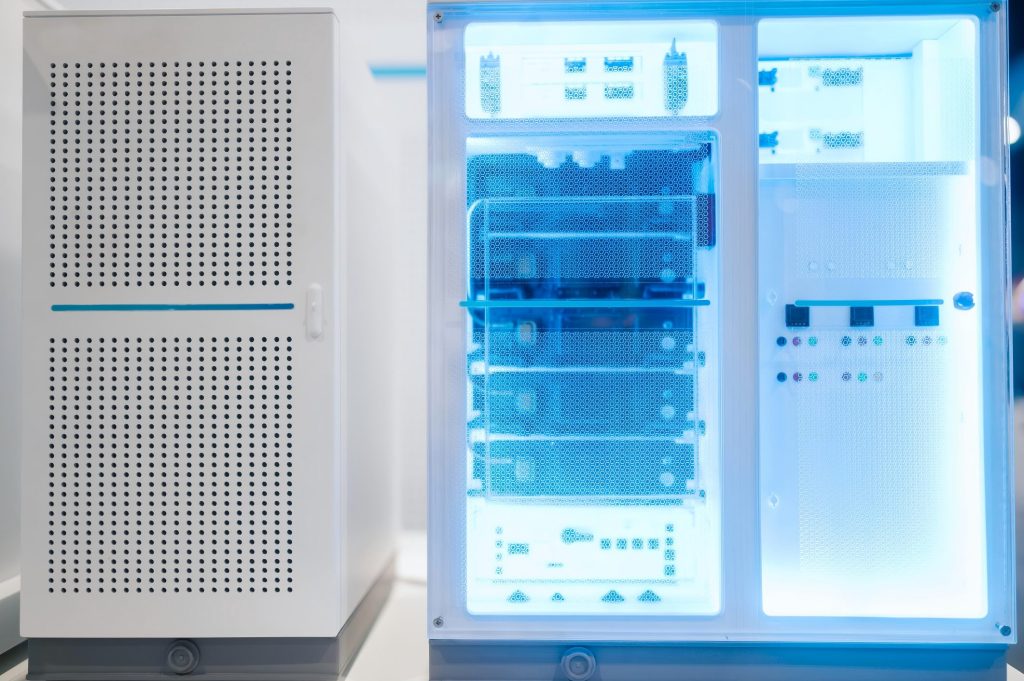
Die voorgestelde oplossing fokus op:
- Stable 1MW continuous discharge
- Long-duration backup capability
- High operational safety
- Intelligente EMS-optimalisering
- Buigsame toekomstige uitbreiding
- Industrial-grade reliability
Recommended System Configuration
System Capacity
- 3MWh Battery Energy Storage
- 1MW Continuous Load Support
Application Scenario
- Large industrial manufacturing facilities
- Heavy machinery factories
- Continuous production plants
- Industrial backup power systems
- Solar + storage hybrid factories
- Industrial microgrid projects
Kerntegnologieë
- Liquid cooling thermal management
- Intelligente batterybestuurstelsel (BMS)
- Multi-layer fire suppression system
- Wolkgebaseerde afstandmonitering
- Modulêre skaalbare argitektuur
Why Liquid Cooling Is Essential for High-Power Industrial ESS
Factories operating continuous 1MW loads generate substantial thermal stress on battery systems.
Traditional air-cooled systems may struggle with:
Traditional air-cooled systems may struggle with:
- Uneven cell temperature distribution
- Verminderde afvoerdoeltreffendheid
- Accelerated battery aging
- Higher failure risks
- Lower long-term reliability
KRL Power’s liquid-cooled ESS architecture is specifically engineered for demanding industrial environments.
Advantages of Liquid Cooling
Stable High-Power Discharge
Supports continuous industrial loads with improved thermal consistency.
Langer batterylewe
Reduces thermal degradation and improves long-term ROI.
Verbeterde operasionele veiligheid
Maintains stable operating temperatures under heavy-load conditions.
Better Energy Efficiency
Enhances system efficiency during continuous operation cycles.
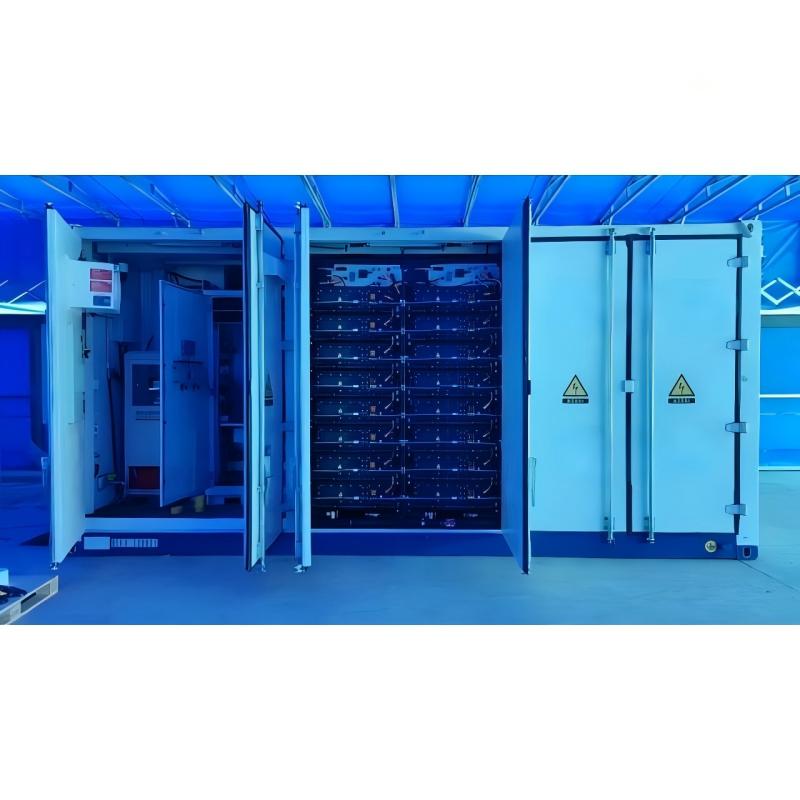
For factories running 24/7 production operations, thermal stability directly impacts business continuity.
Supporting 1MW Continuous Factory Loads: What Really Matters
Many industrial customers focus only on total battery capacity.
However, for large-scale manufacturing plants, continuous power delivery capability is equally important.
A reliable industrial ESS solution must address:
However, for large-scale manufacturing plants, continuous power delivery capability is equally important.
A reliable industrial ESS solution must address:
Continuous Discharge Stability
The system must maintain stable voltage during sustained heavy loads.
Motor Startup Capability
Large industrial motors create significant startup currents.
Transformer Compatibility
Grid and transformer integration must be engineered carefully.
System Redundancy
Industrial operations require backup safety mechanisms.
Smart Energy Scheduling
Peak load management improves long-term operational efficiency.
KRL Power’s engineering approach focuses on the entire industrial power ecosystem rather than battery hardware alone.
How KRL EMS Helps Factories Reduce Electricity Costs
Beyond backup power, industrial ESS systems provide significant economic advantages through intelligent energy management.
KRL Power’s self-developed EMS platform enables:
KRL Power’s self-developed EMS platform enables:
Piekafskraping
The ESS discharges during expensive peak-rate periods.
Valley Filling
The battery charges during low-cost electricity periods.
Verlaag die vraagheffing
Reduces costly peak demand penalties.
Solar Integration Optimization
Improves renewable energy utilization.
Dynamic Capacity Management
Automatically optimizes charging and discharge cycles.
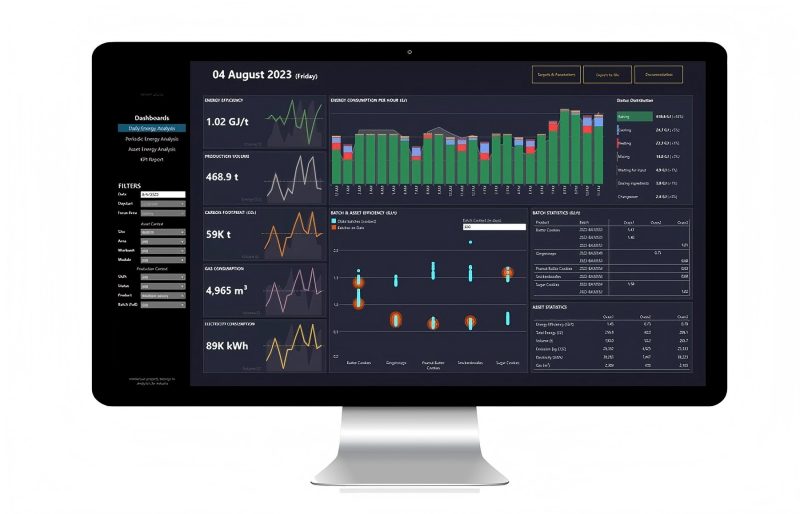
For many South African factories, electricity savings generated through intelligent EMS optimization can significantly improve project payback periods.
Safety Engineering for Industrial Manufacturing Applications
Large industrial energy storage projects require much higher safety standards than residential systems.
KRL Power’s industrial ESS integrates multiple layers of protection including:
KRL Power’s industrial ESS integrates multiple layers of protection including:
- Hoë kwaliteit langlewe litium-batteryselle
- Intelligente BMS-monitering
- Real-time thermal management
- Aktiewe brandonderdrukkingstelsels
- Foutisolasie-meganismes
- Cloud-based diagnostics and alerts
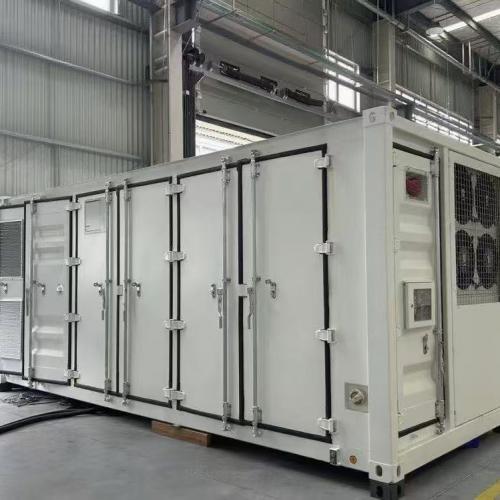
This system-level safety architecture helps ensure stable long-term operation under demanding industrial conditions.
Why Industrial ESS Is Becoming Essential in South Africa
South Africa’s manufacturing sector is rapidly increasing investment in energy storage because of several structural market drivers:
- Aanhoudende beurtkrag
- Stygende elektrisiteitsfooie
- Increased production automation
- Bevordering van die aanneming van hernubare energie
- Demand for operational resilience
- Rising diesel fuel costs
Energy storage is now becoming a strategic infrastructure investment for industrial competitiveness.
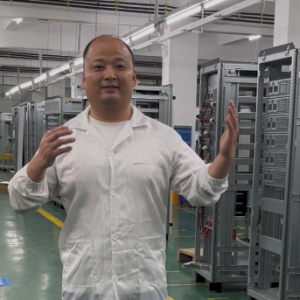
A Message from KRL Power’s R&D Director
“After more than twenty years working in industrial energy systems and large-scale power integration, one lesson remains clear:
Manufacturers do not simply need backup electricity — they need production continuity. For large factories operating continuous heavy loads, power quality, thermal stability, and intelligent energy management directly impact profitability and operational reliability.
At KRL Power, we engineer industrial energy storage systems designed specifically for real-world manufacturing environments.”
— R&D Director, KRL Power
Manufacturers do not simply need backup electricity — they need production continuity. For large factories operating continuous heavy loads, power quality, thermal stability, and intelligent energy management directly impact profitability and operational reliability.
At KRL Power, we engineer industrial energy storage systems designed specifically for real-world manufacturing environments.”
— R&D Director, KRL Power
Why Industrial Customers Choose KRL Power
High-Power Industrial Design
Optimized for demanding factory applications.
Gevorderde Veiligheidingenieurswese
Multi-layer protection architecture for industrial reliability.
Intelligent EMS Optimization
Improves long-term operational economics.
Buigsame modulaire uitbreiding
Supports future manufacturing growth.
Rapid Global Expansion
KRL Power continues growing rapidly in the global industrial ESS market.
Dikwels Gestelde Vrae (FAQ)
Q1. What size ESS is needed for a 1MW factory load?
The required battery capacity depends on runtime requirements. For approximately 3 hours of continuous 1MW operation, a 3MWh ESS configuration is commonly considered.
Q2. Can ESS replace diesel generators completely?
In some applications, yes. In others, ESS is combined with generators and solar systems to create a hybrid microgrid architecture.
Q3. Why is liquid cooling important for industrial ESS?
Liquid cooling improves thermal stability, operational safety, discharge consistency, and battery lifespan under high-power industrial conditions.
Q4. Can the system integrate with solar power?
Yes. KRL industrial ESS platforms support solar + storage hybrid operation.
Q5. Is remote monitoring available?
Yes. Cloud-based remote monitoring and diagnostics are supported.
Q6. Can the ESS reduce electricity bills?
Yes. Through peak shaving, load shifting, and intelligent EMS scheduling.
Q7. Is the system scalable for future expansion?
Yes. KRL’s modular ESS architecture supports future capacity upgrades.
Gevolgtrekking
For large factories in South Africa, industrial energy storage is becoming essential infrastructure rather than optional backup equipment.
A properly engineered 3MWh industrial ESS solution can provide:
A properly engineered 3MWh industrial ESS solution can provide:
- Stable 1MW continuous backup power
- Improved production continuity
- Verminderde afhanklikheid van diesel
- Laer elektrisiteitskoste
- Better operational resilience
- Long-term energy optimization
KRL Power’s advanced liquid-cooled commercial & industrial ESS platform is specifically designed to meet these demanding industrial requirements.
As South Africa’s industrial energy transition accelerates, manufacturers investing early in intelligent energy infrastructure will gain significant operational and financial advantages.
As South Africa’s industrial energy transition accelerates, manufacturers investing early in intelligent energy infrastructure will gain significant operational and financial advantages.