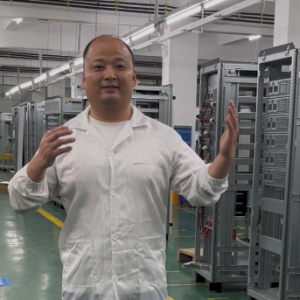
Author Perspective: 20-Year Energy Storage System Engineer
With more than 20 years of experience in battery technology research, energy storage system development, and global project deployment, I have worked with industrial customers across different markets to understand one critical challenge:
Energy is no longer only a utility expense — it has become a key factor affecting business competitiveness.
For many Canadian factories, commercial buildings, mining facilities, agricultural facilities, and industrial parks, electricity costs continue to increase while grid stability requirements become higher.
Customers are asking:
- How can we reduce peak electricity costs?
- How can we improve energy independence?
- How can renewable energy be used more efficiently?
- How can we protect production from unexpected grid interruptions?
- What size of ESS solution is suitable for industrial applications?
A properly designed Commercial & Industrial Energy Storage System (C&I ESS) provides a practical answer.
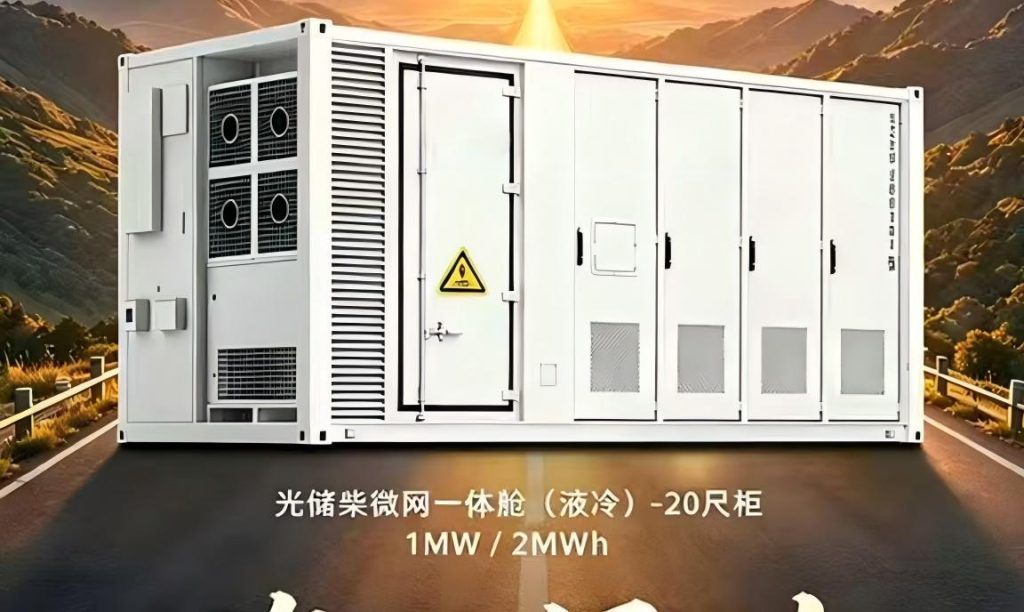
KRL Power developed its 2MWh liquid-cooled Battery Energy Storage System specifically for high-demand industrial applications, combining advanced battery technology, intelligent energy management, and integrated safety protection.
1. Customer Challenge: Industrial Energy Costs Are Becoming Harder to Control
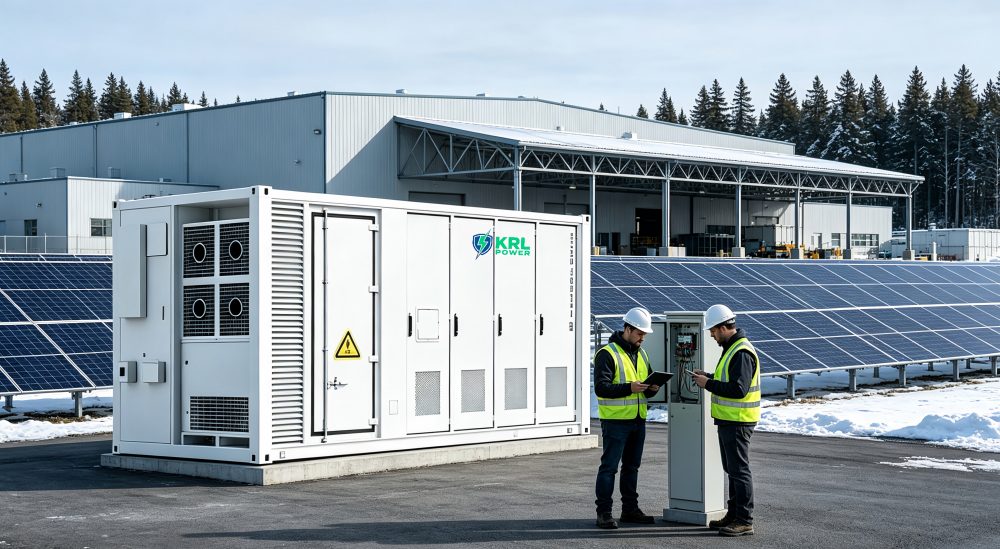
For Canadian industrial users, electricity expenses are influenced by several factors:
1.1 Peak Demand Charges
Many industrial customers experience high electricity bills because of short periods of high power demand.
Examples:
Examples:
- Factory production equipment startup
- Large motors operating simultaneously
- Seasonal production peaks
- EV charging infrastructure demand
Even if high electricity consumption lasts only a short time, demand charges can significantly increase monthly costs.
1.2 Renewable Energy Requires Better Energy Management
Many businesses are installing:
- Solar PV systems
- Wind power systems
- Distributed renewable generation
However, renewable energy output is unstable.
Solar generation is highest during daytime, while industrial electricity demand may happen at different times.
Without energy storage:
Solar generation is highest during daytime, while industrial electricity demand may happen at different times.
Without energy storage:
- Excess solar power may be wasted
- Grid dependence remains high
- Renewable investment returns are reduced
1.3 Grid Reliability and Business Continuity
Industrial production cannot tolerate frequent power interruptions.
A sudden outage can cause:
A sudden outage can cause:
- Production losses
- Equipment damage
- Restart costs
- Supply chain delays
Therefore, modern factories require not only energy savings but also energy security.
2. Recommended Solution: KRL 2MWh Commercial & Industrial ESS
To solve these challenges, KRL Power provides a complete 2MWh C&I Battery Energy Storage System.
The system integrates:
The system integrates:
- Battery modules
- PCS power conversion system
- Intelligent BMS
- EMS energy management platform
- Liquid cooling technology
- Active fire protection system
This all-in-one architecture simplifies installation and improves long-term reliability.
KRL 2MWh ESS Key Specifications
| Item | Specification |
|---|---|
| Battery Capacity | 2MWh |
| PCS Power | 1MW |
| MPPT Capacity | 960kW (8-channel MPPT) |
| Battery Technology | High-performance lithium battery |
| Cooling System | Liquid cooling |
| Cabinet Quantity | 20 cabinets |
| Protection Level | IP65 |
| Communication | RS485 / WiFi / 4G |
| Grid Connection | Grid-connected & off-grid switching |
3. Why KRL 2MWh ESS Is Suitable for Canadian Industrial Applications
3.1 Intelligent Peak Shaving and Energy Cost Optimization
KRL Energy Management System (EMS) analyzes:
- Electricity price periods
- Factory consumption patterns
- Renewable generation data
- Battery status
The system automatically performs:
Charge during low electricity price periods
Store affordable energy
Discharge during peak electricity price periods
Reduce electricity expenses
This helps industrial customers improve ROI and optimize energy usage.
3.2 Advanced Liquid Cooling for Long-Term Reliability
Large-scale industrial ESS requires stable temperature management.
KRL adopts liquid cooling technology to provide:
KRL adopts liquid cooling technology to provide:
- More uniform battery temperature control
- Reduced thermal stress
- Improved battery lifespan
- Higher system efficiency
Compared with traditional air cooling solutions, liquid cooling is more suitable for high-capacity ESS applications.
3.3 Multi-Layer Safety Architecture
Safety is the foundation of industrial energy storage.
KRL ESS integrates:
KRL ESS integrates:
Battery Safety
- High-quality long-life lithium cells
- Intelligent battery monitoring
Thermal Safety
- Liquid cooling management
- Real-time temperature monitoring
Electrical Safety
- Intelligent BMS protection
- PCS control protection
Fire Safety
- Multi-layer active fire protection design
This creates a safer operating environment for industrial customers.
4. Application Scenarios of KRL Canada Industrial ESS Solution
Factory Energy Storage
Suitable for:
- Manufacturing plants
- Automotive factories
- Food processing facilities
- Electronics production
Benefits:
- Reduce electricity costs
- Improve production stability
- Optimize renewable energy usage
Industrial Park Energy Management
ESS can support:
- Multiple electricity users
- Distributed energy systems
- Microgrid applications
Helping industrial parks build smarter energy infrastructure.
Solar + Storage Projects
KRL ESS can integrate with solar PV systems:
Solar power → Battery storage → Factory consumption
Improving renewable energy utilization and reducing grid dependency.
5. How Customers Should Choose a Commercial ESS Solution
Before investing in an ESS project, customers should evaluate:
1. Electricity Consumption Profile
Analyze:
- Daily load curve
- Peak demand
- Electricity tariff structure
2. Required Energy Capacity
A professional supplier should calculate:
- Battery capacity
- PCS power
- Backup duration
3. Safety and Lifecycle Cost
The lowest initial price does not always create the highest value.
Customers should consider:
- Battery lifespan
- Thermal management
- Maintenance requirements
- System efficiency
4. Supplier Engineering Capability
A reliable ESS partner should provide:
- System design
- Installation support
- EMS optimization
- Long-term technical service
6. Why Choose KRL Power as Your ESS Partner?
KRL Power is recognized as one of the emerging high-quality energy storage enterprises in China.
With more than 20 years of technology experience, KRL focuses on commercial and industrial energy storage solutions.
Our advantages include:
With more than 20 years of technology experience, KRL focuses on commercial and industrial energy storage solutions.
Our advantages include:
High Safety Architecture
- Advanced battery cells
- Intelligent BMS
- Liquid cooling technology
- Active fire protection
Better Investment Return
- Self-developed EMS
- Peak shaving
- Valley filling
- Dynamic capacity expansion
Integrated System Design
- All-in-one modular architecture
- Flexible deployment
- Cloud monitoring
- AI-based predictive maintenance
KRL helps industrial customers transform energy challenges into long-term business advantages.
Conclusion
For Canadian industrial users facing rising electricity costs, renewable energy integration challenges, and increasing power reliability requirements, a properly designed Commercial & Industrial Energy Storage System is becoming an essential investment.
KRL Power’s 2MWh liquid-cooled ESS provides a reliable, scalable, and intelligent solution for factories, industrial parks, and commercial energy users.
By combining advanced battery technology, intelligent EMS control, and integrated safety architecture, KRL helps customers achieve:
KRL Power’s 2MWh liquid-cooled ESS provides a reliable, scalable, and intelligent solution for factories, industrial parks, and commercial energy users.
By combining advanced battery technology, intelligent EMS control, and integrated safety architecture, KRL helps customers achieve:
- Lower energy costs
- Higher energy independence
- Better renewable utilization
- More reliable industrial operations
FAQ
Q1: What is a 2MWh commercial and industrial energy storage system?
A 2MWh commercial and industrial ESS is a large-scale battery storage solution designed for factories, industrial parks, and commercial facilities. It stores electricity and provides energy optimization, backup power, and renewable integration.
Q2: How does an industrial ESS reduce electricity costs?
Industrial ESS reduces electricity costs through peak shaving and energy shifting. The battery charges when electricity prices are lower and discharges during expensive peak periods.
Q3: Why does KRL use liquid cooling technology?
Liquid cooling provides better temperature consistency for large battery systems, improving safety, efficiency, and long-term battery performance.
Q4: Can KRL ESS work with solar systems?
Yes. KRL commercial energy storage systems can integrate with solar PV systems to improve renewable energy utilization and reduce grid dependency.
Q5: What industries can use KRL 2MWh ESS?
Typical applications include manufacturing factories, industrial parks, commercial buildings, renewable energy projects, and microgrid applications.