Nigeria represents one of the most promising but challenging markets for distributed energy solutions.
Many commercial facilities operate under unstable grid conditions and depend heavily on diesel generators.
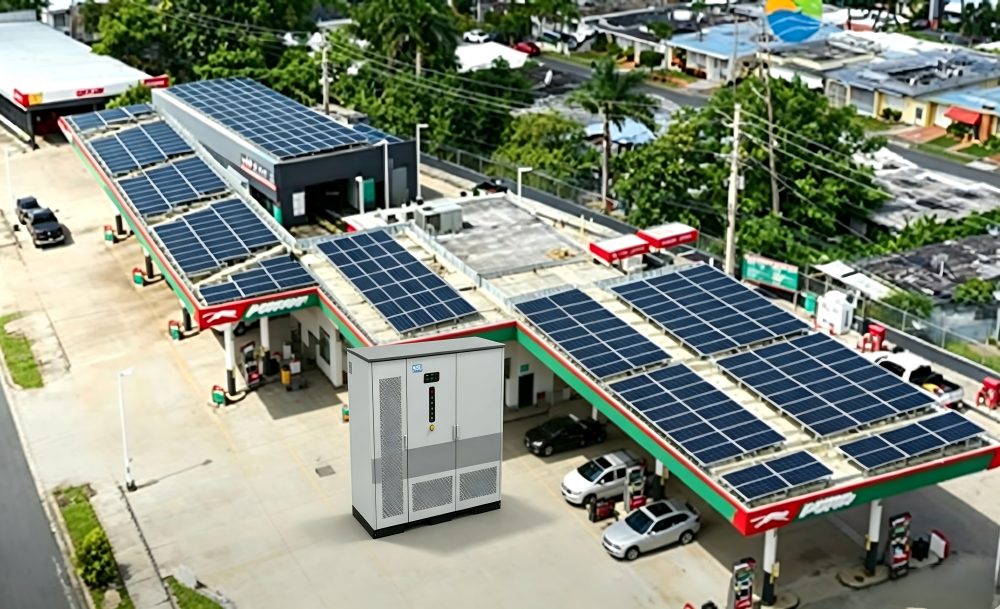
The customer requirement in this project represents a typical commercial fuel station scenario:
- Six fuel dispensers operating daily
- Commercial customer service area
- No reliable public grid connection
- Existing diesel generator dependency
- Requirement for an integrated energy storage solution
- Future possibility of photovoltaic integration
The key challenge is not simply providing backup electricity.
The real engineering challenge is:
The real engineering challenge is:
How can commercial fuel stations maintain continuous operation while reducing diesel consumption and improving long-term energy economics?
KRL Power solves this challenge through an integrated C&I ESS architecture.
1. Energy Challenges of Commercial Fuel Stations in Nigeria
1.1 Unstable Grid Supply Affects Business Continuity
Commercial fuel stations require stable electricity for:
- Fuel dispensing equipment
- Payment terminals
- Lighting systems
- Security monitoring
- Communication equipment
- Office facilities
However, unstable grid supply can create:
- Unexpected shutdowns
- Customer service interruption
- Revenue loss
- Equipment damage caused by voltage fluctuation
2. Why Traditional Diesel Backup Is Not Enough
Many commercial fuel stations currently rely on diesel generators.
Although diesel generators provide emergency power, long-term operation creates several problems:
Although diesel generators provide emergency power, long-term operation creates several problems:
High Operating Cost
Diesel expenses become one of the largest operational costs.
Frequent Maintenance
Continuous generator operation requires:
- Oil replacement
- Engine maintenance
- Spare parts
- Technician support
Low Energy Efficiency
Generators are inefficient when operating under partial load conditions.
Environmental Impact
Increasing fuel costs and emission requirements are pushing businesses toward cleaner hybrid energy solutions.
Therefore:
Therefore:
Diesel generators should become backup resources rather than the primary energy source.
3. KRL Recommended Solution: 250kW/522kWh Integrated C&I ESS
Based on the customer's requirements, KRL Power recommends:
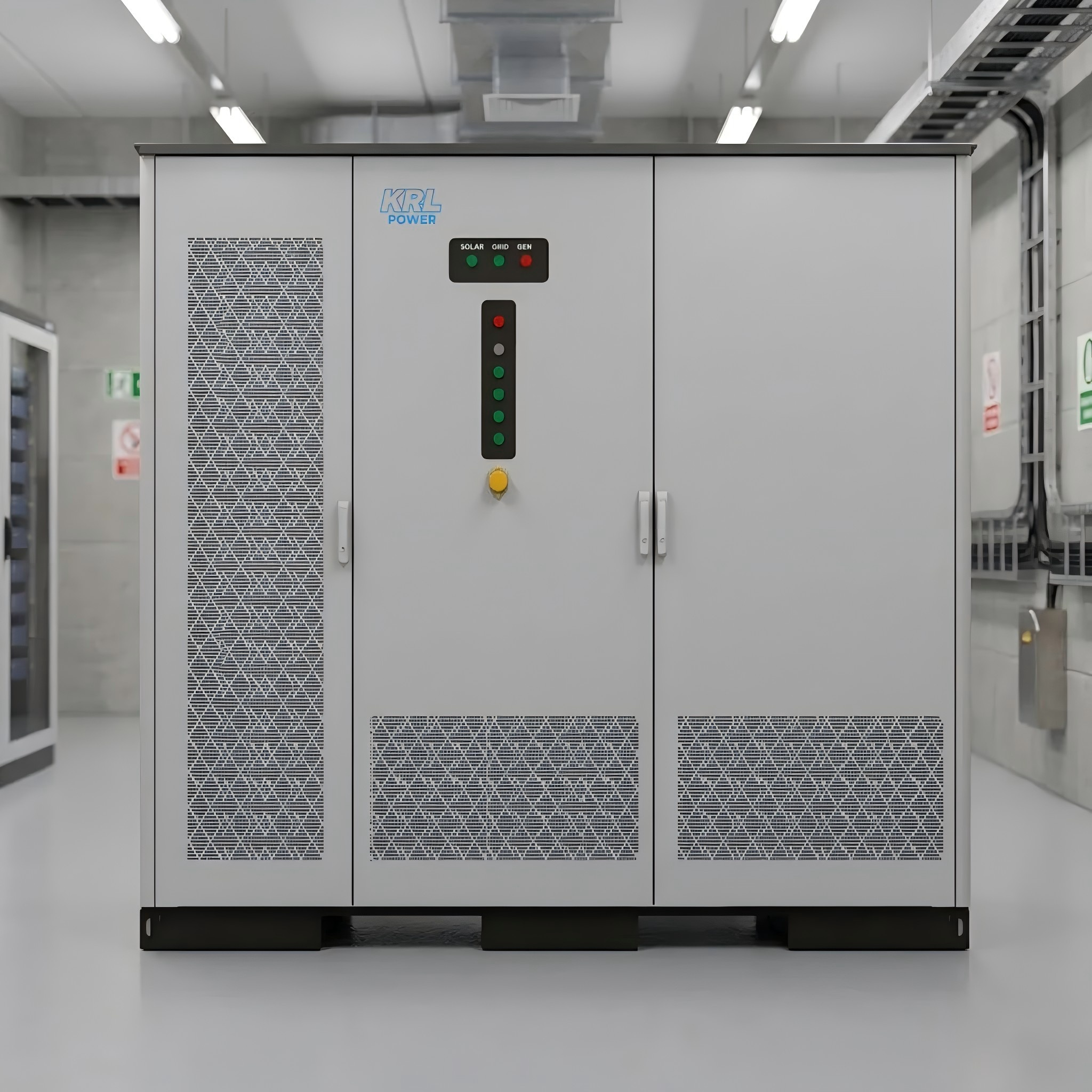
KRL-B522L-250kW/522kWh Liquid-Cooled Commercial Energy Storage System
Product Configuration
| Item | Specification |
|---|---|
| Battery Capacity | 522kWh |
| PCS Power | 250kW |
| PV MPPT Input | 240kW |
| MPPT Channels | 2 |
| Battery Technology | LFP Lithium Battery |
| Cooling System | Liquid Cooling |
| Protection Level | IP65 Battery Cabinet |
| Communication | RS485 / WiFi / 4G |
| Operation Mode | Grid + Off-grid |
| Switching | Seamless Transfer |
4. System Architecture for Nigeria Commercial Fuel Station Hybrid Energy Structure
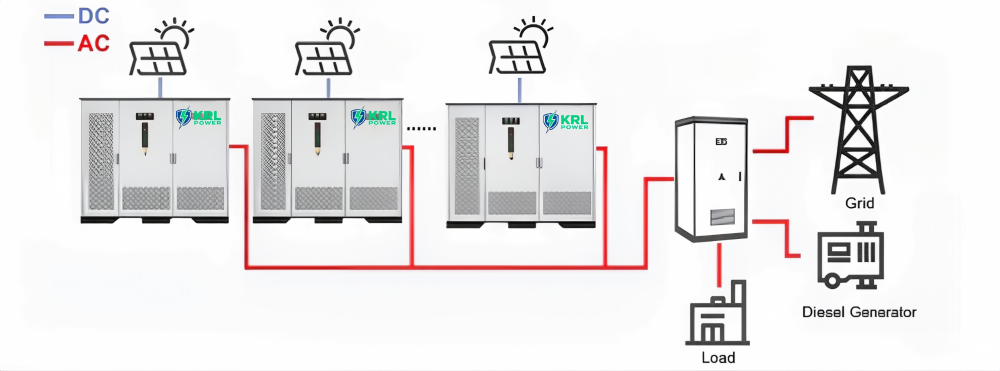
5. How KRL ESS Improves Fuel Station Operation
Scenario 1: Normal Grid Operation
During available grid periods:
Grid + PV:
→ Supply station loads
→ Charge battery when electricity cost is lower
Scenario 2: Grid Failure
When grid interruption occurs:
Automatic switching:
ESS → Fuel station loads
The system maintains:
- Fuel pump operation
- Payment systems
- Lighting
- Security equipment
without manual operation.
Scenario 3: Solar Integration
Future PV expansion:
Solar energy:
→ Direct load supply
→ Excess energy charging ESS
Improving solar utilization rate.
6. KRL Intelligent EMS Energy Management System
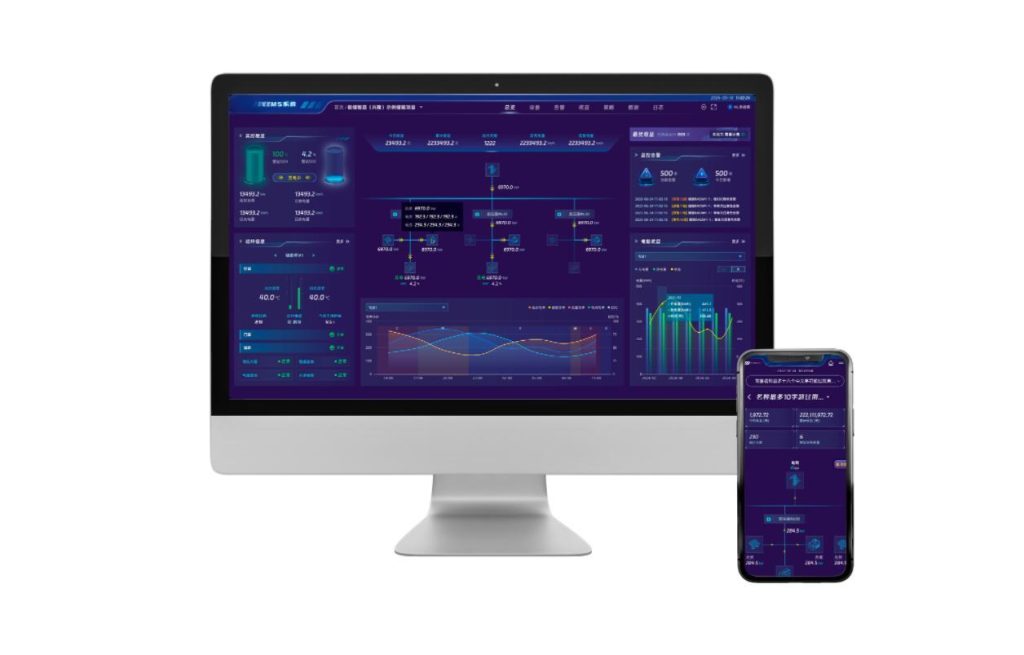
The integrated KRL EMS controls the complete energy flow:
Intelligent Energy Scheduling
Automatically manages:
- PV generation
- Battery charging
- Battery discharge
- Grid usage
- Diesel generator operation
Diesel Optimization
EMS reduces unnecessary generator running hours.
Remote Monitoring
Operators can check:
- Battery SOC
- System status
- Fault alarms
- Energy consumption
Communication:
- RS485
- WiFi
- 4G
7. Why KRL 250kW/522kWh ESS Is Suitable for Nigeria
Extreme Safety Architecture
KRL system includes:
- Long-life LFP battery cells
- Intelligent BMS
- Liquid cooling technology
- Multi-layer protection design
Ensuring stable operation under:
- High temperature environment
- Dust conditions
- Outdoor installation
Highly Integrated Design
Unlike traditional solutions requiring multiple suppliers:
KRL integrates:
KRL integrates:
- Battery
- PCS
- BMS
- EMS
- Thermal management
Advantages:
- Faster installation
- Lower maintenance complexity
- Better system reliability
Flexible Commercial Expansion
The system supports future expansion for:
- More fuel dispensers
- Commercial buildings
- EV charging stations
- Solar integration
8. Business Value Analysis
Without Energy Storage
Energy structure:
Grid
 |
Diesel Generator
 |
Fuel Station Loads
Problems:
- High diesel consumption
- High maintenance cost
- Unstable operation
With KRL ESS
Energy structure:
Solar + Grid + ESS + Diesel

             ↓

Reliable Commercial Energy System
Benefits:
Lower Diesel Cost
Reduce generator operating hours.
Higher Reliability
Maintain operation during grid failures.
Better Solar Utilization
Store unused solar energy.
Improved Asset Value
Transform energy infrastructure into a long-term business asset.
9. About KRL Power
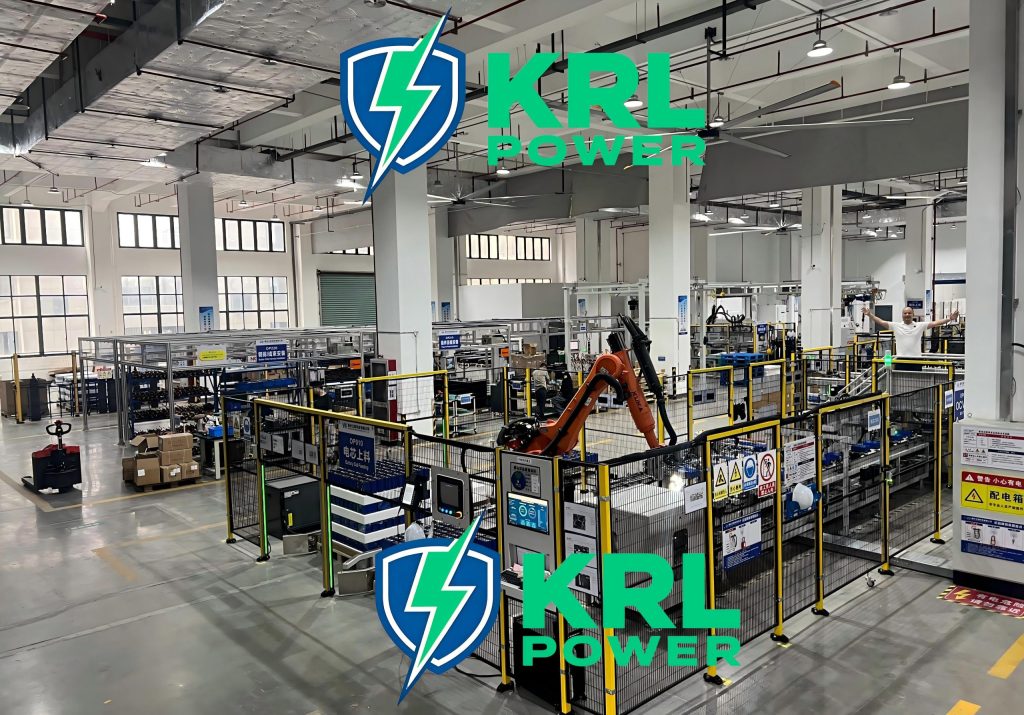
KRL Power is one of the dynamic emerging companies in China's energy storage industry, focusing on commercial and industrial energy storage system development and integration.
KRL has been recognized as:
"High-Quality Energy Storage Enterprise 2025"
KRL Core Advantages
1. Energy Storage Engineering Experience
20+ years technical experience in battery and energy systems.
KRL has been recognized as:
2. Advanced Safety Design
- LFP battery technology
- Intelligent BMS
- Liquid cooling
- Active protection
3. Smart EMS Optimization
Self-developed EMS supports:
- Peak shaving
- Valley filling
- Energy optimization
- Remote diagnosis
4. Global Deployment Capability
Supporting:
- Africa
- Southeast Asia
- Latin America
- Emerging markets
10. Frequently Asked Questions (FAQ)
Q1: Why does a commercial fuel station need a 522kWh ESS?
A 522kWh energy storage system provides sufficient backup capability for commercial fuel station loads while reducing diesel dependency and improving energy reliability.
Q2: Can KRL ESS work without grid connection?
Yes.
The system supports:
The system supports:
- Grid-connected operation
- Off-grid operation
- Seamless switching
Q3: Can this system work with an existing diesel generator?
Yes.
KRL EMS coordinates:
PV + ESS + Diesel Generator
to achieve optimized energy operation.
KRL EMS coordinates:
PV + ESS + Diesel Generator
to achieve optimized energy operation.
Q4: Is the system suitable for Nigeria's climate?
Yes.
The IP65 battery cabinet and liquid cooling system improve environmental adaptability in hot and dusty regions.
The IP65 battery cabinet and liquid cooling system improve environmental adaptability in hot and dusty regions.
Q5: Can solar panels be added later?
Yes.
The integrated 240kW MPPT function allows future PV system integration.
The integrated 240kW MPPT function allows future PV system integration.
Q6: What information does KRL need for project design?
KRL engineers normally require:
- Load profile
- Daily operating hours
- Existing generator information
- Grid availability
- PV installation plan
Conclusion
For Nigerian commercial fuel stations, reliable electricity is directly connected with business continuity.
A modern energy solution requires more than diesel backup.
The KRL Power 250kW/522kWh C&I ESS provides:
A modern energy solution requires more than diesel backup.
The KRL Power 250kW/522kWh C&I ESS provides:
- Reliable backup power
- Reduced diesel dependency
- Solar integration capability
- Intelligent EMS optimization
- Long-term operational savings
By transforming traditional fuel stations into smart hybrid energy facilities, KRL helps commercial operators build more resilient and cost-effective energy infrastructure.