Industrial & Commercial Energy Storage Solutions in the 314Ah Shortage and 500Ah+ Transition Era
As the R&D Director of KRL Power , I have witnessed a structural turning point in the global energy storage industry.
The market is no longer driven only by capacity expansion—it is now defined by supply chain fragmentation, rapid cell evolution, and application-specific energy demands.
On one side, the widely adopted 314Ah battery cell is facing persistent shortage and rising costs. On the other side, the industry is rapidly shifting toward 500Ah+ ultra-large-format cells, including multiple competing standards such as 587Ah, 628Ah, 684Ah, and even 790Ah.
For end-users—especially industrial and commercial energy consumers—this transition introduces a critical challenge:
How do you choose a stable, future-proof energy storage system when battery standards are still not unified?
This is exactly where KRL Power C&I ESS provides a strategic solution.
How do you choose a stable, future-proof energy storage system when battery standards are still not unified?
This is exactly where KRL Power C&I ESS provides a strategic solution.
1. Market Reality: Why Energy Storage Is Entering a “Dual-Track Transition”
1.1 314Ah Shortage and Cost Pressure
The 314Ah battery, once the backbone of 2–4 hour energy storage systems, is now experiencing:
- Tight global supply due to order surges
- Rising raw material costs (lithium carbonate volatility)
- Price increases exceeding 20% in recent cycles
- Strong demand from utility-scale and overseas projects
For industrial users, this results in:
- Longer delivery cycles
- Higher system CAPEX
- Unstable project planning assumptions
1.2 500Ah+ Era: Innovation or Complexity?
At the same time, the industry is accelerating into a new generation:
- 587Ah / 588Ah / 628Ah / 650Ah / 684Ah / 702Ah / 790Ah competing standards
- Lack of unified design architecture
- Different thermal management requirements
- Diverse BMS/PCS integration challenges
This creates a paradox:
Higher capacity does not automatically mean higher system efficiency for end-users.
Higher capacity does not automatically mean higher system efficiency for end-users.
1.3 The Real Customer Problem
For industrial energy users, the real challenges are:
- Unpredictable electricity cost
- Peak demand charges
- Grid instability risks
- Limited ROI clarity due to technology uncertainty
2. KRL Power Solution: Industrial C&I ESS Designed for Transition Period Stability
2.1 System-Level Engineering, Not Cell-Level Dependency
Instead of locking customers into a single cell standard, KRL Power builds systems based on:
- Modular energy architecture
- Multi-generation cell compatibility
- Scalable containerized ESS design
This ensures your system remains usable even when cell standards change.
2.2 Core Architecture of KRL C&I ESS
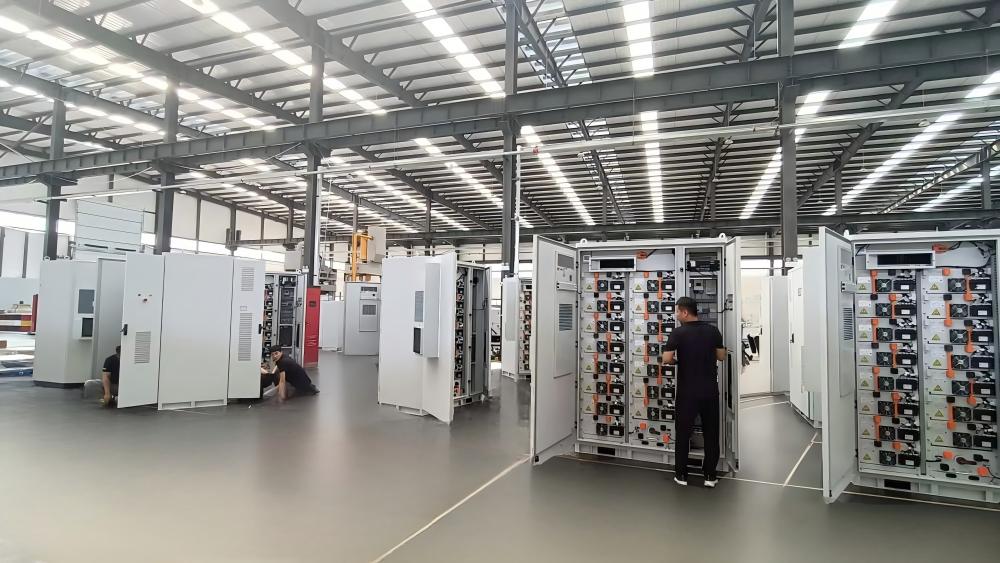
The KRL industrial ESS integrates:
- High-performance lithium battery modules
- Advanced liquid cooling thermal management
- Intelligent BMS (Battery Management System)
- PCS (Power Conversion System) integration
- AI-based EMS optimization platform
This architecture ensures:
- Stable operation in extreme environments
- High charge/discharge efficiency
- Reduced degradation over lifecycle
- Predictable ROI performance
3. Extreme Safety Architecture: Built for Industrial Reliability
Industrial clients do not only need performance—they need risk control.
KRL battery energy storage systems (BESS) adopts a multi-layer safety design:
KRL battery energy storage systems (BESS) adopts a multi-layer safety design:
- Cell-level protection
- Module-level thermal isolation
- Cabinet-level fire suppression system
- Real-time AI monitoring
Key benefits:
- Thermal runaway prevention
- Continuous temperature balancing
- Early fault detection
- Reduced downtime risk
For factories, logistics parks, and data centers, this safety architecture is critical for insurance compliance and operational continuity.
4. EMS-Driven ROI Optimization: Turning Energy into Profit
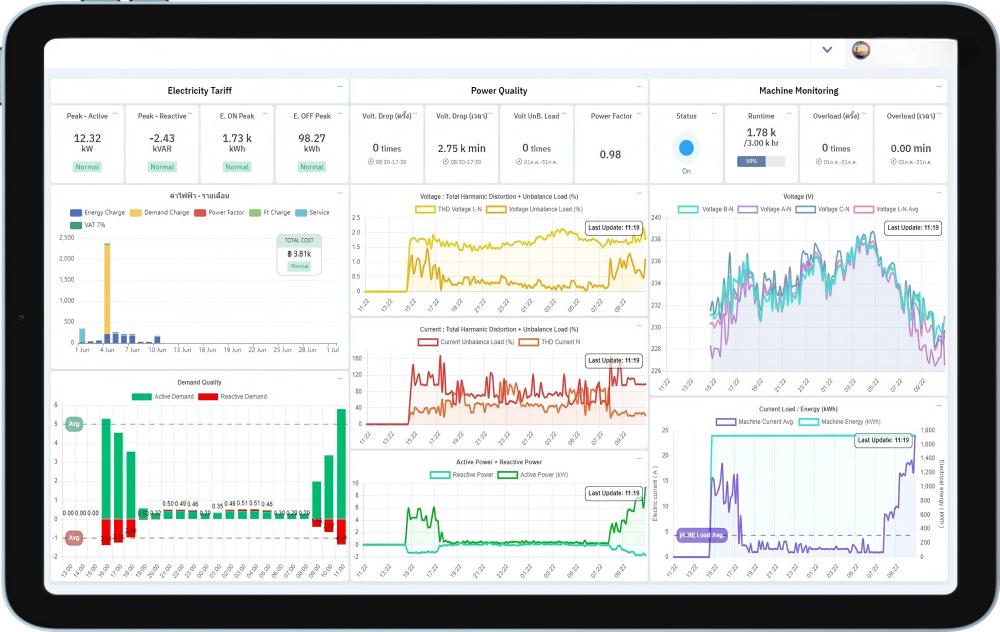
4.1 Why EMS Matters More Than Battery Size
Many buyers focus on battery capacity (Ah / kWh), but real ROI comes from energy intelligence.
KRL’s self-developed EMS enables:
- Peak shaving
- Valley filling
- Demand charge reduction
- Dynamic load shifting
- PV integration optimization
4.2 Real Industrial Value
Typical customer outcomes:
- 15%–40% electricity cost reduction
- Faster payback period (3–5 years typical)
- Improved power factor penalty elimination
- Stable production power supply
5. Application Scenarios: Where KRL ESS Delivers Maximum Value
5.1 Industrial Manufacturing Plants
- Peak demand control
- Machine load stabilization
- Backup power support
5.2 Data Centers (AIDC Energy Storage)
- High power density backup
- Instant response discharge
- Grid fluctuation buffering
5.3 Commercial Complexes & Logistics Parks
- Demand charge reduction
- Solar self-consumption optimization
5.4 Microgrid & Off-grid Systems
- Hybrid solar + diesel + storage
- Energy independence
6. Why KRL Power Is Positioned for the Next Energy Storage Cycle
6.1 Manufacturing + Engineering Integration
KRL Power is recognized as a fast-growing leader in C&I energy storage with:
- Advanced manufacturing capability
- System-level engineering expertise
- Global project deployment experience
6.2 Competitive Advantages
- Extreme Safety Architecture
- Superior Cost Optimization via EMS
- Highly Integrated Smart Design (plug-and-play)
- Strong scalability for global deployment
7. Investment Logic: 314Ah vs 500Ah+ Transition Strategy
For industrial buyers, the key decision is not “which battery is better,” but:
How to avoid technology risk while maximizing ROI.
Recommended Strategy:
How to avoid technology risk while maximizing ROI.
Recommended Strategy:
- Short-term: Use stable, proven C&I ESS systems
- Mid-term: Maintain system flexibility for cell upgrades
- Long-term: Transition to hybrid storage architecture
KRL systems are designed exactly for this phased evolution.
8. Implementation Process
- Energy audit & load analysis
- System sizing & ROI modeling
- Customized ESS configuration
- Installation & grid integration
- EMS optimization tuning
- Long-term O&M support
9. FAQ – Industrial Energy Storage System
Q1: Is 314Ah battery shortage affecting system delivery?
Yes, but KRL ESS is designed with multi-supply compatibility to avoid dependency on a single cell standard.
Q2: Should I wait for 500Ah+ technology to mature?
No. Industrial ROI is driven by system integration, not cell size alone. Waiting may increase energy costs.
Q3: What is the payback period of a C&I ESS system?
Typically 3–5 years depending on load profile and electricity tariff structure.
Q4: Can KRL ESS integrate with solar systems?
Yes. KRL systems support full PV + storage + grid hybrid integration.
Q5: Is the system suitable for AIDC or data centers?
Yes. KRL provides high-response, high-reliability configurations for data center applications.
Conclusion: The Real Winner Is System-Level Energy Intelligence
The global energy storage market is entering a period of cell fragmentation and rapid evolution. While 314Ah remains constrained and 500Ah+ remains unstandardized, industrial users face uncertainty.
KRL Power’s answer is clear:
Do not depend on cell cycles—build system-level energy intelligence.
With modular architecture, advanced EMS optimization, and industrial-grade safety design, KRL C&I ESS provides a stable, scalable, and ROI-driven solution for the next decade of energy transition.