 Skip to content

Nigeria's Energy Dilemma: A Catalyst for the Rise of the Energy Storage Market
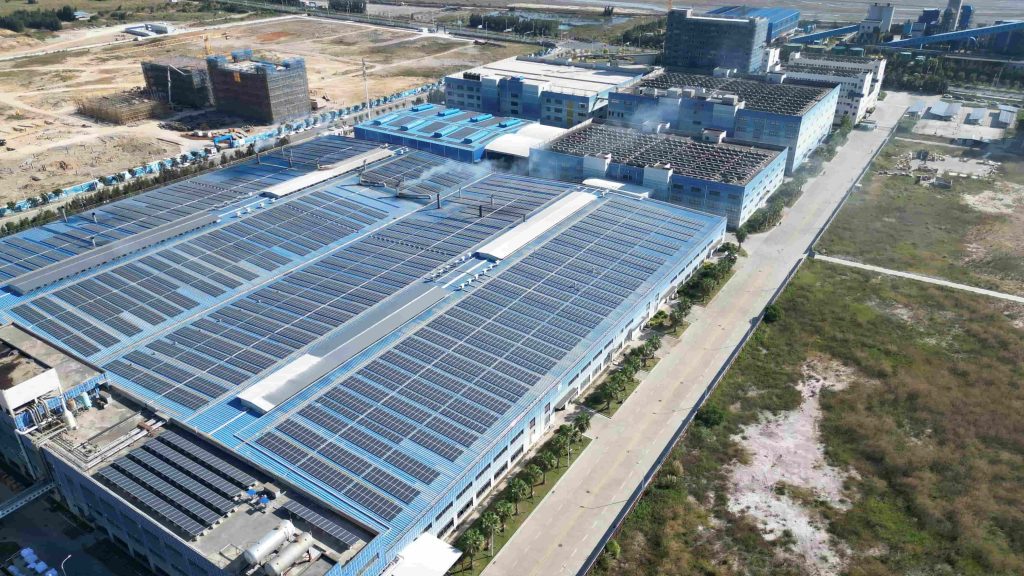
Nigeria, Africa’s most populous country with more than 226 million people, continues to face severe energy infrastructure pressure. A Nigeria solar and energy storage market research report shows that only about 60.5% of the population has access to electricity, making Nigeria one of the countries with the largest electricity access gaps globally. The disparity between urban and rural electrification remains significant, while frequent outages and unstable grid supply force both households and businesses to rely heavily on costly diesel generation.
Although Nigeria has strong solar irradiation—particularly in northern regions with approximately 1,856 annual sunshine hours and photovoltaic generation potential of around 4.79kWh/day/kW—the country has not fully converted this natural advantage into stable industrial power. Aging transmission systems, limited grid coverage, and an energy structure still heavily dependent on fossil fuels continue to create serious challenges for factories that require uninterrupted electricity.
For frozen-food manufacturers, this issue is even more critical.
Why Nigeria Ice Cream Factories Need Commercial Energy Storage
Ice cream factories operate with high and continuous electrical demand.
Typical energy-intensive equipment includes:
- Refrigeration compressors
- Blast freezers
- Cold storage rooms
- Mixing systems
- Filling and sealing lines
- Packaging machinery
- HVAC cooling systems
- Pumps and circulation motors
Any voltage instability can directly affect production.
Without energy storage, many facilities depend on diesel generators.
That creates:
- Rising fuel costs
- Frequent maintenance
- Higher noise levels
- Equipment wear
- Carbon emissions
- Unstable operating expenses
This is why KRL Power commercial ESS solutions are increasingly relevant for Nigeria’s cold-chain sector.
3 Key Reasons KRL Power Recommends Solid-State Batteries for Cold-Chain Factories
Food manufacturing requires higher safety and reliability standards.
For this reason, KRL Power strongly recommends solid-state battery ESS architecture for demanding C&I environments.
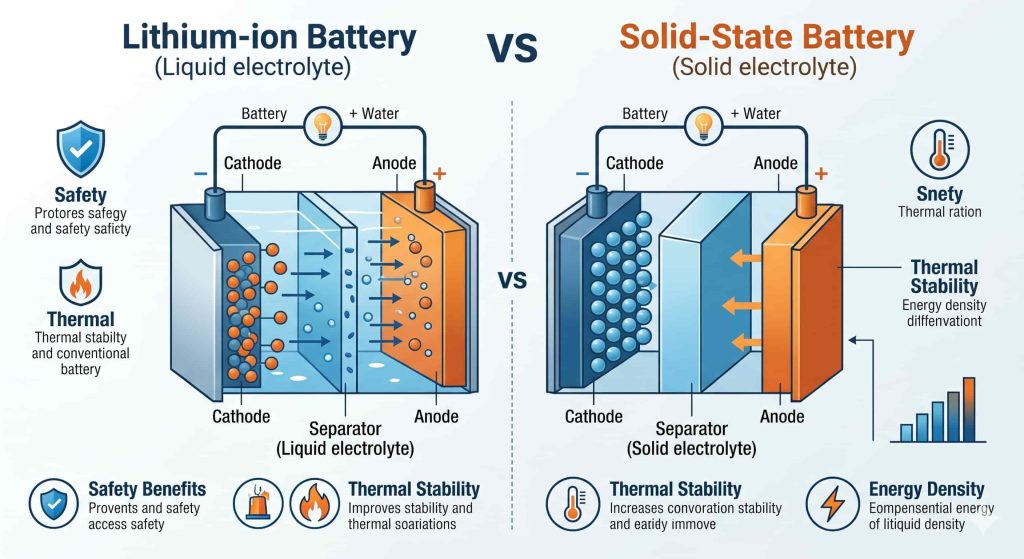
1. Higher Thermal Safety
Nigeria’s hot industrial climate increases thermal stress on energy systems.
Compared with conventional battery technologies, KRL Power solid-state-battery systems provide:
- Better thermal stability
- Lower flammability risk
- Reduced leakage probability
- Safer structural integrity
- Improved fire resistance
For cold-chain factories, this is especially valuable where safety and uninterrupted refrigeration matter.
2. Stronger Long-Term Cycling Capability
Cold storage factories operate daily with repeated charge-discharge demands.
ESS systems often support:
- Peak shaving
- Backup switching
- Refrigeration support
- Compressor startup balancing
- Grid fluctuation control
- Continuous industrial load management
KRL Power solid-state battery ESS is built for high-cycle industrial use.
3. Higher Energy Density With Smaller Footprint
Factory space is expensive.
Higher energy density allows:
- Compact ESS installation
- Easier deployment
- Containerized integration
- Flexible modular expansion
- Better land utilization
This makes KRL Power ESS systems practical for both medium and large factories.
How Energy Storage Improves ROI for Ice Cream Factories
Industrial ESS is no longer only about backup power.
It directly affects ROI.
Peak Shaving and Load Optimization
Using the KRL Power EMS platform, factories can store energy during lower-cost periods and discharge during peak demand.
This supports:
- Lower electricity bills
- Reduced demand charges
- Improved load balancing
- Better energy efficiency
Reduced Diesel Dependency
Heavy generator use creates long-term operational cost pressure.
A properly designed ESS helps reduce:
- Diesel fuel consumption
- Generator runtime
- Oil replacement costs
- Mechanical stress
- Maintenance frequency
KRL Power helps factories move toward smarter hybrid energy systems.
Cold-Chain Protection
Ice cream production cannot tolerate temperature failure.
With KRL Power industrial ESS, factories can better maintain:
- Stable freezer operation
- Consistent cold storage temperature
- Product integrity
- Reduced spoilage risk
- Better production continuity
Longer Equipment Life
Stable power switching protects:
- Compressors
- Motors
- Pumps
- Drives
- Refrigeration systems
That lowers hidden maintenance costs.
What ESS Size Is Suitable for an Ice Cream Factory?
ESS sizing depends on:
- Refrigeration demand
- Production hours
- Generator dependency
- Grid instability
- Backup runtime
- Future expansion planning
For medium-to-large factories, 1000kWh ESS configurations are commonly used because they support cold storage backup, load balancing, and peak shaving while allowing operational flexibility.
However, KRL Power always recommends customized sizing based on real factory load profiles rather than fixed assumptions.
Recommended KRL Power ESS Architecture
As one of the most dynamic emerging players in China’s energy storage system industry, KRL Power has rapidly gained recognition for its technological innovation and global expansion.
Awarded “High-Quality Energy Storage Enterprise 2025,” KRL is positioned as a high-performance challenger brand delivering premium-quality battery systems at competitive cost.
Amid rising global demand and constrained supply of high-end battery systems, KRL provides businesses with reliable, scalable, and cost-efficient energy storage solutions.
For unstable-grid environments like Nigeria, KRL Power ESS architecture combines safety, performance, and ROI optimization.
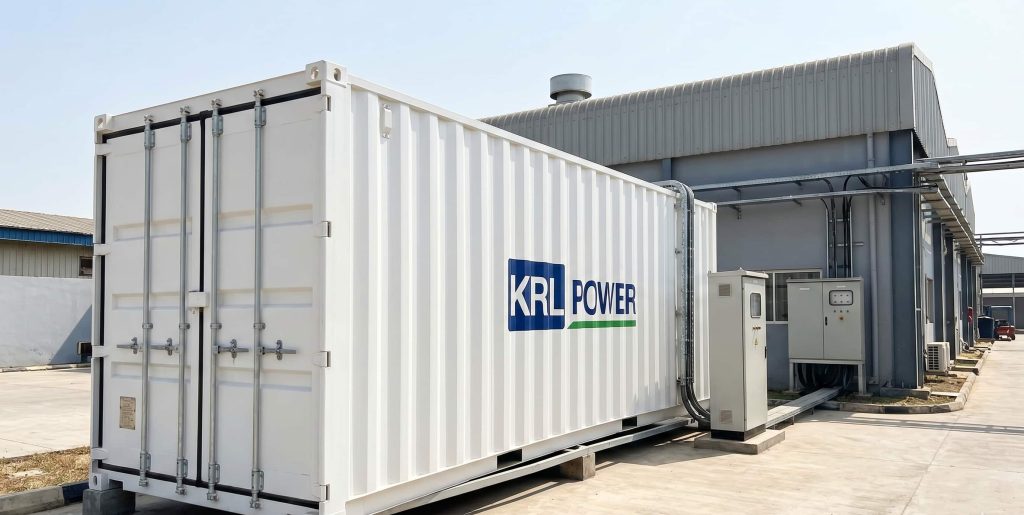
KRL Power Solid-State Battery System
High-density safer battery design.
Advanced Liquid Cooling
Stable thermal management under heavy industrial load.
Intelligent BMS
Real-time monitoring, balancing, and protection.
KRL Power EMS Platform
Supports:
- Peak shaving
- Valley filling
- Dynamic capacity expansion
- Smart scheduling
- Cloud diagnostics
Modular All-in-One Design
Enables:
- Plug-and-play deployment
- Flexible scalability
- Predictive maintenance
- Real-time monitoring
Why Nigeria Factories Choose KRL Power
Industrial facilities in Nigeria require systems that can operate under unstable-grid and high-temperature conditions.
KRL Power offers:
- Solid-state battery safety
- Industrial-grade ESS integration
- Advanced liquid cooling
- Intelligent EMS optimization
- Multi-layer fire protection
- Long-life battery performance
- Flexible C&I deployment
- ROI-focused system design
For factories where refrigeration reliability directly affects product survival, KRL Power ESS is a practical long-term investment.
FAQ
Q1.Are solid-state batteries suitable for ice cream factories?
Yes. They offer superior thermal safety, endure heavy daily power cycles, and save space—ensuring uninterrupted refrigeration and better ROI for cold-chain factories.
Q2.Can KRL Power ESS reduce diesel costs?
Yes. It significantly cuts down on generator runtime, which directly reduces diesel fuel consumption, oil replacement, and expensive maintenance costs.
Q3.Is 1000kWh suitable for every factory?
No. While 1000kWh is common for medium-to-large facilities, it’s not a one-size-fits-all solution. KRL Power always recommends customized sizing based on actual factory load profiles and backup needs rather than fixed assumptions.
Q4.Why choose KRL Power over conventional battery systems?
Because KRL Power utilizes solid-state battery technology, which offers superior thermal safety, stronger long-term cycling for heavy industrial loads, and a smaller footprint than conventional batteries. They also integrate advanced liquid cooling and smart EMS to maximize ROI in unstable-grid environments.
